





Table of Contents
History of Mod Clothing
Mod Jackets and Coats
Jeans & Trousers
Suited & Booted
Featured Brands
The Knack and How To Get It
Its story is a kin to the greatest of dramas, with twists and turns, romance and tragedy, good times and bad. After the end of WWII, Britain emerged still very much conforming to well served, yet age-old traditional values — but this time with an added despair.
A country that had lost a whole lot in the ravages of war had also conjured up a loss in direction for many of it's young people. A sense that outmoded traditions and overly strict moral conscience were stifling creativity and the ability to express ones self in turn generated a subversive reaction amongst many of Britain's youth.
This creative rebellion manifested itself in the form of fashion, music and the arts. The affluent youth began pushing the boundaries, with previously conservative fashion trends slowly being replaced with a more flamboyant and individual style. The first subculture to emerge amongst Britain's more expressionistic youth was the Teddy Boy.
What next for Britain's Youth?
The Edwardian look defined a new generation and Drape coats, quiffs, bolo (shoestring) ties, sideburns and creepers became the order of the day. By 1953, Teddy Boys had become a recognised and rapidly growing phenomenon and when the Daily Express printed the words Teddy Boy (Teddy being short for Edward'ian) in its September 23rd edition, the movement was gaining momentum.
Heavily influenced by American Rock and Roll with the likes of Elvis Presley, Bill Haley, Eddie Cochran and the film Blackboard Jungle all coming to prominence — The archetypal Hero's and icons of the Teddy Boy era were born — Themselves, a reflection of this new rebellious attitude.
To grasp an insight into the extrovert fashions of the Teddy Boy, it's advantageous firstly to create a snap shot in the mind of the typical member.
The average Teddy Boy adorned the classic drape jacket, often with the authentic velvet collar feature. It's Edwardian inspiration was also practical for the time. Hanging out on cold street corners (always was and will be a typical teenage past time) meant that the woollen fabric was an ideal solution for beating the cold.
Style and substance — a drape jacket also had many concealed pockets, not just for protecting hands from the bitter cold, but also for concealing weapons and contraband such as alcohol. The more elegant, sophisticated and sought after a persons drape jacket, the more being in possession of such a garment became a symbol of status within the group — a badge of honour if you like.
The Teddy Boy's would also wear drainpipe jeans, often short length to leave a portion of the sock on show and to act as a stark contrast between the dark black trousers and the striking footwear.
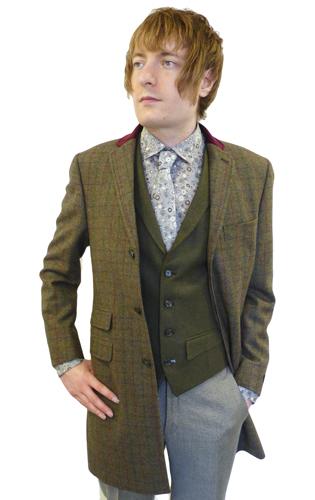
THE GIBSON 'VINNIE' MENS OVERCOAT
First up The Gibson London 'Vinnie' - Inspired by the classic Fifties drape Jacket with crucial Sixties Mod updates. A fab Article of Retro Clothing - complete with velvet collar, exquisite check fabrics and stylish Mod ticket pocket detail.
View Full Range
THE GIBSON 'VINNIE' MENS OVERCOAT
For classic Drainpipe Jeans, the stylish Madcap England 'Cavern '59' combines Fifties Cavern Club era styling, Sixties Mod charm with a contemporary Indie edge - A Retro Clothing icon and a very versatile garment - Part of the Mens Clothing collection from Madcap England.
Buy Now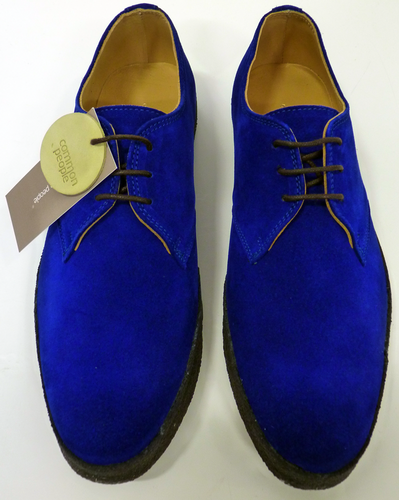
COMMON PEOPLE 'DYLAN' SHOES
These Common People 'Playboy' inspired 'Dylan' blue suede shoes have an authentic thick crepe sole. A genuine Sixties Steve McQueen style in real Dandy Mod colour way, 'Dylan' are the perfect stand out shoes to compliment any Retro outfit.
Buy NowClassic gibson shoes with thick crepe soles or the famous brothel creepers became the shoes of choice for many a Teddy Boy. The outfit would be finished off with a smart shirt, often with wide collars (a traditional Americana influence) and the classic bootlace (bolo) tie. Hair was lovingly and time consumingly quiffed, sometimes in an audacious overblown manner, tapering out in to the iconic duck arse (also referred to as duck tail or DA) at the back.
... and so what of the Teddy Girl? As with their male companions, the Teddy Girls dressed out of a need to shock the older generations. Once again, the American Rock & Roll influence featured heavily on the agenda - toreador pants (close fitting trousers that extend to or slightly above the calf) and the classic circle skirt became an instantly recognisable trait of the typical Teddy Girl. In order to create a true identity, away from the excessively respectable, prim and proper look of previous generation, the Teddy Girl opted for low cut tops, experimenting with different styles and looks in order to achieve a new and outrageous appearance and ultimately be the envy of the burgeoning social scene.
Despite it's rapid growth, by the end of the Fifties the Teddy Boy movement was in decline and bored teenagers began to look for new ways to vent their frustrations. With the foundations set for change the time was right for a new sub-culture to emerge - a new generation waiting in the wings, ready to put their stamp on Britain's cultural heritage.
I had A Dream… and that dream was mod!
Modernists, Beatniks and the Beat Generation!
Firstly perhaps we should start by stating the obvious - that the 1960s is arguably the most talked about and most fondly remembered decade of recent times. A period of time that witnessed much cultural change and laid to rest many ghosts of shame that had preoccupied the Western world for far too long.
It was an optimistic time, particularly for the worlds youth - an exciting time for music, film, fashion and indeed for opportunity. Whilst slightly digressing from the subject matter, the above expresses the sentiment that the Sixties was a time for change, a change not solely underpinned by socio-political, technological and economic advances, but moreover a sense of prevailing freedom for all, realised by a spirit of belonging and a sense of humanity that cultural advancements facilitated. Here we will endeavour to demonstrate that the Mod movement was a part of this change, having an impact that still lingers today - A catalyst that allowed many to grasp an identity, a sense of belonging and a way of life.
"That was a vision that we had."
'It is because I am Beat, that is, I believe in beatitude and that God so loved the world that He gave His only begotten son to it... Who knows, but that the universe is not one vast sea of compassion actually, the veritable holy honey, beneath all this show of personality and cruelty?' (Jack Kerouac; excerpt from "Is There A Beat Generation?", November 8, 1958, New York's Hunter College Playhouse).
What's the difference between a pub and a coffee bar? Ask that to the youth of today and you'll probably get a totally different answer. However, back in the Fifties and the dawning of the Beatnik culture the viewpoint was clear and concise - Pubs would close at 11pm, whereas the coffee bars would often open to the early hours and were generally equipped with jukeboxes. Whilst jazz and blues music became the predominant music played at coffee bars in the late Fifties, the early Sixties witnessed a sea of change and wild eyed R&B began to filter through - a new and alternative playlist for a new and emerging sub culture!
The modernist movement perhaps set in wave a new motion - whilst the affluence of Britain's youth was indeed a factor of change, so too was education. Here was a time when Britain's youth were better encouraged to pursue a higher education, but more than this is a sense of educating oneself - garnering further knowledge of the world and also of the cultural niche that enthused the individual.
Having established some sort of resemblance to the early days of the modernist and Mod movement in terms of the social scene and hang outs, lets delve into the fashion that defined this early era and how the seeds were sewn ready for the full scale Mod explosion!
The Beat Generation.
Mod as a term derives from modernist, a word associated with the growing modern jazz movement that rose to prominence in the late Fifties. Modernist (and/or Mod) being the perfect antonym to emphasise the stark contrast in styles between themselves and traditional jazz players (or Trads as they became known).
The affiliation between modern jazz enthusiasts and Beatnik culture led to an amalgamation of interests. A coffee bar culture emerged and as an off shoot of these aligned interests a new cultural wave was growing - and so, the first stones were set, paving the way for a very modern phenomenon.
That's Why I'm Mod, See!
The late Fifties bred a youth culture that observed a penchant for existentialism and the need for a person to give his/her life it's own meaning. As such a sub culture that generated a sense of belonging and meaning represented a productive life decision.
Belonging meant submerging oneself into the scene, wholeheartedly adopting the lifestyle. It wasn't so much adhering to a set of rules or maintaining individuality within the constrains of that movement, it was a freedom that the culture provided. As well as music and the arts, Fashion played a key role in the early days of the modernist movement. The first generation to have a disposable income and ready available funds to spend on clothes may be partly true, but some would go without food for a few days if it meant furnishing themselves with the latest fashions as well.
The fashion adopted by early Mods had previous sub culture trends to draw on. As discussed in Part 1, the exacting and punctilious tendencies of the Teddy Boys teamed with their immaculate and distinctive dandy look helped break the barrier that had previously prevented men in particular from expressing a fashion statement construed as different to the norm. It also paved the way for a tailored extravagance the likes of which had never been seen before.
The bohemian styling of the Beatniks had an equally prominent effect on the forward thinking Mod Clothing pioneers. Though perhaps a stereotype of the beatnik look, berets and turtleneck jumpers are an iconic image of the era, styles that endured the Sixties Mod phenomenon and combined comfort, style and character. Much like the Teddy Boys, Beatniks and indeed modernists also favoured black skinny drainpipe jeans - a lasting testament to the appeal and longevity of a true symbol of Mens Mod fashion.
The modernists (style conscious modern jazz fans) favoured the Italian, tailored look - a look that would also prove to be the cornerstone of Mod fashion in the Sixties. A key past time for any modernist would be to peruse the latest Italian magazines and watch both French and Italian films to obtain style ideas and fashion inspiration. Adopting French inspired hairstyles, often influenced by French films of the era - the emphasis being on short and neat and wearing Winklepicker pointed shoes, the look was very much a sleek and stylish one - a pioneering first incarnation of the immortal Mod image.
Slim narrow lapels to tailored suits would slowly emerge as a fashion favourite, paired with striking pointed collar shirts. The very epitome of cool, these early Mods would take great care and attention in both fashion and lifestyle rituals. Cleanliness was important and a crease in the wrong place or a dirty shirt could easily spoil a whole day.
With the arrival of an equally sleek mode of transport for the fledgling Mod scene, Vespa and Lambretta and Scooters, the need for a practical way of keeping Mod suits spic and span was eagerly required. The Parka fit the bill perfectly. Originally designed for the military, the classic army green oversize jackets were ideal for wearing over suits - the essential riding wear!
Although the Mod movement was steadily growing it was still confined to the few - the cultural landscape was changing, but as with the Teddy Boy movement in those previous years, it would take the press to acknowledge this change in youth culture allowing the word to spread more quickly and further afield than previously seen. In this respect the media played a crucial role in the growth of the Mod movement.
The disposable income available to teens in the early Sixties combined with their willingness to spend it on styling themselves, led to the emergence of the first youth targeted fashion boutiques. The period could be referred to historically as an economic masterstroke, moving into a viable and previously untapped market, but was at the time seen by some to be an instance of corporate big wigs exploiting the affluence of young consumers and the youth market . It's fair to say, the blatant emergence of a new High Street culture was sometimes crudely dismissed as nothing more than a killer marketing strategy aimed solely at the generation of baby boomers. The reality was though, it was actually more a natural extension of youth culture - pioneered by young people themselves.
In fact Boutiques often resulted from a common interest in the sub culture, designers themselves stretching the boundaries of their new found love. Freeing the youth market to dress as they wished in the context of the fashion world can largely be attributed to the Sixties and of course Mod culture. Indeed, Boutique fashion played a crucial and important role in coaxing a young persons greater expression - an element that has since snowballed into a big part of modern youth culture. Rather than the faceless and soulless organisations dominating the market place it was in fact people like Mary Quant, John Stephen and Biba who came to prominence - all three shared an affection and dedication to the fashion aspect of the Mod subculture they would later become synonymous with... and remember this is just three, there were many more!
The late Fifties infancy of the Mod movement saw fans of modern jazz to Beatnik and coffee bar culture adopt a distinguished and smart dress sense, from Italian style tailored jackets and suits to the intellectual style of the roll neck jumper.
THE GIBSON 'VINNIE' MENS OVERCOAT
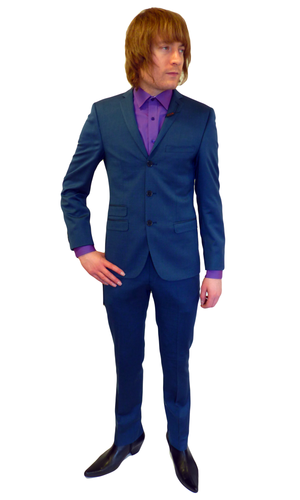
The sleek and slim fit style of the classic Mod 3 button suit is a staple of the modernist era. This Ben Sherman Camden Slim Fit Suit is a striking Retro incarnation - Typically Mod and an Atom Retro bestseller. Available in a multitude of colours with more styles to come. Seen here in Bright Blue.
Buy Now
THE GIBSON 'VINNIE' MENS OVERCOAT
For classic Drainpipe Jeans, the stylish Madcap England 'Cavern '59' combines Fifties Cavern Club era styling, Sixties Mod charm with a contemporary Indie edge - A Retro Clothing icon and a very versatile garment - Part of the Mens Clothing collection from Madcap England.
Buy Now
COMMON PEOPLE 'DYLAN' SHOES
These Common People 'Playboy' inspired 'Dylan' blue suede shoes have an authentic thick crepe sole. A genuine Sixties Steve McQueen style in real Dandy Mod colour way, 'Dylan' are the perfect stand out shoes to compliment any Retro outfit.
Buy NowTo view the full range of BEN SHERMAN Tailoring available at AtomRetro click Here! For other Mod Tailored styles please feel free to visit he Atom Retro 'Suited and Booted' section of the Mens Clothing site.
A cool pair of Retro Sixties style Winklepickers will help you achieve a desirable Mod look and with a host of styles and shapes available to buy at Atom Retro, you are really a bit spoilt for choice! Here's a small selection.
Classic Black 'Veer' Winklepickers by Paolo Vandini also available in Suede.
The Winklepicker would prove to be a style that would become an enduring image of the Sixties Mod movement and we will touch on this in more detail at a later time - We will discuss the impact of the classic Chelsea 'Beatle' Boots and it's cuban heel counterpart, as well as the more extrovert and flamboyant incarnations of the stylish Mod Winklepicker shoe.
In the mean time to view the full range of Retro and Mod Winklepicker Shoes at Atom Retro click Here! ... and for the full range of Sixties Mod and Retro Chelsea Boots click Here! For the more reserved and intellectual Beat Generation style, look no further than the luxurious and classic Retro Mod John Smedley range that includes the following Mod Roll Neck Jumpers - John Smedley 'Belvoir', 'Pembroke' and 'Richards' and not forgetting the Mock Turtleneck style of the 'Oxford' John Smedley pullover. See Below.
A brand synonymous with Sixties and Mod Culture, the full Mens John Smedley range can be viewed Here and the womens range Here
Remember, stay tuned for the next installment in the Atom Retro Mod Clothing Guide.... Coming soon! Featuring an insight into Boutique fashion of the Sixties and it's impact on growing Mod culture. Don't worry though because we will return to the early part of the Sixties Mod movement (1960 onwards) in a later chapter!
Part 3 of the Mod Clothing Guide.
Inside the Sixties Boutiques...
From Biba's postal Boutique to Big Biba and Big Business.
As promised this chapter is set to explore the intricate interiors of some of the Sixties most iconic shops and boutiques. Looking into the roles of key players within the fashion industry and celebrating their inspiring stories and innovative ideas. Kicking off with the tale of Barbara Hulanicki's and Stephen Fitz-Simons famous BIBA store.
From Art College to freelance fashion illustrator to mail order innovator to boutique proprietor. A whirlwind exploration of Barbara Hulinicki's BIBA.
There's always been a certain propensity for the avid fashion connoisseur to acquire designs that their beloved icons so gracefully adorn. Biba's Postal Boutique was the first instance of Barbara Hulanicki pursuing avenues that explored the desirability of the 'As worn by' celebrity culture. The ability to affordably design and dress fashion fans in styles akin to icons such as Bardot was to prove a lucrative career choice. BIBA's Postal Boutique unleashed a suitably chic Retro gingham dress to the Sixties scenesters via an advert in the Daily Mail (May 1964). In less than one day the response was emphatic, with four thousand orders taken and the total eventually reaching a staggering seventeen thousand. Fast forward less than 4 months and BIBA's first store was all set to open. A haven for Mod Girls with boundless Retro wares, Mod Clothing and raving sounds!
Barbara Hulanicki was always keen on developing Mod silhouettes into a more three dimensional style. She pictured her happy clients looking just like the designs she had originally drawn...
Extravagent, decadent and the place to be, The first BIBA store opened in Kensington in September, 1964. A walk in cat-walk with Retro, Art Deco influences and lavish scenes, BIBA set out to be style, substance and a hip hangout. A beacon of celebrity couture and Mod chic styles, BIBA's reputation rapidly grew. A rock and roll and celebrity haunt, the BIBA interior was a stage, complete with it's own wardrobe designer, a plethora of willing performers and artistes as well as a confident crowd of affluent, young clientele. Delightful Mod clothing in clever and innovative colour palettes set against a backdrop of Victorian furniture and Retro antiques caused a stir amongst the customer base of mainly women under the age of 25.
Clever marketing campaigns saw clothes draped on hat stands or period furniture and accessories neatly displayed in bowls. The frenzy for the latest BIBA designs was immense and the shop would be over-run by eager customers. BIBA witnessed unequivocal growth from an entirely unwitting viral marketing campaign that saw brand recognition surge through unbridalled word of mouth, afterall even the staff formed part of BIBA's loyal customer base. A certain air of sophistication and authority could be assumed by working in a place of such social stature. The instant understanding of what customers wanted, their desire to dress like icons and idols of stage, screen and music made BIBA a hot spot for young society girls, but moreover the affordable prices made their dreams come true and thankfully not at the expense of their bank balance.
For just 10% of the average weekly wage, BIBA could kit girls out like the stars. Even the stars themeselves got in on the action, gratefully snapping up the latest new and trendy threads from the boutique BIBA. The relatively new concept of fast fashion it could be argued was born in the Sixties. What the Mod Girls, Cathy McGowan et al dressed in on Friday's Ready Steady Go would be on the shelves of BIBA boutique in the form of an affordable replica first thing Monday morning.
Building the BIBA brand
Hulanicki and Fitz-Simon had enormous demand for their wares, but their market reach had the potential to be far greater. Ideas of a grander shop and the re-introduction of the BIBA mail order service would open the BIBA enterprise up to customers who lived outside of London. The bold Retro designs and vibrant colours combined with the ever recognisable BIBA label began to create such a buzz that every discerning fashion lover wanted to be seen in a BIBA garment, a feeling of owning an exclusive design from an exciting boutique and just how happy it could make one feel.
From Abingdon to Kensington Church Street and the second BIBA store.
In 1966, BIBA mark II opened on Kensington Church Street and just the same as the first store, but this time on a wider scale the demand for their designs was unrivalled. Barbara Hulanicki herself recounted in her book A to Biba an interesting story regarding the birth of the Mini Skirt. Shortly after the grand opening in Kensigton Church Street, some new stock of skirts had arrived. Made out of stretchy jersey fabric the skirts had shrunk significantly since leaving the manufacturers to the eventual arrival at the store.
...'I nearly had a heart attack. The skirts were only 10 inches long. "God," I thought, "we'll go bust - we'll never be able to sell them." I couldn't sleep, but that little fluted skirt walked out on customers as fast as we could get it onto the hatstands.'
The enthralling sound of the latest music echoed through the BIBA stores, the faster the song, the seemingly faster the interaction between customers, clothing on the shelves and one another would be. A team of dedicated Mod Biba girls would gladly assist and serve the merry band of Mod customers the latest fashion trends. Retro decor enhanced by elaborate clothing designs in all styles, shapes and sizes. A loving sentiment to all things BIBA, the acknowledgement of grand style at great prices and the anticipation of next weeks fashions, today would continue to be the cornerstone of the BIBA ethos and attitude. These little Retro look boutiques were in tune with the beat of swinging London, their finger on the pulse of fashion.... and from the smallest nucleus, it's humble beginnings, BIBA was about to undertake it's most ambitious venture yet.
Big ideas and Big BIBA!
Roof gardens, resident flamingo's, Andy Warhol's condensed soup shelving... an Art Deco interior enhanced by elaborate designs. This is not a snap shot of the intricate workings of Salvador Dhali's mind, but an actual representation of features within the Big BIBA Emporiums interior. From it's Art Deco fascia, the former Derry and Toms seven storey department store on Kensington High Street was an instant draw for BIBA founders, Hulinacki and Fitz-Simon. Well placed with plenty of foot fall, coupled with the desirable location within London's busy Kensington district meant that BIBA could open it's doors to it's growing numbers of clientele and in theory cater for them all. Fashion, food, homeware and entertainment all under one roof and in BIBA's own imitable style... The Big BIBA Emporium was born!
A massive renovation that cost in excess of £1,000,000 saw the department store transformed to conform to BIBA's idiosyncratic design and compliment the hand picked, versatile product range.The first floor attempted to smooth the gap between the move from small boutique to big store layout with a familiar Edwardian vibe, polished furniture and Victorian hat stands, gracefully adorned with attire and accessories. Other floors had their own themes and personal signs imitating the classic BIBA motif and elegantly describing the goods therin. There was a Childrens floor, a Menswear floor, food hall, homewares and a book store. The decadent Thrirties Art Deco theme attempted to re-create the original facade and interior of the fine period building.
The Fifth floor Rainbow Room restaurant ushered in a new era in BIBA entertainment, the concept of a whole, fulfilling lifestyle available under one roof. BIBA's intriguing idea of not showcasing it's products within it's window displays was a further artistic attempt to lure and captivate customers into the fairytale world of BIBA.
The decline and demise of the Big BIBA Empire
The move from 9,000 square foot premise to a whopping 80,000 square foot Retro inspired emporium was not without it's problems. Since it's opening in 1973 Big BIBA was under pressure. Opening it's doors in the midst of a recession, giving a temporary boost to the local area, Big BIBA would would eventually succumb to the difficult economic circumstances itself. British Land's* brush with the property crash proving the final straw. It's worth noting that Hulanicki had already distanced herself from the demise of the brand and left citing creative difficulties some time earlier. Big BIBA closed it's doors for good in 1975. Huainicki's amazing BIBA story eventually ended with the sale of the brand to a company with which she had no connections in 1977. The scrutinising press, the flamboyant excesses of each grandiose floor space and the stocking of a mammoth department store had posed obvious financial risks and a huge burden on the creative minds of Hulanecki and Fitz-Simon.
Whilst initially the reaction of the public was in the main positive, the Big BIBA Emporium had become something of a museum featuring unusual objet d'art. Crowds would flock to view, but not necessarily purchase the latest BIBA designs and offerings. Under increasing pressure from backers, Hulinecki began to tire of the beaurocracy involved within the increasingly complicated group structure.
"Every time I went into the shop, I was afraid it would be for the last time."
In 1969 chain store Dorothy Perkins had bought a 75% stake in BIBA, offering finacial backing and freedom of creative control to Hulinecki. Thus Biba Ltd was formed. In 1973 Dorothy Perkins was bought out by British Land, just prior to the opening of Big BIBA. Hulinecki would later accuse British Land of running the BIBA arm of it's business down to protect other parts of its business empire.
The BIBA cosmetics range remains big business to this day, the iconic Mod clothing brand lives long in the memory. An icon of Sixties Mod culture and a beacon of pure Retro and Vintage style.
In keeping with the BIBA Boutique and Emporium philosophy of good quality, affordable attire, Atom Retro has put together a little collection of Mod and Retro Clothing with a cool Vintage Sixties appeal.
Part 3 of the Mod Clothing Guide cont
This is the in place to be!
A figurehead of British fashion, a lost icon rediscovered and perhaps previously overshadowed by his contemporaries. The name John Stephen, the legacy Carnaby Street.
John Stephen's success in the Mensewear arena more than matched the impact of Quant and Hulanicki on Womens fast fashion in the Swinging Sixties. Whilst not always being recognised in such high esteem as some of his peers, John Stephen is gradually coming to prominence, now regarded as one of the Uk's most innovative and inspirational fashion entrepeneurs.
Moving from his native Glasgow to London at the age of 18 in 1952, Stephen found work within the Military Department at Moss Bros in Covent Garden. Here he honed his talent as a tailor, studying and practicing in traditional tailoring. Soon, Stephen moved on to find work at avant-garde and pioneering menswear shop Vince Man shop situated in Newburgh Street, London. Here, John Stephen saw first hand the huge potential and indeed the longing of the gentleman customer for a neoteric Fashion Menswear Boutique. One that expressed freedom through fashion, a modern outlook and that was in tune with the youth of the today and their social scene. As John Stephen was already part of this scene he already had a key understanding of customers wants and desires. Using Vince as a stepping stone to further his fledegling fashion career, Stephen worked double shifts as a waiter and at Vince to save up enough money.
In four short years, John Stephen with his new business partner Bill Franks was ready to embark on his first foray into shop keeping and success as an entrepeneur. The shop, opened in 1956/57, a first floor unit in Beak Street was short lived, not due to a downsturn in sales, but a fire at the premises, forcing focus to shift to London's as yet unheard of Carnaby Street. Having already acquired the use 5 Carnaby Street thanks to his kindly Beak Street landlord, Stephen's empire was steadily growing.
Peacock Revolution to Pedestrianisation - The Carnaby Crusade!
The year 1958, the setting Carnaby Street, a drab back Street in London's Soho district. Painting his shop a incandescent shade of canary yellow, playing the latest hit records and producing short runs of jeans, shirt and jackets. This fast fashion approach facilitated rapid turnover and is a business model that has been emulated a thousand times over. Growing up with the burgeoning social scenes and with his finger on the pulse of mens fashion, Stephen was to be a forerunner and key player in the mod subculture his clothes would come to define. Within six years, Carnaby Steet, thanks to John Stephen was transformed from dreary back street to busseling epicentre of Swinging Sixties London. From the iconic and original His Clothes, Stephen also owned boutiques named Mod Male, Domino Male and Male West 1.
Stephen had a knack for coming up with fresh and 'of the moment' Mod styles with a limited edition ethos that saw lines deleted no sooner had they arrived in stock and flown out the door. This avoidence of repetition in lines meant Stephen's reputation and dominace in Menswear was guaranteed. Dressing a lifestyle with attention to detail and knowledge of the here and now enabled Stephen's empire to flourish into a Menswear monopoly. Soon, Stephen would occupy 15 shops in Carnaby Street alone. He presided over an era forever engrained in fashion history, positioning himself as king of Mod fashion and Mod Clothing, that would also open up the door to contemporaries such as Lord John (Warren Gold), Take 6, Gear, Mates and allowed notable tailors such as Dougie Millings to stamp their mark on the Mod and music fashion scene both in London and afar. Stephen's flamboyance and flair for Mod and Retro Clothing also paved the way for other fashion visionaries such as John Pearse, Nigel Waymouth and Sheila Cohen's 'Granny Takes a Trip' and Ian Fisk's and John Pauls, 'I Was Lord Kitcheners Valet'.
Such was Stephen's affinity with the Mod scene, the likes of Mod icons, The Who, The Kinks and The Small Faces would all dress in the Mod attire from one of Stephen's many boutiques.
"Carnaby is my creation. I feel about it the same way Michelangelo felt about the beautiful statues he created."
From His Clothes to Her Clothes.
Paying careful attention to the desires of Mod Males, Stephen would tailor his Mod Clothing packages to incorporate specific detail. He pioneered the use of triple and double button sequences on Mens shirts, incorporated Psychedelic Retro paisley patterns on shirts and ties and also manufactured collarless Mod suits, which he first introduced in the late Fifties, a few years prior to the famous Beatles (Dougie Millings designed), Piere Cardin inspired collarless suits.
John Stephen had found a unique way to offer contemporary Mod Clothing at affordable prices. A passer by could count the money in their pocket and realise that the eye catching piece in the window of His Clothes was within their budget. Regency Dandy attire at reasonable rates - a must have have for any discerning Mod Clothing connoisseur.
In 1967, Stephen added womens clothing to his Mod oreintated repertoire, opening shops such as 'His N Hers' and 'Tre Camp'. Once again anticipating hot styles and applying the same innovative approach to designs, John Stephen was easily able to attract a female following to his previously male orientated boutiques. Audacious Psychedelic prints on classic Mod shift dresses, Stephen also embraced the lates Sixties Kaftan culture with outandish oriental inspiration to tunics, shirts and accessories. Mod mini's with mad prints were perfectly suited to the Dandyist fashions found in the male counterpart boutiques. As his shop declared, this was a real 'His 'N Her' story. Famous celebrities including screen icons Elizabeth Taylor and Marlene Dietrich were even sporting John Stephen Mod inspired womens attire. Stephen's androgenous themes cleverly crossed over from womens to mens fashion. Coupled with this, the direction of store layout's could easily cater for a myriad of flamboyant tastes and be quickly adjusted to reflect the latest trends.
The times they are a changin'.
By the lates Sixties, the Mod subculture Stephen's designs epitomised was changing. Stephen realised this and began developing new ideas to encapsulate the changing fashion trends. With links to football manifesting itself in the form of advertising hoardings at the Mexico 1970 World Cup, Stephen was attempting to broaden his market reach and scope. Stephen would even have franchise agreements in place in Russia and the USA.
As the Seventies and a new decade dawned, Stephen's business model had been replicated on London's busiest high streets. Carnaby Street once a hub for Mods and Mod Clothing was now merely a tourist haunt, a shadow of it's former glory. Stephen realising this decided to branch out and opened a wholesale arm to his operations that included a factory for clothing manufacture in his native Glasgow. This factory would employ in excess of 100 people.
The end of an era and a new dawn...
John Stephen floated his company in 1972, but after a series of leaner years and a downturn in fortune, Stephen sold the brand and ceased trading under his name in 1975. Stephen would then go on to re-invent himself as Francisco-M, focusing on cutting edge fashion with a continental influence, inspired by the fashions of Italy and France.
In 1975, amidst the closure of his Mod related operations, the V&A museum in London acquired John Stephen's complete archive of works. This is held by the V&A costume department and to this day a number of retrospective exhibitions have taken place to celebrate his work.
As a further accolade, John Stephen was commemorated with a blue plaque on Carnaby Street to celebrate his achievements in transforming the street into a mecca of Swinging London, an icon of Mod culture and of course Mod Clothing. After all, His Clothes was the first fashion boutique to open down Carnaby Street all those years ago in 1958.
From the 'Peacock Revolution' to dandy Mod and Edwardian fashions, John Stephen put his sartorial stamp on the Swinging Sixties, Carnaby Street and Mod Clothing. A vanguard of young Mods had Stephen to thank for allowing them to ditch the staid and tired threads of their fathers and and dress impeccably, with originality and outlandish Mod flair. His Clothes signalled the start of something special, the start of a Mod revolution and the start of a whole new concept in Mens fast fashion.
The Carnaby Collector
As an intersting sign off, Atom Retro has picked out a few Carnaby Street and Stephen era influenced garments in an attempt to reflect Carnaby Street and John Stephen style. Some Mod Clothing gems, a Retro Clothing archive of suitable dandy attire, inspired by 'The King of Carnaby Street' John Stephen.
Let us begin with the Dandy-esque, Edwardian frock coat, the famous 'In Crowd' and 'Rare Breed' Jackets by Madcap England. Two Mod Clothing classics and an Atom Retro staple for quite some years. Avaialble in different fabric variations from the classic cord to a more flamboyant velvet version. Sublime Retro Clothing that is well suited to the John Stephen era of Carnaby Street Mod Clothing.
Next in line, it's the West One Leather Jacket, once again by Madcap England. A name inspired by one of John Stephen's boutiques and with a certain John Stephen tailored Mod flair. Another Retro Clothing classic that has been a real hit on Atom Retro. Available in two colours black and brown!
Another of John Stephen's best sellers was of course the hipster trouser which Atom Retro has in abundance in the form of cool and classic Hipster Flares (in both cord and denim). There's also the odd bootcut flare in stylish Elephant Cord to cast an eye over too! Retro Clothing staples and in tune with the John Stephen Carnaby Boutiques! Atom Retro also offer a more flamboyant range in Hispter flares with their striped 'Holy Roller' Jeans and 'Duke' Snap Stud Flares.
Finally, to round things off let's look at something for the ladies. Retro Mod shift Dresses with bold Psychedelic Sixties prints for that ultimate Mod Girl, John Stephen inspired look. Typically audacious attire, the likes of which would not look out of place gracing the window displays in the 'His 'N Hers' or 'Tre Camp' Boutiques.
This classic paisley ruffle dress is both affordable and striking. Vibrant Psychedelic Sixties paisley combined with an Edwardian Dandy style ruffle. Retro Regency influence to create a Mod Clothing masterpiece. Avaialble in two colours red and navy.
Tune in soon for Part 3.3 of the Mod Clothing Guide. This chapter will concentrate on the long lasting legacy of the one and only Mary Quant.
Mary Quant's Bazaar
A life leading up to Bazaar...
Born in Blackheath, London to Welsh Parents, Mary Quant finished her studies at Blackheath High School and went on to study illustration at Goldsmith's College. Upon finishing her course, Quant took up a post as an apprentice couture milliner, whilst also taking a pattern cutting class in her spare time. It was her experiences during her apprenticeship that led Quant to realise that fashion shouldn't just be reserved for the upper classes, but should also be accessible to a younger, less priveledged clientele. Quant surmised that at the time fashion simply wasn't tailored to the youth market. Inspired by memories from childhood, images of Chelsea Beatniks and flamboyant dance outfits, Quant was to asssume the mantle as a pioneer of youth fashion. Teaming up with her husband and Business Partner, Alexander Plunkett-Greene whom she had had met whilst studying at Goldmsith's College and Archie McNair to take on accountancy, legal and commercial aspects, Quant plotted a fashion revolution that would begin at 138A Kings Road, London.
The beginning of a Bazaar World...
1955 was a busy year... No sooner had she started her apprenticeship in millinery, Quant was preparing to embark on her own fashion adventure. Her very own Clothing Boutique along The Kings Road. A £5,000 cash injection, courtesy of Greene (acquired from an inheritance) had allowed them to rent Markham House. The first floor of which would be allocated to the iconic Bazaar boutique. Also at this time a chic five petal daisy motif, a seed that would grow into an icon of the Swinging Sixties era and a symbol of Mod Culture - a stylistic hallmark to usher in the embryonic world of Bazaar was born. Quant carefully selected lines of clothing to sell in Bazaar and straight from the word go sales flourished. With shelves left empty on a daily basis, Bazaar's problem it would seem was not buying enough stock... or was it that the margin they were making was less than adequate, at least compared to other local retailers...
...'it was no wonder we did such a roaring trade the moment we opened. The shop was constantly stripped bare-sometimes we hardly had enough to dress the window because we never bought enough of anything'.
Mary Quant, dismayed at the lack of inspiring garments and wares with which to furnish her shop, decided to literally take matters into her own hands. The clothing landscape of London was set to change forever.
The Mod era and the Chelsea Look!
With a small manufacturing set up, a factory out of her own home, Quant would sew dresses through the night to sell in Bazaar the next day. Hiring a dress maker to help out during the day, Quant's aim was to create the right clothes for the fashion conscious young female. From here the innovative and conceptual Mod designs would begin to come into fruition. Quant would later credit Mods as a major source of inspiration. Her designs were often simple, tunic and shift dresses, easy to wear and with special attention paid to colours, patterns and fabrics. Acknowledged as being the first to use PVC in clothing, recognised for her use of striking colours in pantyhose as an accessory to both dresses and knitwear, Quant's vivacious and sexy designs were soon the talk of the town. Quants work with *Butterick's, a prominant name in sewing patterns would see some of her designs sell over 70,000 units. Her clothes combined simple shapes and bold colours, the very embodiment of young womens fashion. Influenced by pop culture, Quant's designs were the epitome of swinging Sixties London. From her very own Vidal Sassoon Bob hair cut, Quant was beginning to position herself as Mod Girl and her wares as Mod essentials. Cleverly co-ordinated Mod Clothing such as pinafores, laced with colour and layered over simple tops, colourful accompaniments to match knitwear and accesories such as PVC collars to accentuate style and of course the most iconic of Quant' Mod Clothing innovations, the Mini Skirt! ... a trademark of the Chelsea Look and the Swinging Sixties Mod era.
The Mini went Massive!
Mary Quant was uniquely positioned at the dawn of a new fashion era, a renaissance in modern clothing that would afford Quant her own chapter in fashion history and folklore. Since the late 1950's skirts were gradually getting shorter, elements of practicality, style and demand of the young female consumer to dress differently. Quant would take these traits and add an element of shock into the mix. Something the discerning Chelsea Girl gladly identified with. Sharing credits with the girls on Kings Road and two other contempories, André Courrèges and John Bates who also experimented with shorter length skirts (though the three did not work together), Quant would develop a cool concept in ladies fashion... eventually going on to coin the phrase Mini Skirt, named after her favourite mode of transport. Quant later suggested the girls who shopped in Bazzar encouraged her to boldly experiment with the length of the skirts. The discerning fashion connoisseurs of the Chelsea Set constantly wanted them shorter and shorter and to accessorise the look with colourful and patterned tights. Quant's radical designs were garnering more and more attention and the Mod Look was about to turn into a Worldwide phenomenon.
Plastic Raincoats, Revealing skirts and Pretty Pinafores...
The creation of a colourful world through colourful garments had made Quant into a household name, a celebrity in her own right. A pioneer of Lades Mod Clothing and fashion, drawing on Vintage and Retro culture and adding contemporary twists to designs. Quant's range of vibrant plastic raincoats, striking shift dresses, Mini skirts and tights were the toast of the Chelsea Set, the whole of London and by now much farther afield. In 1961, she had opened up a second Bazaar in Knightsbridge, an equally successful venture. By the mid 1960's demand was high, the optimism and feel good factor that was taking London by storm, fueled by Sixties Pop culture, Mod fashions and economic prosperity was now travelling overseas, taking Quant's fashion philosophy along for a ride. In 1963, the opportunity to design for JC Penney in the USA meant Mod Clothing that was born out of Swinging London was soon to be explored overseas, a mass market expedition for Quant's innovative Mod wares. JC Penney widely recognised as one of the US's largest retail chains had faith in Quant's ability to overhaul it's fashion house and promote a younger, fresher feel. An up to date image makeover would see Quant's Mod geometric pattern shift dresses, vibrant mini skirts and classic pinafores hit the shelves and become a massive hit with a whole new clientele. Swathes of colour, delightful designs to dress and impress... the Mod look was going global. JC Penney were overwhelmed by the success of the range and as sales soared Quant was inevitably kept on board. In the late 1960's Quant had huge success with her range of colourful hotpants. Another lasting imapact on the landscape of British fashion history. 1967 saw a third shop open in London's New Bond Street.
Not since the 1920's had fashion witnessed such radical change. The social contsructs of wealth and status that had previously dictated fashion trends were overhauled and affordable fashions levelled the playing field. As Quant hereself would later remark:
"Snobbery has gone out of fashion, and in our shops you will find duchesses jostling with typists to buy the same dress."
Quant was awarded with the order of the British Empire for contributions to fashion in 1966. Further accolades followed and in 1990, Quant received an award from the British Fashion Council for her lasting impact in the fashion world.
The end of the Sixties and the movement from Mod Fashion to Household Goods.
Prominence in Sixties Mod culture and fashion gave Quant the confidence to expand her offering. From cosmetics to household goods including duvets, bed linens, carpet designs, toys and more, Quant's influence was widespread. In 1988 she even designed the her very own Mini vehicle decorated with an array of familiar features. The cometics that she had started in 1966, offering wild colours to match her Mod Clothing designs would gain significantly in popularity through the 1970's and 1980's. Later in her career, the Mary Quant brand name was boughtby a Japanese company and Quant finally stepped down as Director in 2000.
*Ebeneezer Butterick created the first graded sewing pattern in 1863, changing the face of home sewing forever. The company he founded would go on to be one of the prominent players in DIY fashions.
As in previous chapters, some select designs from Atom Retro's product portfolio will be on show, to demonstrate a certain amount of Quant flair and to celebrate her lasting impact on fashion. Including Sixties Mod Clothing such as Retro shift dresses, Mini Skirts and colourful knitwear. A collection of Retro Clothing inspired by a legend of British Fashion, Mary Quant.
Lord John, Warren and David Gold.
From Petticoat Lane to Carnaby Street.
Their origins in the busy market district of London's Petticoat Lane where they operated a stall selling Mens suede jackets to discerning fashionistas, Warren and David Gold soon expanded their horizons... Carnaby Street beckoned.
Brothers Warren and David Gold opened their fisrt store in Carnaby Street in 1963. Hot on the heels of the John Stephen led Carnaby Street fashion renaissance, their shop Lord John was perfectly positioned to attract the dedicated followers of the Mod Clothing scene. An uncanny knack of pre-empting the latest fashion trends, Warren and David Gold had a constantly changing inventory of up to date Mod threads with which to furnish their loyal customer base.
In tune and In Time...
Keeping abreast of the latest developments in Mod culture meant the Warren and David immersed themselves in the scene attracting a few famous friends along the way. The likes of The Small Faces had a clothing account there, whilst The Kinks, Brian Jones, The Who and even The Beatles coveted the latest Lord John styles. Fighting their way through mad crowds of Swinging Sixties trendsetters, perfectly coiffed, well dressed Mods and the hundreds of tourists who converged on Carnaby Street customers would pour into Lord John. By now a busseling beacon in one of London's hippest streets, Lord John was decked out with not just tailored continental attire such as suits and rain coats, but with brightly coloured shirts, hipsters, bright coloured knitwear including ski jumpers and a striking array of suede, corduroy and denim jackets. Lord John was fast to adapt and was one of the first boutiques to offer kaftan jackets to the mass market. As with other retailers of the era, emphasis was on affordability, style and innovation and Lord John had a reputation for all three. Here was a shop where famous actors and musicians would vye for the same garments as daytrippers, dandies and Mods. It was one of the first instances of fashion breaking down barriers between status, wealth and position, placing everyone on the same level... as the devilishly and delightfully dressed.
Carnaby Street Rivalry
A bitter dispute with the King of Carnaby Street, John Stephen would make headlines in the early Sixties as Warren Gold accused Mr Stephen of registering a company 'Lord John of Carnaby Street', despite the fact it was clear the name was already in use. John Stephen had argued that he registered the name to differentiate himself from the Gold's brothers boutique after becoming concerned people were believing the two were linked. The feud would last for some time.
A Psychedelic Dawn
By the time of the Summer of Love in 1967, Lord John was already firmly engrained in the fabric of Mod fashion history. Comissioning artist David Vaughan (of famed design team Binder, Edwards and Vaughan), the Lord John boutique was bought to life with the unveiling of the famous and iconic Psychedelic Retro wall mural. One of the most eye catching buildings in the area, Lord John was consistently featured in newspapers and magazines through organic press pieces and a skilled advertising campaign. By 1970 the Gold Brothers owned 8 boutiques. This was expanded to 30 in just a few short years.
What comes next...
Warren Gold still operates as a Mens Clothing retailer from his Big Red Building in Golders Green Road, London. The shop is based on his pioneering Goldrange factory outlet business model that he had perfected with his brother David. Goldrange operated in Petticoat Lane some years previous.
Lord John garments are frequently displayed at the V&A museum in London, a further testament to the Gold Brothers success.
John Simons Ivy Shop.
Another fave hang out for those into their Mod Clothing was the fab Ivy Shop in Richmond owned by John Simons. Originally the store vision was to incorporate an Ivy League, Collegiate and Americana look for fashionable clientele. Dapper gentlemen that envisaged themselves as a Cary Grant, Chet Baker and of course the likes of Paul Newman and Steve McQueen. The Ivy Shop opened it's doors in 1964 and quickly garnered a following of young executive customers and with this followed a deserved and cool reputation.
The Ivy Look was something of a enigma when it first arrived on British shores, originally with US military personel who would attempt to shift odds and ends round the clubs of London. A cool Retro collegiate vibe with such wares as smart shirts, denim jeans and playboy (Creeper Sole) shoes proving to be staple garments. The Ivy Look was all about looking modern, with pared down attire, clean lines... essentially the epitome of casual cool. There was no need for intricacies, bells and whistles.. just a clean, smart image.
Just like Mods, those who had discovered the Ivy Look had an affinity with music. The modern garb of the Ivy Look was perfectly in tune with the Blues scene and Jazz movement as well as prominant feature of coffee shop culture. Mods on the otherhand whilst influenced by the Ivy Look also looked to Italian fashions for their inspiration, and thus delighted in a fusion of Americana and Italian Tailored style. John Simons Ivy Shop was at the heart of the Ivy Look, a Mod Clothing emporium that catered for those who revelled in fresh, contemporary threads.
Prince of Wales Check suits, Dogtooth fabric trousers, smart long collar button down shirts, brogues and basketweave shoes... the refined fashions adopted by Suedeheads opened up a further niche for John Simons. The now established Ivy Shop was central to the fashion revolution of the Sixties. The place to buy American Clothes in England... a sentiment expressed in advertisements circa 1968 that featured both the Ivy Shop and John Simons second store, 'Squire'situated on Brewer Street, London.
Life before Ivy....
Seeing US soldiers decked out in stylish Gaberdine trousers, tailored uniform jacket and finished with shiny leather brogues was the beginning of a story, a vision in sartorial style that would inspire IVY Shop founder John Simons. A career in fashion that started with a position as apprentice window dresser for Cecil Gee. Cecil Gee had managed to carve a niche in nouveau gentlemans clothing, nurturing links with the fledgling modern jazz scene. The Fifties saw Cecil Gee import fine fabrics from Italy and introduce brands such as Brioni, Canali and Hugo Boss to the UK. John Simons acquired a keen interest in the rapdly changing fashion environment, noticing new trends, Italian influence and of course the Americana gear that was on sale at Austin's of Shaftesbury Avenue. Lou Austen was a jazz saxaphonist that played on the Queen Elizabeth Cruise Liner. Making regular excursions to the US, Austen fetched the latest American fashions back home to sell. Austen's success allowed him to live in residency at London's prestigeous Savoy Hotel. John Simons managed to get himself the gig as window dresser at Austen's store of an evening, his main motive being to root the through the extensive range of American inspired Mens Clothing. The seed was sewn and John Simons Ivy Shop was ready to grow.
The Ivy Shop climbs to the top
The Ivy Shop in Richmond is legend, in it's day a haven for Ivy Look enthusiasts, Mod Clothing connoisseurs and young executives about town. A vital cog in the wheel of working Richmond, adding soul and texture to the very fabric of the busy urban landcsape. Whether looking for Wing Tip's, Button Down Oxford Shirts, College Tie and Crombie or opting for a classic Mod mohair suit with 3 button fasten and four to the cuffs, the Ivy Shop was the place to go. Sixties photo shoots featuring a whole host of top bands would feature the staple styles that were available in the UK courtesy of John Simons Ivy Shop. Styles akin to those the high profile A-list stars of the screen such as Paul Newman and Steve McQueen adorned became highly sought after. As was the Kennedey-esque college style. Admiration for attire that embodied the clean cut American Collegiate look was growing not just in London, but also in other metropolitan areas.. Customers would often travel from afar to visit the famous Ivy shop. The Ivy Shop represented a different hang out, a change from the flamboyance of Carnaby Street, the Dandy-esque boutiques, the Ivy Shop was still engrained in Vintage, Heritage and Mod Culture, but in a wholly different way. A well recognised importer of the finest American Clothing brands.
The further works of John Simons
John Simons famously owned the J. Simons Shop is London's Covent Gardens. Opening in 1981 the J. Simons store still prided itself on the same high quality product, iconic fashion brands from the states and of course the iconic Baracuta G9 Jacket, originally born out of Manchester, UK in 1937. John Simons himself is widely recognised as coining the term Harrington, after Rodney Harrington (Ryan O'Neals Character in Peyton Place) who would often wear the Baracuta G9. J. Simons also hand picked a selection of Vintage attire as an alternative option of dress. A sensible strategy aimed at offsetting the price increases witnessed in clothing manufacturing that had risen sharply since the mid-Eighties. J. Simons eventually closed it's doors for the final time in 2009.
Fans of the Ivy Look, stylish Mod Clothing and fine American brands can now find John Simons latest shop situated at 46 Chiltern Street, close to Marylebone High Street.
Before I was Lord Kitcheners Valet
There was most definitely a gap in the market for nostalgia, a glimpse at the grandeur the British Empire, a time fondly remembered, the land of our Victoria. 'Lord Kitcheners Valet' was a porthole for those that sought out Victoriana, true pioneers of Retro Clothing, a voyage that took in Military splendour, objets d'art and various trinkets from the Victorian era. Ian Fisk, John Paul and Robert Orbach were instrumental in bringing the Retro Clothing revolution to prominence. Tapping into Mod Culture, Vintage Couture and the growing Music Scene, these three connoisseurs of Retro fashions cooked up a Boutique that would become synonymous with the Swinging Sixties. Before 'I was Lord Kitcheners Valet' there was never a shop that posessed such a great name and there was a distinct lack of places to precure a military tunic to bedazzle, amaze and take centre stage. The Victorian Dandy image that 'Lord Kitchener' epitomised raised a few eyebrows and captured the essence of an exciting change in youth culture. A haven for Mod Clothing afficionados, Vintage lovers and Retro enthusiasts... oh and rock and roll stars too!
Who could imagine such as fab name...
Ian Fisk thought of the name 'I was Lord Kitchener's Valet' simply because he thought it reflected the wares that they sold. He wanted a name that suggested and represented a bygone era, and conjured up images of Victoriana and Edwardian themes. A nostalgic name for a Retro Clothing and Vintage furniture emporium.
The rapid rise of the humble Valet.
The idea of bringing a hint of nostalgia via furniture and fashion form through sale of Vintage wares to the greater public was an astute observation that although slow to start was soon to become big business. Heralding an era in Military Tunics for the everyman, Mod fashions for all, 'I Was Lord Kitcheners Valet' had a huge slice of luck to help it on it's way.
One fateful day in 1966...
As Robert Orbach remembers in an interview with the V&A Museum…
"I’m sitting there one morning and in walked John Lennon, Mick Jagger and Cynthia Lennon. And I didn’t know whether I was hallucinating… but it was real. And Mick Jagger bought a red Grenadier guardsman drummer’s jacket, probably for about £4-5. They all came from Moss Bros and British Army Surplus...
...So Mick Jagger bought this tunic and wore it on Ready! Steady! Go! when the Stones closed the show by performing 'Paint it Black'. The next morning there was a line of about 100 people wanting to buy this tunic… and we sold everything in the shop by lunchtime."
With a new reputation as outfitters to the stars, 'Lord Kitcheners Valet' success sky rocketed. Other notable famous clients included Eric Clapton who bought a Military tunic just as Cream's debut album was about to hit the shelves. Jimi Hendrix also famously acquired a tunic from 'Lord Kitcheners' as featured in many iconic photographic images.
Anti establishment or merely fashion?
The appropraition of Military uniform and insignia by young hipsters was frwoned upon by some sections of society. Ex-soldiers lamented the lack of respect from the younger generation to those who had fought bravely for their country. Others thought the attire could be construed as anti-establishment and represented a rebellion of youth culture. The reality is that the look was considered fashionable, innovative and with it. The very epitome of cool!
The original Lord Kitcheners Valet opened up at 293 Portobello Road in London's busy Notting Hill in 1964, but was soon followed by 5 other stores. Wardour Street, Fouberts Place, Picadilly Circus, Carnaby Street and one in the fashionable, up and coming Kings Road. The Carnaby Street store was a unit that was rented from Lord John's Warren Gold. A perfect location, close to the famous Marquee Club. In fact it required a person to walk pass the shop to get to the Club. In 1966, a song that affectonately referenced the shop, imaginatively entitled, "I was Lord Kitcherners Valet' was recorded by The New Vaudeville Band.
Sgt Pepper and Lord Kitchener
Peter Blake claimed that the iconic Sgt Pepper's album sleeve was ceoceived when he and Paul McCartney wondered past Lord Kitcherners Valet and were inspired by the scenes and themes in the shop window.
Lord Kicheners Valet lays out his last outfit...
Lord Kitcheners Valet would grace the Sixties and most of the Seventies with it's presence, eventually closing it's doors in 1977. The legacy of this Swinging Sixties legend lives on however. An icon of Mod Clothing, Retro Clothing and Vintage wares.
The roots of the Mod movement began in the late fifties, evolving from The Beatnik and Teddy Boy subcultures that had grown across the USA and Europe since the end of the Second World War. The affluent youth of the late fifties and early sixties found themselves in a unique position. The traditional victorian values were changing, the permissive society of the sixties had started and free from the finacial problems the war had created, now young people had spare cash to spend on luxury items - records, cars and clothes.
The Teddy Boys, or Teds, were the forerunners to The Mods - a movement that used style as identity in the same way The Mods came to. For the first time it became socially acceptable for young, hetrosexual men to be fashion concious and concerned about their appearence. Women's fashion would experiment in equally radical ways; skirt hemlines crept up and up, resulting in the Mini Skirt, while other clothing became androgenous, not so frilly or femine as before.
Saville Row of London, the world famous tailors and suit makers, quickly took advantage of the changing trends. They recreated the 'Dandy' image for The Teds and later, The Mods, with garments such as Drape Jackets and Drainpipe Jeans in the fifties and early sixties, and later the classical Mod Suit.
Drainpipe Jeans
Drainpipe Jeans - extreamly tightly cut trousers, tight to the ankle and tight around the waist, became the must-have article in the late fifties. Already controversial, parents would often disapprove of the look and the 'beat scene' culture that drainpipes had already come to represent. To remedy this, thier sons, unable - or forbidden, to have the real drainpipe trousers, would secretly gradually alter thier regular cut trousers to narrow the leg and make them fit tight to the ankle.
Mens Drainpipe Jeans and Trousers
Ladies Drainpipe Jeans and Trousers
Drainpipes - often now refered to as Skinny or Skinnyfit Jeans in contemporary clothing circles, are a mod staple. Arguably the first icon of the Mod wardrobe, no budding Mod gentleman or lady can be without a pair or two. Atom Retro's range, pictured above, include the classic fifties and sixties designs and more recent indie-mod popular designs - but all are styled after the vintage Mod drainpipes - unisex, very tight fitting to the waist and ankle, with a hipster waist.
The Mod Suit
In 1958, a group of young men in East London began to adopt a new smooth, stylish, sophisticated new look, heavily influenced by contemporary late fifties French and Italian fashions. This was the emergence of the quintessential Mod Suit. Italian styled with narrow lapels, tailoring was the key.
Winklepicker Shoes and Chelsea Boots
To finish the Mod Suit look, Winklepicker shoes and later in the sixties, Chelsea Boots were the Mod footwear of choice.
The defining aspect of the Winklepicker is the elongated toe which comes to a point and giving the shoes their name, by resembling the type of pin used to eat periwinkles. As the Winklepicker became a mod icon, so the designs and styles becames more daring, dashing and sharp. Pictured below are some of Atom Retro's range of Winklepickers - each carefully chosen for their authentic Sixties vintage design and style and made in England. They include the classic Black Winklepicker Shoes in either patent leather or crimped, patterned leather, Paul Weller - Jam -esque black and white 'Carnaby' Winklepicker and the ultimate Mod Winklepicker - White leather.
- 1. 'Spencer' Black Winklepickers
- 2. 'Carnaby' Black and White Two-tone Winklepickers
- 3. 'White Winklepicker'
- 4. 'Winklepicker' Black Patterned Winklepickers
The Chelsea boot also usually sported a winklepicker toe. A slim, tightfitting ankle boot, usually with an elastic band to the side, they were originally made for horse riding with a flat, block heel. Later, the addition of the Cuban heel, a slanted stylish heel that was higher than usual for mens footwear, saw the boots become one of the defining fashion icons of the sixties, as they were adopted by The Beatles, Rolling Stones and many others, (Giving rise to thier nickname, 'Beatle Boots'). Traditionally in Black leather, black suede also became a staple for Mod Chelsea boots - the 'booted' in 'Suited and Booted'.
Atom Retro's bestselling range of Chelsea Boots includes all the iconic styles which are synonymous with Mod style and clothes. In black leather, either with the flat, block heel or the authentic slanted Cuban heel, or in Black Suede Cuban heel - the ultimate mod footwear and perfect to set off any Mod suit or mod look. The range also includes the striking and unforgettable 'Chelsea Dagger' Chelsea Boots - the fusion of the retro classic sixties Chelsea Boot with a modern indie twist - this pair of boots is perfect for the Mod who wants to create an impression - the footwear of choice for any 'Face'.
Harrington Jackets
Baracuta and The Harrington Jacket
Apart from the Mod suit, the other staple coats and jackets of the Mod wardobe include The Harrington and The Parka.
The Harrington Jacket was first made in Stockport, Cheshire by the Baracuta company. Known then as simply the Baracuta or Baracuta G9, it was designed by the Miller Brothers in 1937 who were seeking to make a lightweight short jacket that would be both wind and waterproof. The jacket they came up with was a slim fit blouson jacket with elasticated waist and cuffs. The iconic tartan lining was originally the famous Fraser Tartan, permission having been granted to the Miller Brothers by the decendant of the Fraser clan, Lord Lovat. In the sixties the Baracuta jacket found favour among Mods, as a warm, waterproof jacket and ideal scooter wear. It appealed with its fuctionality - but also its style - smart and dapper - it fit perfectly with the mod look.
It was also made fashionable by movie and rock stars such as Elvis Presley and Steve McQueen, but was its association with Ryan O'Neal that gave the jacket its new name. Named after O'Neal's character in the American soap opera, Peyton Place, the coat would be forever known as the Harrington Jacket.
Steve McQueen Wears Baracuta
Steve McQueen wearing a Natural Baracuta G9 Harrington on the box of the 70th Anniversary Baracuta Limited Edition.
The Harrington Jacket is the casual Jacket of choice for Mods and Retro fans. Traditionally a zip fasten, blouson jacket with elasticated waistband and button collar, the Harrington Jacket has been re-worked and re-styled over the years into many different versions, looks, colours and fabrics.
The original Harrington Jacket was the Baracuta G9 Harrington, which first appeared in 1937, created by the Miller Brothers, John and Isaac. The following year, the Millers were granted permission to use the iconic red Fraser Tartan in the lining of the jacket and the Harrington as we know it began to take shape. The G9 is the classic Harrington Jacket, with the trademark G9 reverse which sets it apart from all other jackets, with its famous 'umbrella' shaped 5 point vent to the back. Baracuta also make a flat backed version of the Harrington, known as the G10 and also a open waist version, the G4. View all Baracuta Harrington Jackets
Baracuta Harrington Baracuta G9 Reverse The Baracuta G9 Harrington - showing the classic Fraser Tartan lining and trademark 'Umbrella' pointed vent to the reverse.
The Baracuta Harrington fit in perfectly with the Mod Ivy look, popular in both the USA and UK in the late Fifties and Sixties, and quickly became the casual jacket of choice. John Symons, owner of The Ivy Shop in the Sixties, coined the name 'Harrington', naming it after a character from American soap 'Peyton Place', Rodney Harrington, who wore the jacket. The Harrington was soon picked up by style icons, worn by Steve McQueen, Elvis Presley, Frank Sinatra and in later years The Clash, Liam Gallagher, Johnny Borrell, Daniel Craig and numerous others.
Later in the Seventies and Eighties and onwards the Harrington's popularity continued with Mods, Scooterists, Mod Revivalists and Skinheads all adopting the look, and making it their own. In the Nineties and Britpop, the Harrington Jacket was also adopted by Indie fans and came back to the forefront of fashion and claiming its place as one of the most enduring Mod garments.
Although, Baracuta made the original Harrington Jacket there have been many different versions, with almost every Mod, Retro or heritage clothing brand producing their own Harrington Jacket at one time or another - so there are many to choose from, and enough to fit every taste or budget.
True Mod Clothing purists will point you towards the Baracuta - and you can't go far wrong - as if you only own one Harrington Jacket, then surely it needs to be the Baracuta?! Classic colours include Black, Natural and Navy, but each season Baracuta bring out new and different versions of this iconic jacket in new fabrics, colours and styles. (Check out the recent Millerain Baracuta Jackets in the limited edition 'Project 137' range!)
Ben Sherman also have their own Harrington Jacket made in a very pure, clean, simple and Mod fashion. A classic design which usually sports the Ben Sherman House Check to the lining. [View all Ben Sherman Harringtons]
Merc London are equally as famous for their Harrington Jacket, and make many new colours and designs each year - each season usually features two or three new takes on the classic Harrington Jacket. [View all Merc Harringtons]
[View all Mens Mod Jackets]
Baracuta Harrington Merc Harrington Ben Sherman Harrington Examples of The Baracuta G9 Harrington in black, Merc Harrington in Blue and Ben Sherman Harrington in Stone.
The Parka
Another functional jacket that has become synonymous with Mod Culture is the Parka. Again, it was the practicalities of the jacket as scooter wear coupled with the possiblity of getting a good looking one on a budget (as opposed to the tailored, made to measure suit or the designer Baracuta Harrington) that gave rise to its popularity. The Parka was further immortalised and inextricably made Mod by the 1979 film, Quadrophenia and the cover of the same titled 1973 album by The Who, depicting a Parka clad Mod on a scooter - but it was earlier, in the late fifties, that the Parka first became a Mod icon.
Ironically, considering the emphisis on need for the new, the tailor made and the impeccably neat for other items of mod clothing, the origninal Parka jackets came from an army surplus store. It had been designed with warmth and protection against the elements in mind, based on the design eskimos and innuits wore, for American soliders in cold climates. Usually fur lined, Parkas are hooded and zipper fastening, in contrast the the anoraks of the time, which were a whole piece, put on over the head. The optional fishtail back of the coat also became iconic of Mod clothing. Originally coming in regulation army green, many Mods of the sixties and seventies would dye their Parka to match the colour of their scooter, in contemporary fashion Parkas are now available in many colours.
Atom Retro's range of Parka jackets, pictured below, remain faithful to the sixties and seventies style Mod Parka. In army or olive green, or black they are big fitting, hooded and different lengths to suit the needs of the Mod who wants it to accompany their scooter, or for the Mod who wants it to complement their Mod wardrobe.
- 1. Parka 64 in traditional army green
- 2. Go!! Parka
- 3. Marka Black Parka
The Pretty Things: Mod Clothing In The Swinging Sixties
In the begining, Mod culture and Mod style was dominated by men. From 1960, women slowly started to become interested in Mod life and by 1963 were setting thier own Mod trends. One of the most important designers of womens Mod clothing was Mary Quant. She had opened her first boutique in 1955, in the Kings Road, Chelsea - another location that became famous for Mod clothing boutiques and designers. Her second was opened in Knightsbridge in 1961. Famous for designing many iconic Mod garments, it is probably the revolutionary Mini Skirt for which Mary Quant will be remembered. Hemlines had been creeping up since about 1958, and in 1963 were just above the knee. By 1965, a hemline five inches above the knee was not uncommon. Quant invented them, but it was the sixties boutique, Biba that put them on to the high street and into Mod fashion.
The Mod Shift Dress was also a staple of any Mod girls wardrobe. A straight dress without a waist, made of almost any pattern and colour, it was the op-art influenced, black and white designs that became the most iconic and perhaps the most Mod styles. This straight style dress removed much of the feminity from a traditional dress design, making it the quintessential Mod womans dress. Most Womens Mod clothing is androgenous in style, or masculinised as male fashions were feminised. Women wore flat shoes, trousers such as the drainpipe jeans that were previously only worn by men and shirts and sweaters that matched or in fact were mens.
John Stephen, often credited as the founder of Carnaby Street, is sometimes overlooked as a key figure in Mod fashion. Carnaby Street became the mecca for Mod clothing in the sixties and was dominated by John Stephen's shops, with 15 along the bredth of it. He began simply in the late fifties, with a boutique just off Carnaby Street, His Clothes in Beak Street. It was to revolutionise Mens clothing. His method was to provide what the male Mods wanted and kept his shops well stocked with the latest trends. His first significant contribution to Mod fashoion were hipster (low waist) trousers, designed for young hetrosexual men (and previously only associated with homosexual men), which were often made of thick 'elephant' corduroy. He also brought floral shirts, fitted velvet jackets and kilts to the fashion forefront. By 1967 he had added womens clothing to his Mod boutiques and had become one of the defining designers of the Swinging Sixties.
John Stephen's Style Thick (Elephant) Cord 26" Hipster Flares (Left 4) John Stephen's Style Denim 26" Hipster Flares (Right 2) John Stephen's Style Cord 22" Flares with Normal fit waist (Right 4) John Stephen's Style Denim 22" Flares with Normal Fit Waist (Left 2) All these Flares in Ladies Sizes.
John Smedley is a clothing company that was originally founded in 1784, and is still going today. However, it is perhaps most reknowned for the sixties mod clothing it produced, namely italian polo knitted tops, polo shirts and turtle necks in cashmere or wool. Crew neck and V-Neck sweaters were also popular, but it is maybe the polo knit, with its button neck that is the most iconic. With its large collar, Mods would often wear it buttoned as close to the neck as possble, in long or short sleeves, and frequently with horizontal striped pattern.
John Smedley Style Polo Shirts
We Are The Mods: The Mod Revival And Beyond
Two factions of male Mod culture had developed by the mid sixties; the mainstream slickly styled Mods and the Scooter Boys Mods. Both groups wore the John Smedley type polo knit (also copied and homaged by the Mod Revival Fred Perry Polos), but it was the Scooter Boys who would usually pair them with plaid or checked trousers, bringing plaid and checks in as iconic Mod styles. Later, in the Mod Revival period it would be these patterns and styles that became the staples of Mod clothing in every area, including footwear and accessories.
One artical of iconic Mod Revivalist footwear is the Dr Martens Boots, also known as Bovva Boots, 1460s or Beetle Crushers, although these were worn by the Scooter Mods of the sixties. Designed originally as an orthopedic shoe, when the infamous Dr Marten broke his foot during a skiing holiday, the first Dr Marten Boots were produced commercially on the 1st of April 1960 (hence the 1460s nickname). Available in black or cherry red leather, they were great footwear for scooter riding, and also useful in the legendary Mods versus Rockers Rumbles.
Another iconic garment of the Mod Revival was the striped Boating Blazer. Made famous by Mod revival bands such as The Jam, the jacket was also a mod icon in the sixties and worn then by icons such as The Who or Brian Jones. The Boating Blazer orginated as a Mod article of clothing from the classic Carnaby Street era, and continues now as a great rock and roll iconic jacket, worn by neuveau mods such as The Kaiser Cheifs.
The Harrington Jacket also came back in fashion during the Mod Revival period, along with a variation on the classic jacket style, the bomber jacket. Again, practical as a warm jacket for riding scooters, the bomber jacket also fitted in with the revivalist style. Retro, but hard-looking enough to pass.
