
Patrick Footwear & Clothing
Born in France in 1892 and embraced on British terraces nearly a century later, Patrick is a sportswear name with rare authenticity. Blending heritage craftsmanship, football prestige and unmistakable 80s Casuals attitude, the brand remains a cult favourite for anyone who appreciates retro sports style with substance.
A Legacy Built Since 1892
Patrick’s story begins in 1892, when Eugène Bénéteau opened a small shoe workshop in Pouzauges, France. His son Patrice later expanded the operation, crafting specialist boots for the town’s football team, work so well regarded that demand soon spread across the region.
In 1945, Patrice anglicised the brand’s name to Patrick, a move that opened the doors to international recognition. By then, the brand had already pioneered several innovations, including the two-stripe reinforcement, an early design that strengthened the boot’s structure and evolved into one of sportswear’s most recognisable motifs.
Innovation at the Heart of the Game
Throughout the mid-20th century, Patrick pushed the boundaries of athletic footwear with breakthroughs such as the Plastifix sole, celebrated for its combination of durability and lightness. Perhaps even more influential was the brand’s early adoption of athlete sponsorship, making Patrick one of the true pioneers of sports marketing long before it became standard practice.
Football Icons: Keegan, Platini & a Golden Era
Patrick’s global profile rose dramatically in the 1980s thanks to two legendary football partnerships.
Kevin Keegan signed with the brand in 1980, sparking a boom in Patrick boots across the UK. His iconic two-striped footwear became the must-have choice for young fans, while the “Keegan King” model cemented the brand’s cult status.
Shortly after, Michel Platini, then Europe’s most celebrated midfielder, joined the Patrick roster. His performances in classic black-and-white Patrick boots elevated the brand’s standing throughout Europe and rivalled the giants of the era.
Together, Keegan and Platini turned Patrick into a defining force of 80s football culture.
Terrace Culture & the Rise of the 80s Casuals
As football terrace fashion evolved in the late 70s and early 80s, Patrick trainers and track tops became essential pieces within the growing 80s Casuals movement. The brand’s clean silhouettes, premium suede finishes and distinctive two-stripe branding resonated with fans who wanted European sportswear that looked as sharp on the street as it did on the pitch.
Patrick became part of the visual language of terrace culture; synonymous with independence, style, and a love of the beautiful game.
The Rio & Dijon: Terrace Classics Reborn
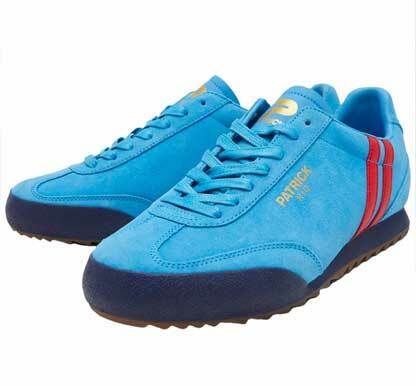
Among Patrick’s most celebrated footwear styles are the Rio and Dijon trainers; iconic silhouettes rooted in the brand’s early 80s archive.
Patrick Rio
A lightweight, retro-inspired trainer featuring soft suede uppers, the iconic two-stripe branding and a classic gum sole. Designed originally for athletic versatility, it became a terrace staple thanks to its clean lines and effortless styling with denim and sportswear.
Patrick Dijon
The Dijon brings a slightly more refined shape with premium leather or suede constructions, T-toe detailing and gold-foil branding. Its understated profile and durability made it a favourite among Casuals seeking a sleek alternative to mainstream sports brands.
Both models continue to be reissued today, connecting modern wearers to the golden age of European terrace fashion.
Patrick Today: A True Retro Sportswear Icon
More than a century after its beginnings, Patrick remains deeply connected to the culture that shaped it. From its pioneering innovations to its association with football’s greatest legends, the brand carries a heritage that still resonates with fans of terrace style, vintage sportswear and the 80s Casuals movement.
With trainers and track tops that honour its roots while feeling timeless and wearable today, Patrick stands tall as one of retro sportswear’s enduring greats, authentic, iconic, and unmistakably original.