

Beginning life in the modest kitchen of 4 Victoria Avenue in 1947, Hornsea Pottery would go on to become one of Britain’s most beloved ceramic producers and an enduring icon of mid-century design. Founded by brothers Colin and Desmond Rawson in the quiet coastal town of Hornsea, East Yorkshire, the business began as a tiny cottage setup, creating Paris-style plaster models and small decorative pieces for the local tourist market. What started as a creative side venture quickly blossomed into a compelling commercial proposition as visitors eagerly snapped up the brothers’ charming souvenirs.
By 1954, demand had grown to the point that the brothers relocated to the derelict Brick and Tile Works at Edenfield on the outskirts of town—a move that marked the beginning of Hornsea Pottery’s transformation into a significant regional employer. With expanded space and improved production facilities, the business broadened its offering and introduced full tableware collections by 1967. By 1974, Hornsea Pottery had become the town’s largest employer, with a workforce of 250 people producing more than three million ceramic items each year from the Edenfield site. Few could have predicted that this once tiny kitchen enterprise would evolve into a household name in British ceramics.
The Rise of John Clappison
The Rawson brothers, both alumni of Batley College of Art, handled most of the early design work themselves. However, by the mid-1950s they had begun to notice the creative potential of a young student at the Hull College of Art: John Clappison, the son of one of Hornsea’s earliest investors. Inviting him into the business proved to be a pivotal moment. What followed was the beginning of one of the most influential design careers in British ceramics.
Clappison may not enjoy the same name recognition as some of his mid-century contemporaries, partly because much of his work was never signed, yet his contributions were both prolific and commercially extraordinary. Over the decades, millions of Clappison-designed pieces found their way into British homes. Though he would later design for other firms, his name remains most closely associated with Hornsea Pottery’s distinctive aesthetic.
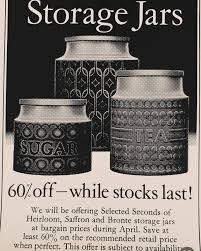
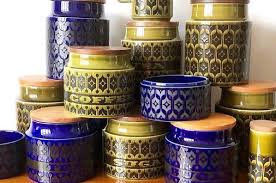
Among his many designs, the Elegance and Heirloom ranges stand out as enduring classics—pieces that have remained highly sought after by collectors thanks to their graphic motifs, warm colour palettes and timeless sense of style. These designs not only helped define the Hornsea look of the 1960s and ’70s but also played a major role in the company’s rapid growth during this period.
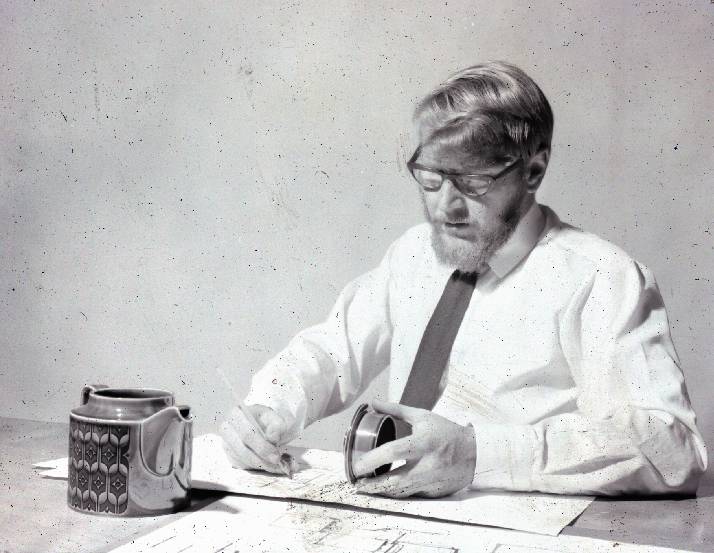
John Clappison at the Hornsea Studio with an example of the 'Hierloom' design.
Expansion, Challenges and Decline
With the success of Clappison’s work, alongside the Rawsons’ leadership, Hornsea Pottery continued to expand both its output and its ambitions. At its height, the company operated additional sites in Lancashire and even Corfu. However, the rapid expansion came at a cost. Increasing financial pressures, stiff competition from cheaper imported ceramics and shifting consumer habits began to take their toll in the late 1970s.
The situation worsened throughout the early 1980s. In a moment symbolic of the company’s struggles, Clappison himself was made redundant on 31 December 1984—a sign that the firm was fighting to stay afloat. Although Hornsea Pottery continued operating in a diminished form for several more years, the financial strain proved impossible to overcome. In April 2000, the bank called in the receivers, bringing an end to more than half a century of British ceramic history.
A New Era of Collectability—and a Revival
Yet Hornsea Pottery’s story did not end with the closure of its factory doors. In the years that followed, interest in the company’s output began to surge, fuelled both by nostalgia for 1970s homeware and by a wider resurgence of appreciation for British mid-century design. Collectors sought out vintage pieces, and the timelessness of Hornsea’s patterns and forms allowed them to fit seamlessly into contemporary interiors.
Among those passionate fans was the team behind Magpie. Believing that Hornsea’s legacy should be preserved and passed on to future generations, Magpie began the process of re-manufacturing some of the pottery’s most iconic designs. Their early collections focused on the illustration work of John Clappison, meticulously recreating his classic stoneware pieces using original designs, archive colourways and traditional glazing techniques. The results were modern pieces rich in authenticity, successfully bridging the gap between past and present.
Today, Atom Retro is proud to present a curated selection from the Magpie × Hornsea range. Each piece comes beautifully packaged in matching gift boxes, making them perfect presents for fans of mid-century style or collectors looking to expand their Hornsea-inspired homes.
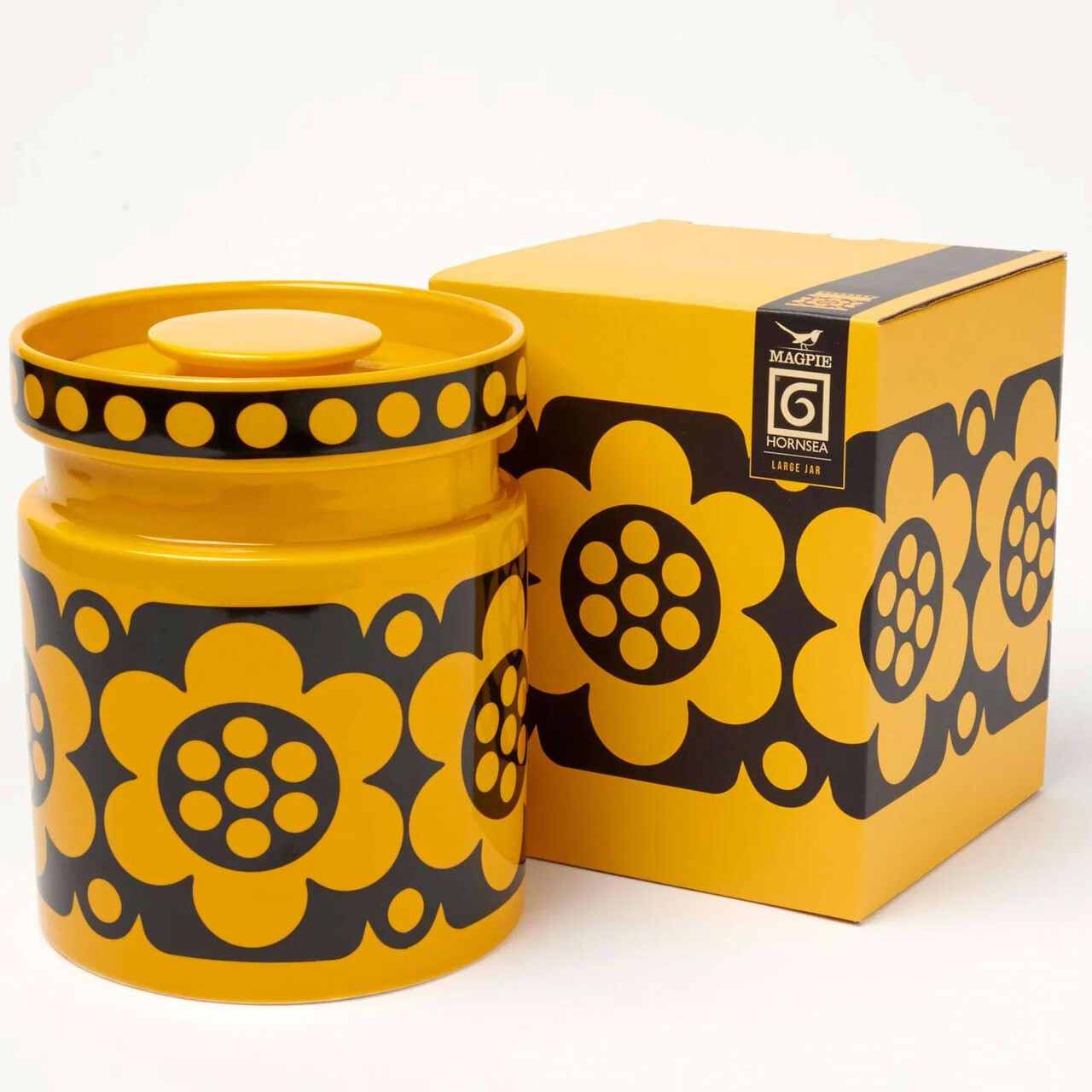
Magpie x Horsea Pottery Geo Flower Jumbo Cookie Jar
Enter Jack Dadd: A New Design Chapter for Magpie × Hornsea
Now entering their seventh season collaborating with Hornsea Pottery’s design legacy, Magpie have expanded their focus beyond Clappison to explore another creative force from the company's later years: Jack Dadd. A freelance designer for Hornsea Pottery from around 1974 to 1977, Dadd brought a distinctly graphic sensibility to the brand—one that resonated strongly with the era’s bold visual trends.
Though not as widely known as Clappison, Dadd cultivated a loyal following thanks to his signature “newsprint” style illustrations applied primarily to mugs and small ceramics. His designs frequently featured zodiac signs, jungle-inspired themes and quirky animal characters—including toucans, owls, lions, tigers, elephants and hippos. Rendered in striking black linework against earthy stoneware tones, his pieces possessed a newspaper-cartoon charm that felt both playful and stylish.
Magpie’s latest range draws directly from Dadd’s archives, offering fresh interpretations of his original artwork alongside contemporary updates inspired by his unmistakable legacy. These new pieces maintain the character and whimsy of Dadd’s work while presenting it through a modern lens, ensuring that his contribution to Hornsea’s history receives the recognition it deserves.
For collectors, this marks an exciting new chapter. For newcomers, it’s the perfect entry point into the world of Hornsea design—one built on craft, personality and a distinctly British sense of creativity.
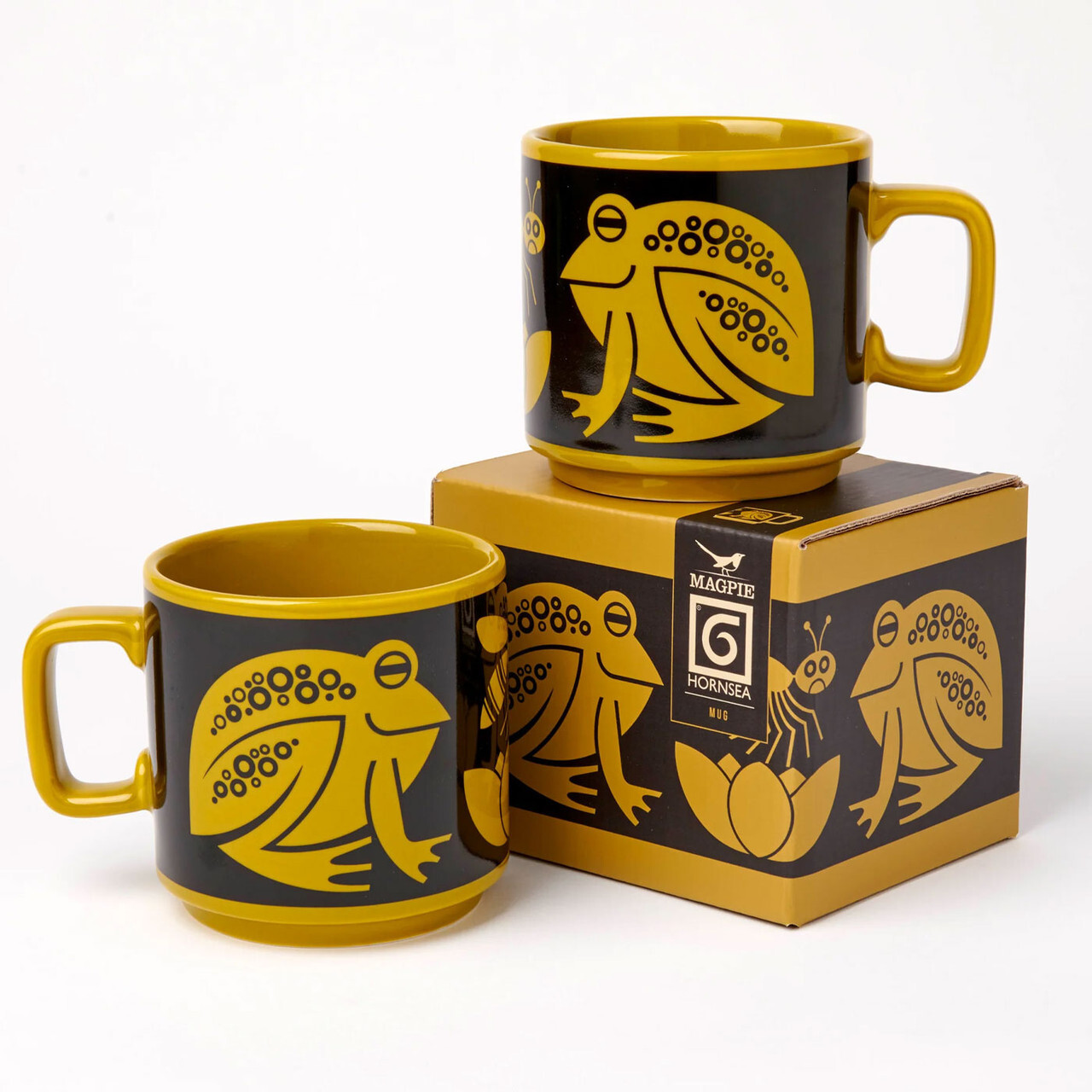
Magpie x Hornsea Pottery Frog Mug
Check out the full Magpie x Hornsea range here.