⭐The Pretty Things: Mod Clothing in the Swinging Sixties.
If music was the heartbeat of the Mod movement, clothing was its visual language. Every carefully chosen garment, every polished shoe and every perfectly pressed collar communicated something about the wearer. Mods didn't simply follow fashion; they pursued style as a way of life.
Emerging from London's coffee bars, jazz clubs and tailoring houses in the late 1950s, the Modernists developed a wardrobe unlike anything Britain had seen before. Influenced by American Ivy League fashion, Italian tailoring, French cinema and contemporary music, Mods assembled a look that was youthful, sophisticated and relentlessly modern.
The garments that defined the movement were rarely extravagant. Instead, their power lay in precision. Slim cuts replaced bulky silhouettes. Clean lines displaced ornamentation. Quality, fit and attention to detail became everything.
Some pieces were adopted for practical reasons, others for style, but together they formed one of the most influential wardrobes in twentieth-century fashion history. From drainpipe jeans and button-down shirts to parkas and Chelsea boots, these are the essential pieces that helped define the Mod look.
Drainpipe Jeans — When the Line Got Sharp
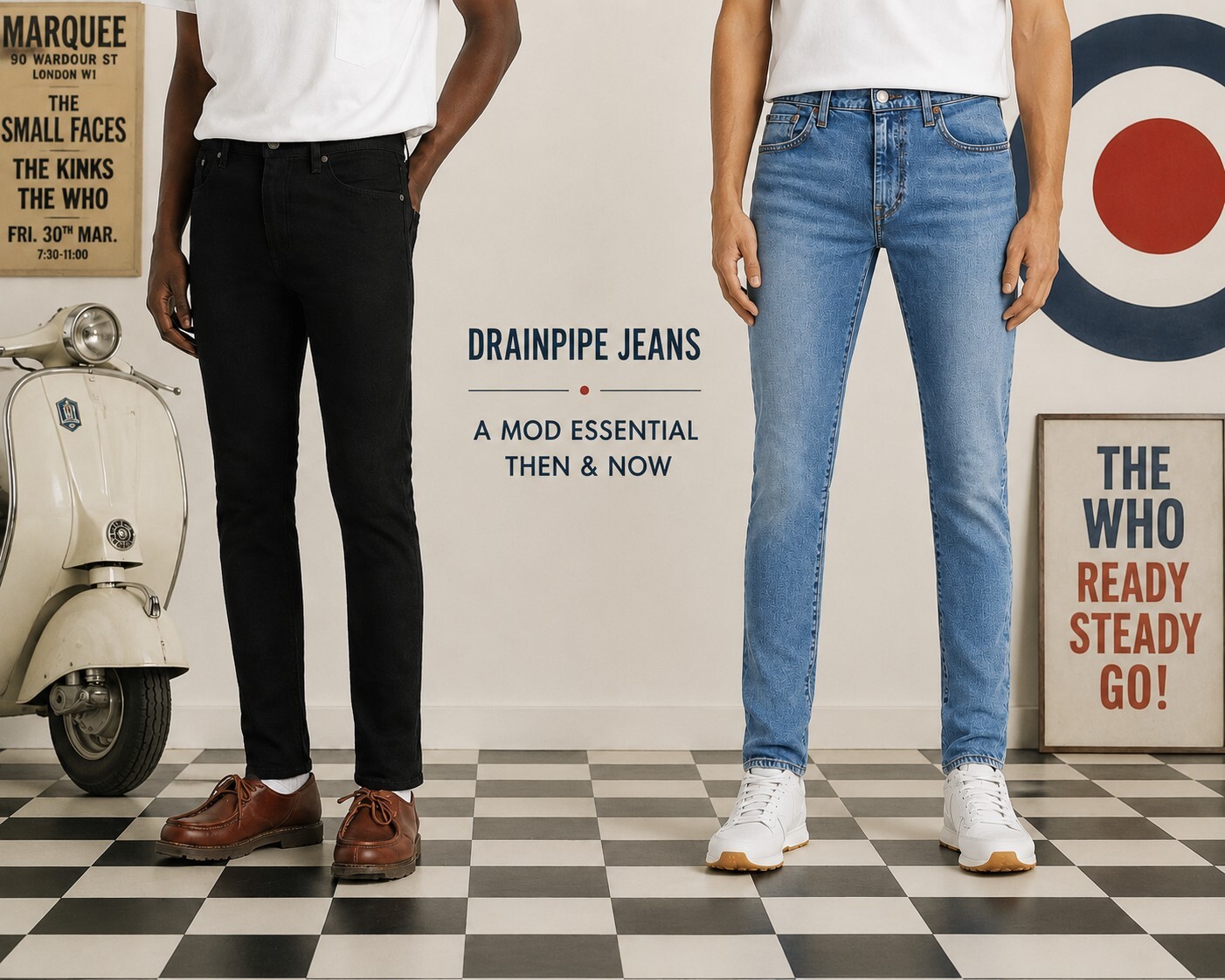
Before Mods were decked head-to-toe in sleek tailoring, it was the trouser leg that drew the first line in the sand. Drainpipe jeans, thin as the name suggests and hugging the leg right down to the ankle, marked a decisive break from post-war normality. Emerging in the late fifties, these tightly cut trousers were a daring uniform for the young and the restless. Parents frowned, teachers raged, and older generations muttered about impropriety, yet the very controversy helped cement their cool.
Unable to buy the real thing, inventive teens resorted to clandestine alterations, tapering wide legs into narrow shafts with hidden stitches and a smuggled sewing machine. By the dawn of the sixties, the look had spread: the uniform of coffee bar bohemians, jazz club regulars and early Mod pioneers. Today, drainpipes remain a cornerstone of Mod styling; unisex, lean, austere, and effortlessly sharp, the blueprint for every “skinny” jean that came after.
The Mod Suit — A New Uniform for a New Generation
If the scooter was the chariot of the Mods, the suit was their armour. The Mod Suit was something entirely new; clean, modern, continental and unapologetically youthful. In East London around 1958, sharp-eyed young men began discarding the flamboyant drape jackets of the Teddy Boys for something cooler and more streamlined: the Italian-inspired silhouette.
This wasn’t stuffy British suiting for bowler-hatted clerks; it was rakish art in motion. Narrow lapels, a shorter jacket length, slim fitted trousers (sometimes cropped), lightweight fabrics and minimal fuss. French New Wave cinema, Fellini films and Italian tailoring houses all played their part. Add a crisp button-down shirt, knitted tie or silk accessory, and a Mod instantly stood out from the crowd; sleek, smart and utterly modern.
Tailoring wasn’t a luxury, it was a necessity. Suits were saved for, customised and obsessively cared for. The cut had to be perfect; the fit exacting. Mods measured themselves against Carnaby Street mannequins or Savile Row influence, then pushed tailoring into new territory. For weekday city streets, the suit whispered sophistication; for weekend clubs and all-night dancing, it sparkled with swagger. In every stitch lay a statement: we choose how we dress, and we dress for the future.
No Mod wardrobe was complete without it. Suited and booted wasn’t just a saying, it was a creed.
The Button-Down Shirt — Cool, Clean and Perfectly Pinned
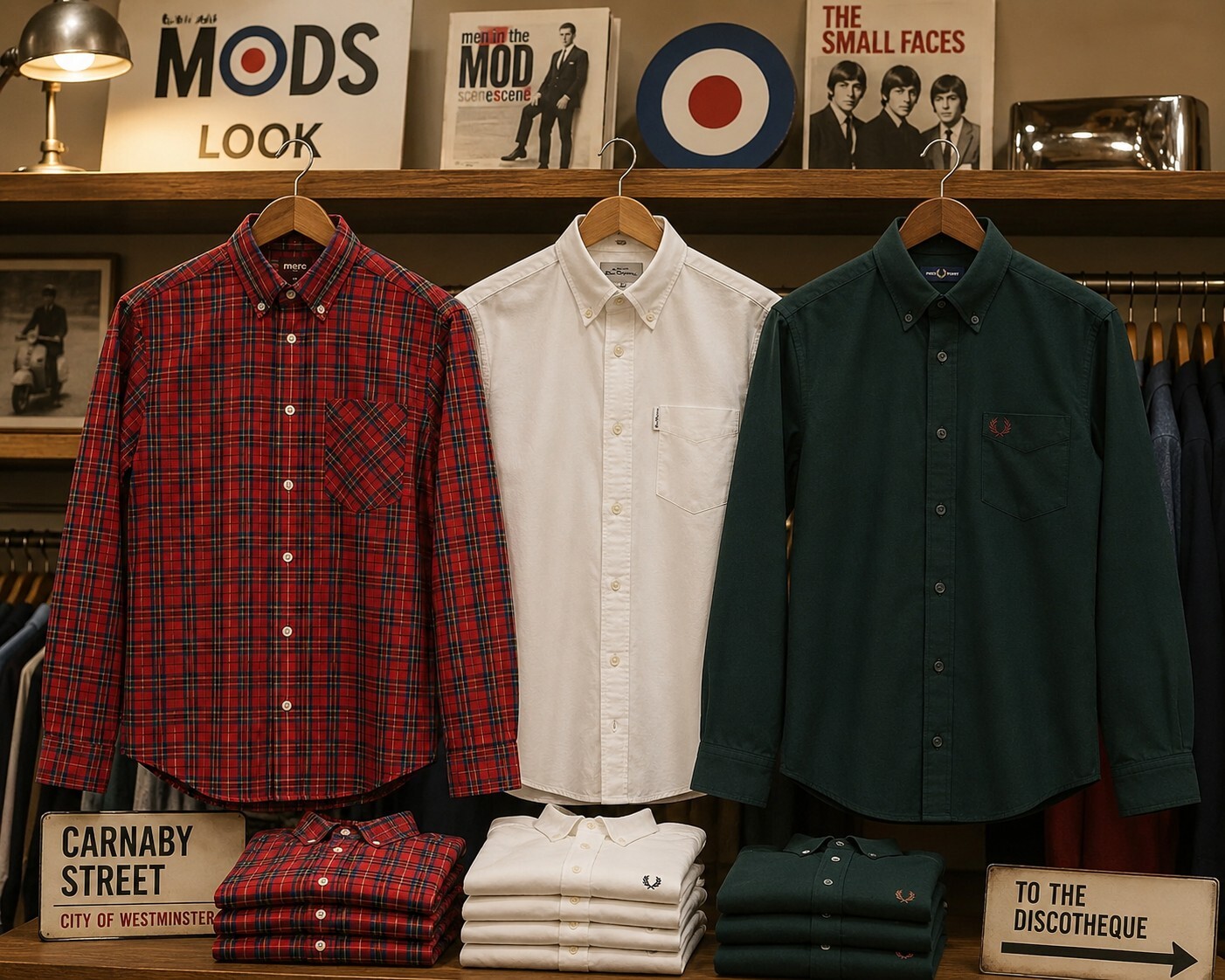
Among the many garments that came to define the Mod wardrobe, none captured the crisp, modern edge of the movement more completely than the button-down shirt. Smart yet relaxed, stylish yet understated, it was the bridge between weekday polish and weekend play, the perfect expression of Mod control and confidence.
Inspired heavily by American Ivy League style, the button-down shirt crossed the Atlantic in the late 1950s, carried by jazz-loving servicemen, enterprising importers and those who tracked down the latest looks in obscure London menswear shops. While Britain’s traditional shirts sported wide collars prone to flapping open, this new style offered something radically different, points neatly secured with small buttons, creating a clean, pin-sharp look that complemented the slim Mod silhouette.
Once Mods discovered the button-down, it became a quiet obsession. Shirts were chosen carefully: perfect collars, just the right length, and always crafted from quality fabrics. Oxford cloth for everyday wear, slim poplin or fine cotton for club nights, and occasionally a dash of check or stripe for extra flair. Colours tended toward ice-cool tones; French blue, bright white, pale lemon, worn beneath a narrow-lapelled suit by night or paired with drainpipes and a lightweight windcheater by day.
The button-down also aligned seamlessly with Mod values: minimal, modern and precise. It was tailored enough to look sharp, casual enough for a scooter ride, and versatile enough to take its wearer from café to club without missing a beat. For many Mods, the collar itself became a badge of style, fastened up for a clean, composed appearance or buttoned down fully in a manner copied from jazz musicians and Ivy League athletes.
As the sixties rolled on, the button-down became ubiquitous. From Soho tailors to Carnaby Street boutiques, from The Ivy Shop to bespoke Mod outfitters, the shirt cemented itself as part of both the everyday and the iconic. It appeared in album photos, film stills, and on the backs of everyone from sharp-dressing city clerks to scooter-riding teenagers burning through the night.
Today, Mods, original and revival, still prize the button-down as a cornerstone of their wardrobe. Its simplicity remains its power: a clean line, a perfect collar, and a subtle nod to the American modernism that helped shape a British subculture. Worn with pride, precision and purpose, it is, and always will be, a Mod essential.
The Polo Shirt — Casual Cool for the Modernist
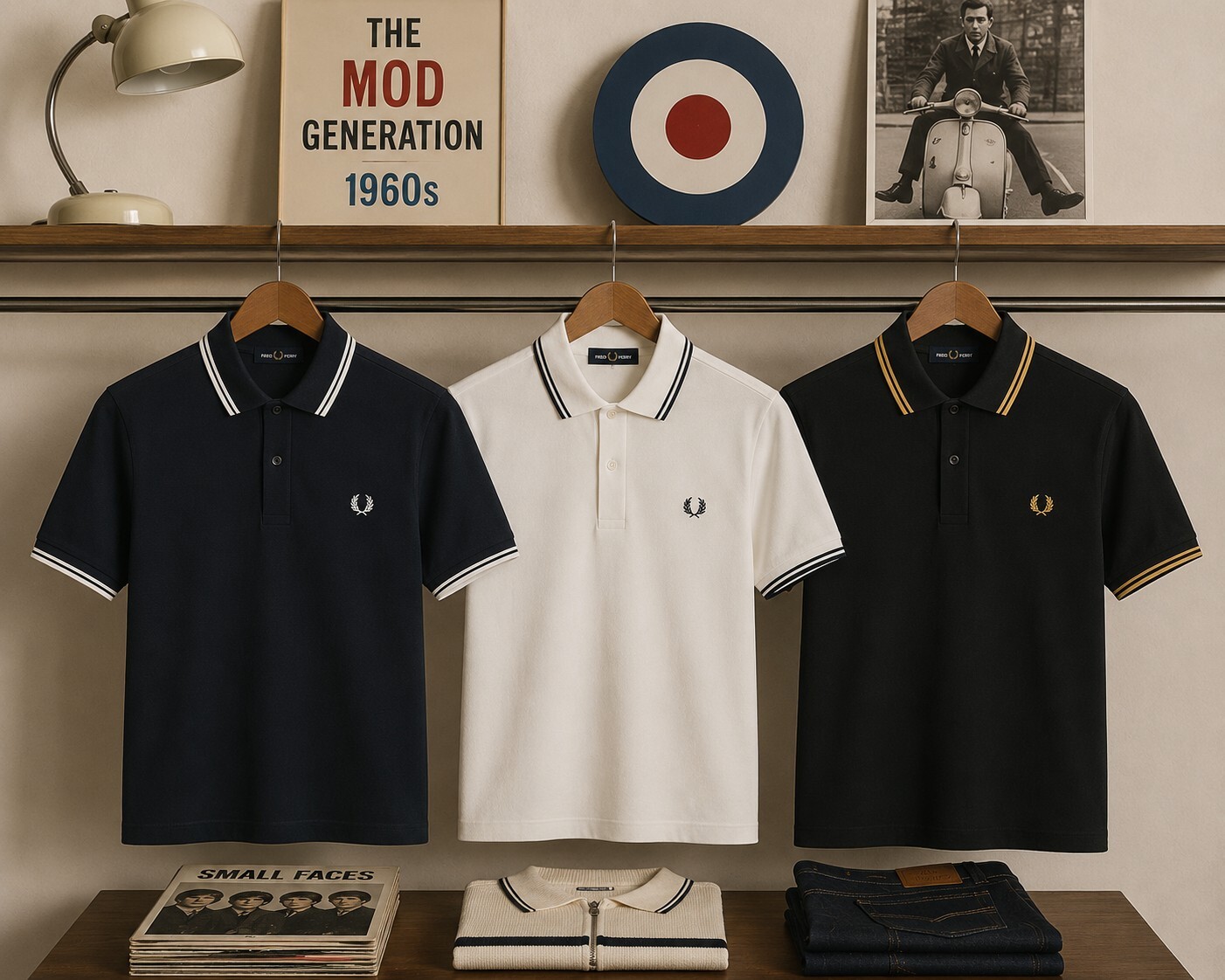
While tailoring formed the backbone of Mod style, there were times when a suit and tie simply weren't required. For those moments, Mods turned to the polo shirt.
Clean, athletic and effortlessly stylish, the polo represented a more relaxed expression of Modernist fashion. Inspired by European sportswear and continental leisure culture, it offered all the neatness of a shirt while remaining comfortable enough for long afternoons in cafés and all-night sessions on the dancefloor.
The key was simplicity. Slim fits, clean collars and a sharp silhouette ensured the polo retained the polished appearance Mods demanded. Worn buttoned to the top and paired with tailored trousers or drainpipes, it became a staple of off-duty Mod style.
By the mid-sixties, the polo shirt had become as closely associated with the movement as scooters and soul records, proving that casual clothing could still be impeccably smart.
The Roll Neck — Modernist Sophistication
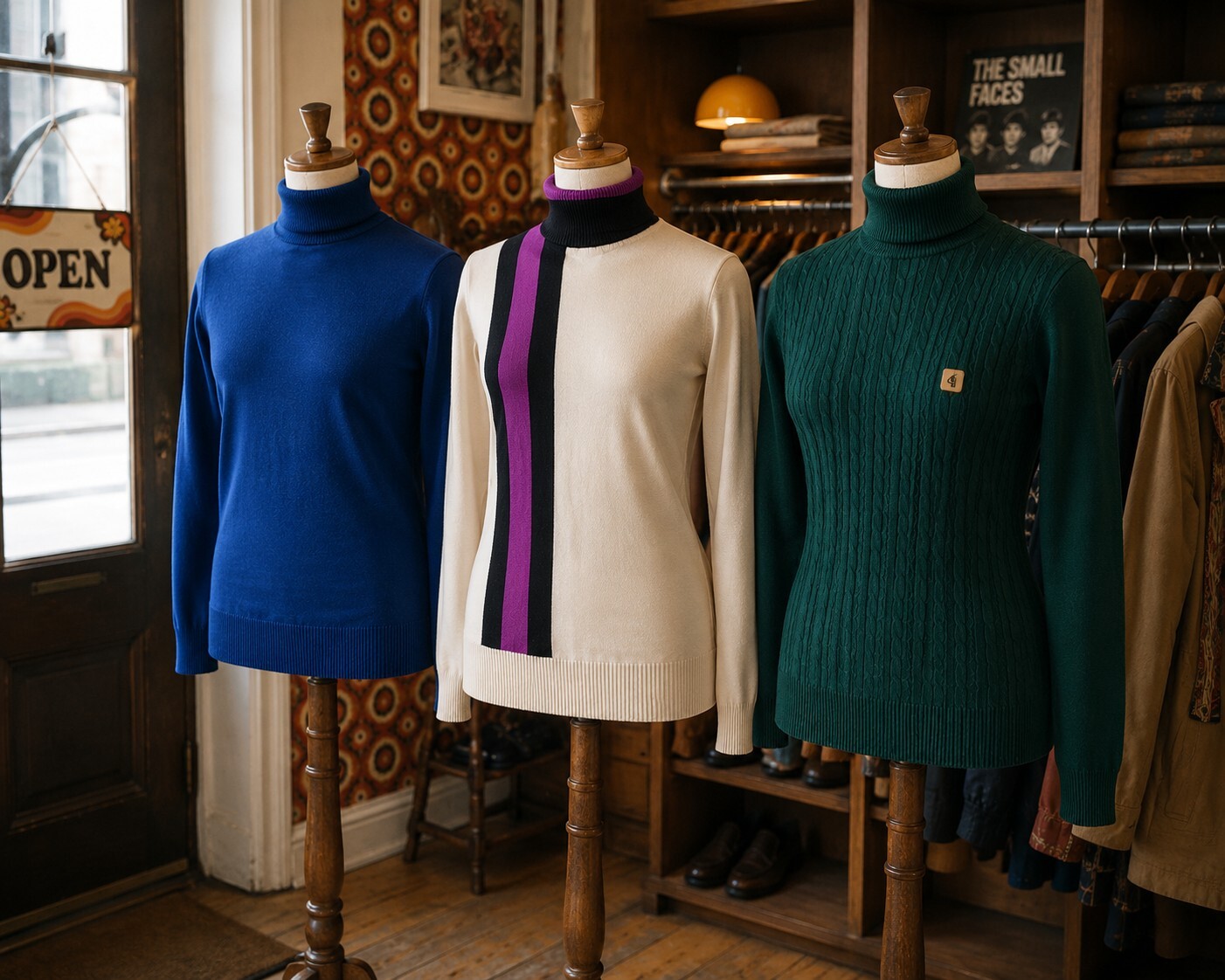
Few garments capture the intellectual side of Mod style quite like the roll neck.
Borrowed from artists, jazz musicians and European intellectuals, the roll neck introduced a touch of continental sophistication to the Mod wardrobe. It stripped away unnecessary detail and focused attention on silhouette and fit, values that sat comfortably alongside the movement's appreciation for modern design.
Black was the classic choice, but navy, burgundy, cream and charcoal all found favour. Worn beneath a tailored jacket or peacoat, the roll neck created a sleek, uninterrupted line that felt both contemporary and timeless.
For many Mods, it represented an alternative to conventional formality; less rigid than a shirt and tie, but no less stylish.
Winklepicker Shoes & Chelsea Boots — Sharp From the Ground Up
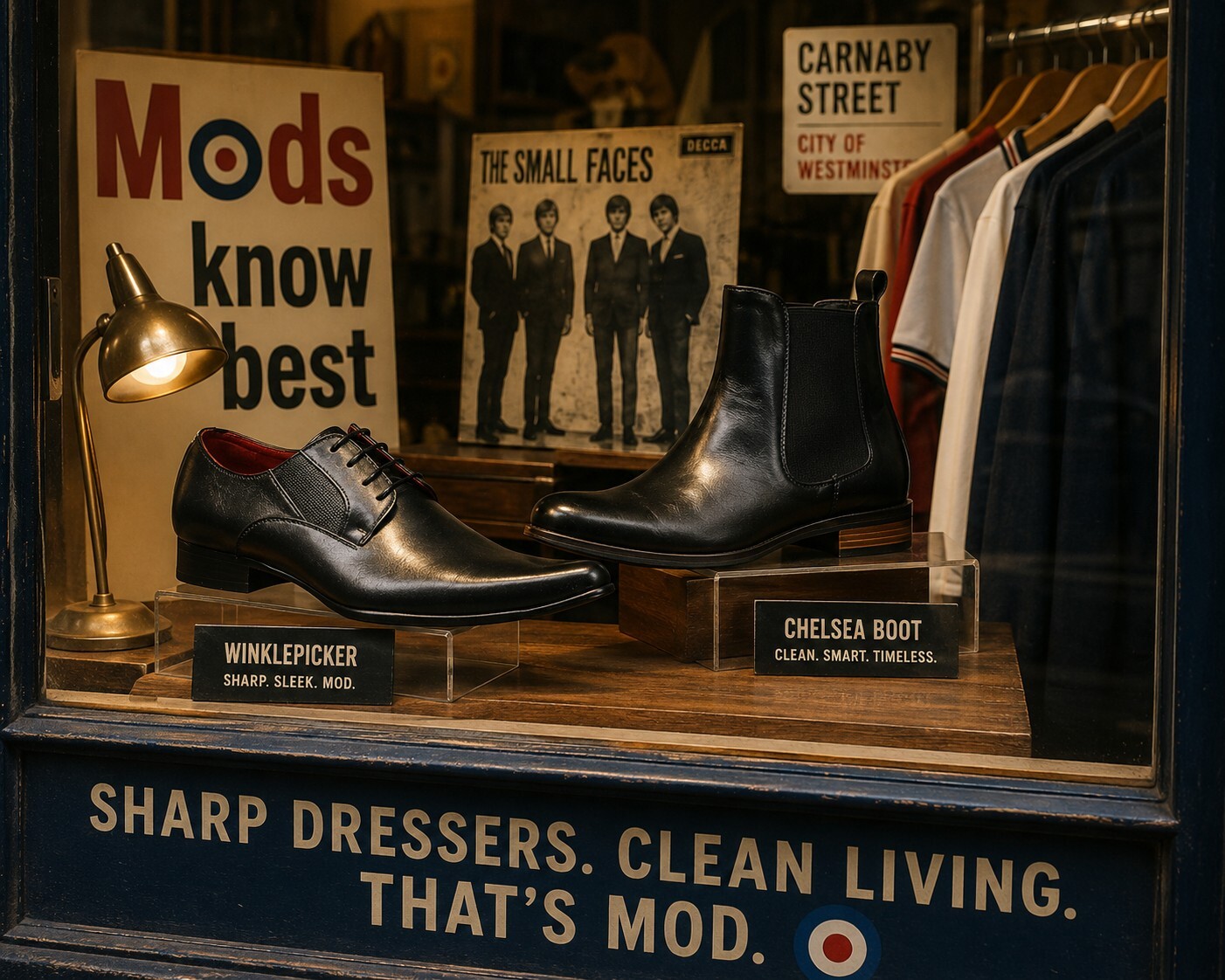
A Mod may start with the suit, but the outfit was judged from the shoes up. The Winklepicker; sleek, elongated, and ending in a wicked point, was the first footwear phenomenon to complement Mod tailoring. Inspired by rock ’n’ roll, coffee-bar culture and rebellious flair, the sharp toe became a badge of honour. The more exaggerated the point, the more daring the wearer. By the early sixties, the style came in polished leathers, suede finishes and even decorative buckles, perfect partners to the clean lines of Mod dress.
As the decade moved on, the Chelsea boot stepped into the spotlight. Originally designed for horsemen, the ankle-hugging elastic-sided boot was refined for the dance floor. Slim, minimalistic and versatile, the Chelsea boot embodied Mod functionality and fashion in equal measure. Soon, the addition of the Cuban heel, steep, stylish and slightly theatrical — lifted the boot into iconography. The Beatles sealed its reputation, and from then on the Chelsea was a must-have: black leather for urban cool, black suede for late-night swagger.
Together, Winklepickers and Chelsea boots gave Mods the final piece of the puzzle: elegance, attitude and a step ahead of the establishment. They were the finishing touch to the Mod mantra; stylish, sharp and always moving forward.
The Harrington Jacket — Casual Cool, Perfected
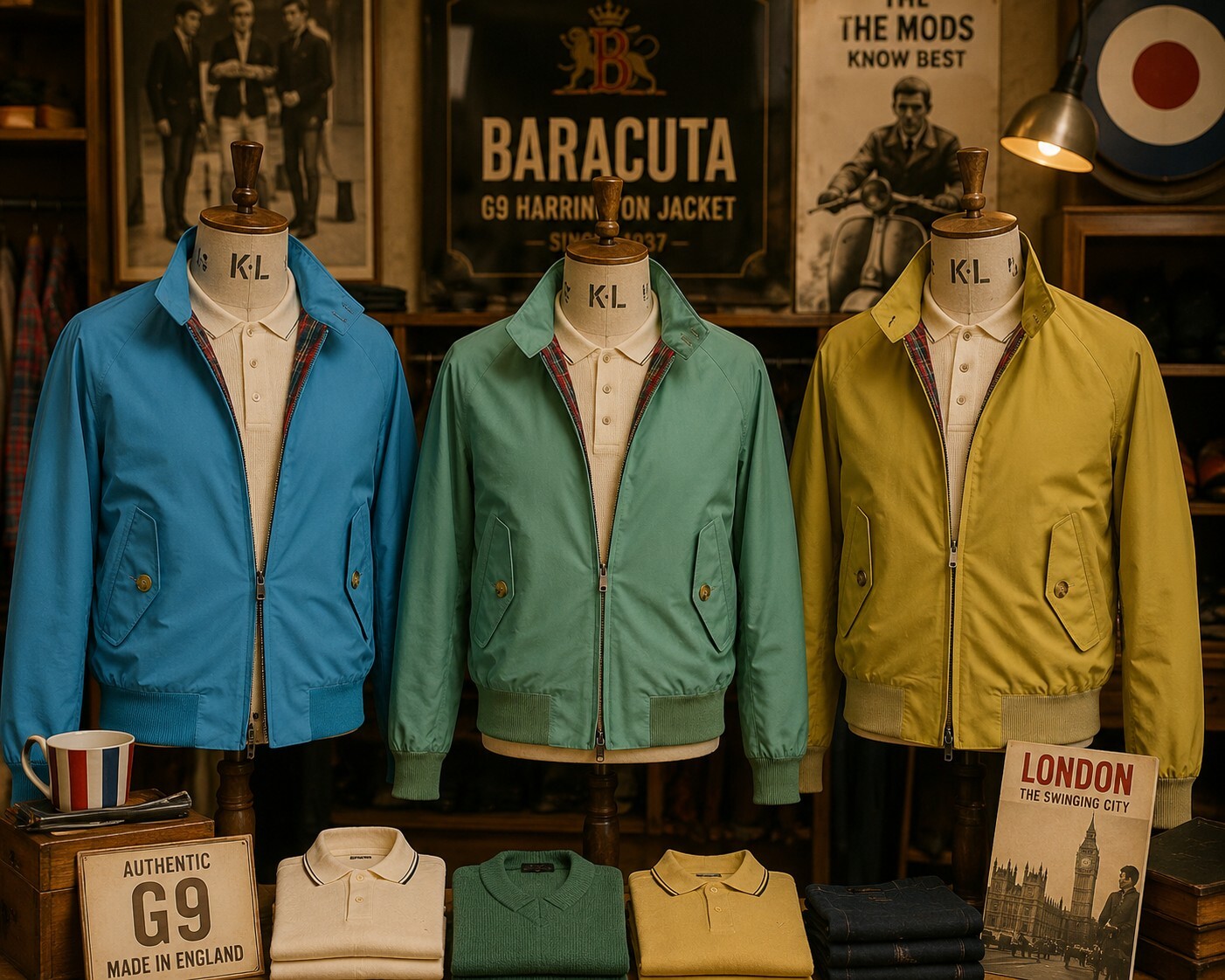
While the Mod suit represented the movement at its smartest, the Harrington jacket offered a more relaxed expression of Modernist style. Lightweight, practical and effortlessly sharp, it became the ideal companion for everything from coffee bar gatherings to scooter rides across town.
The jacket's clean silhouette perfectly complemented the Mod preference for slim-fitting clothing. Short in length and free from unnecessary embellishment, it could be worn over a button-down shirt, lightweight knitwear or polo shirt without disrupting the sharp lines that defined the look. It struck the perfect balance between casual and smart, something Mods constantly sought in their wardrobes.
Originally developed as a practical sports jacket, the Harrington found an enthusiastic audience among Britain's style-conscious youth during the late 1950s and early 1960s. Its simple design, stand collar and distinctive tartan lining helped set it apart from bulkier outerwear, while its versatility made it suitable for almost any occasion.
Whether worn on city streets, in Soho cafés or on the dancefloors of London's clubs, the Harrington became an essential piece of Mod attire. Decades later it remains one of the most enduring symbols of British style, proof that the simplest garments are often the most timeless.
The Parka — The Armour of the Scooter Generation
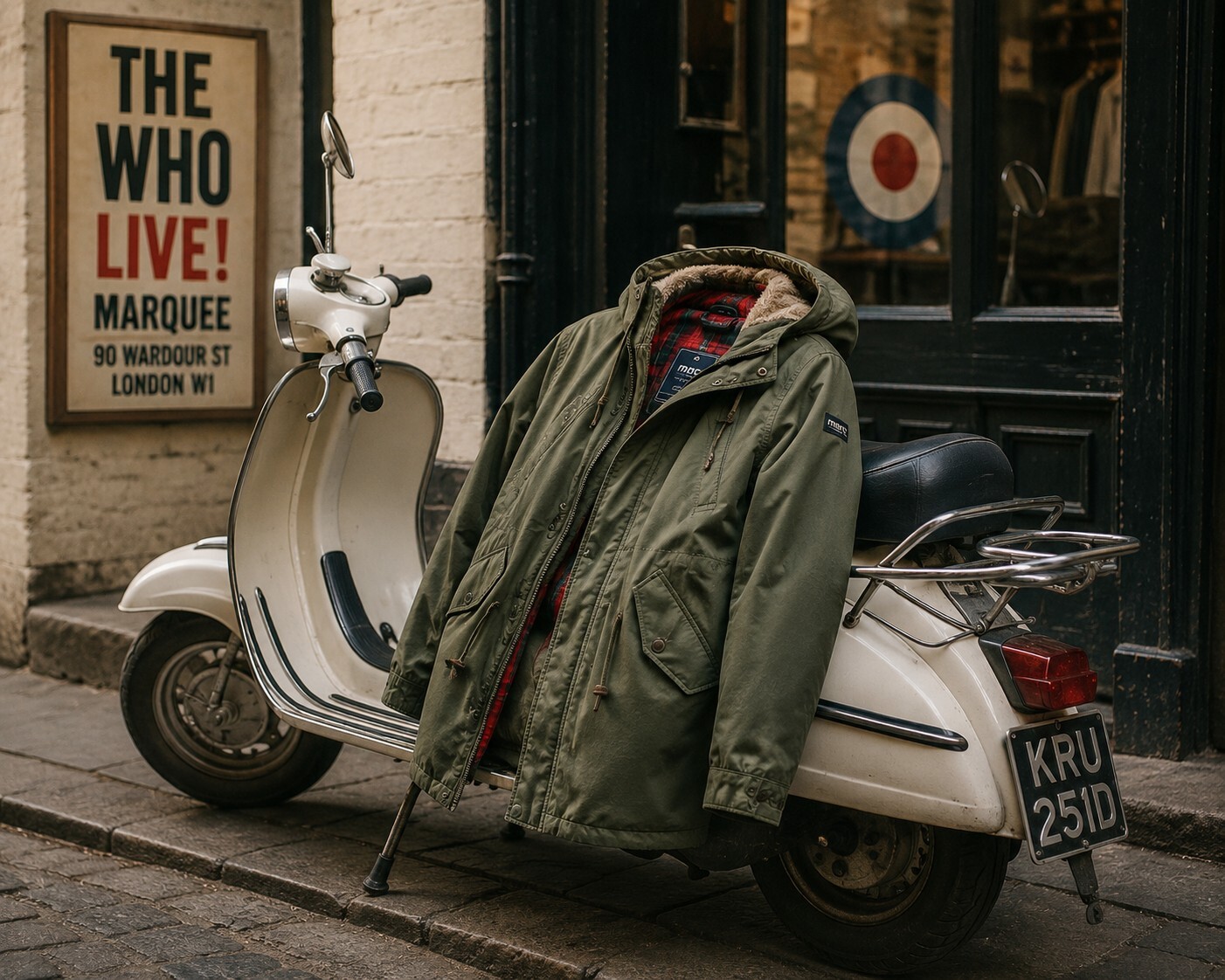
Few garments are as closely associated with Mod culture as the fishtail parka. Practical, distinctive and instantly recognisable, it became the unofficial uniform of scooter-riding Modernists throughout the 1960s.
Unlike many pieces of Mod clothing, the parka was adopted for practical reasons before it became a style statement. The movement's obsession with immaculate tailoring created a problem: expensive suits and polished shoes were particularly vulnerable to British weather, road grime and scooter oil. The solution arrived in the form of military surplus parkas, which could be worn over an entire outfit while travelling and removed upon arrival.
The long silhouette, protective hood and durable construction made the parka perfectly suited to life on two wheels. Yet what began as a practical garment quickly became woven into the visual identity of the movement. Parkas were personalised with badges, patches and symbols, transforming military surplus into something uniquely Mod.
By the time images of scooter rallies and seaside gatherings became part of British popular culture, the parka had become inseparable from the Mod image itself. Its place in fashion history was cemented once again during the Mod Revival of the late 1970s, when a new generation embraced the coat as both a practical garment and a cultural badge of honour.
Today, the fishtail parka remains one of the most recognisable pieces of Mod clothing ever created; a garment that combines functionality, identity and style in equal measure.
The Peacoat — Sharp Style for Colder Days
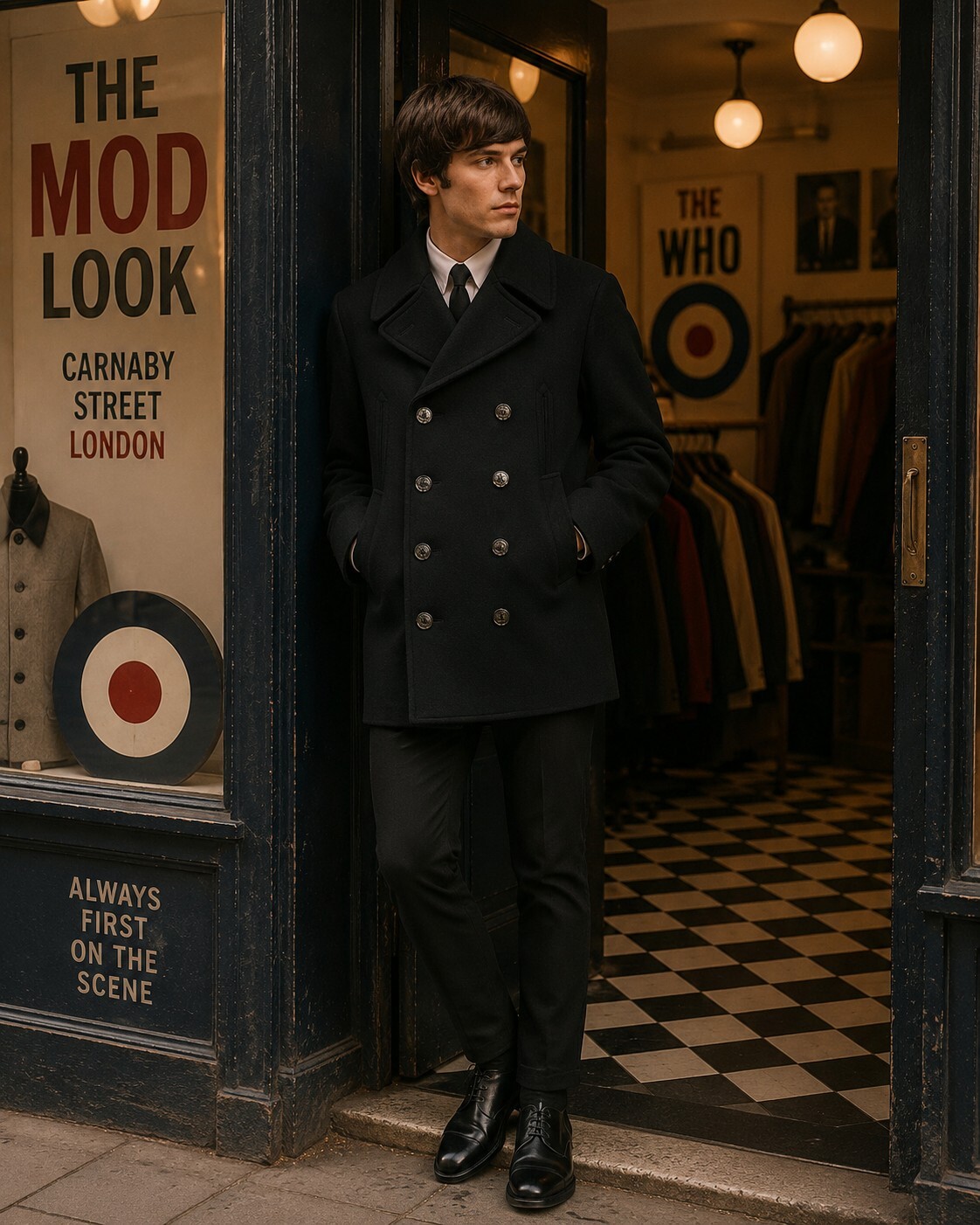
If the Harrington was the jacket of choice for mild evenings and the parka provided protection on the road, the peacoat offered Mods a smart and sophisticated solution for winter.
Originally designed for naval use, the peacoat's clean lines and tailored appearance made it a natural fit within the Modernist wardrobe. Its double-breasted front, broad lapels and structured silhouette echoed many of the qualities Mods admired in tailoring, while its heavy wool construction provided warmth without sacrificing style.
The peacoat occupied a unique position within the Mod wardrobe. More refined than a parka yet less formal than a suit jacket or overcoat, it could be worn comfortably with everything from roll necks and button-down shirts to slim trousers and Chelsea boots. This versatility made it particularly popular during the colder months, when maintaining a sharp appearance without compromising comfort became increasingly important.
Like many Mod staples, the peacoat benefited from its ability to feel both timeless and contemporary. Drawing on military heritage while retaining a distinctly modern silhouette, it embodied the Mod talent for repurposing classic garments and making them feel entirely new.
Its appeal has endured far beyond the 1960s, remaining a staple of both Mod and mainstream menswear. Smart, practical and effortlessly stylish, the peacoat continues to demonstrate why the best pieces of clothing rarely go out of fashion.
⭐Swinging Style: An Introduction to Mod Womenswear
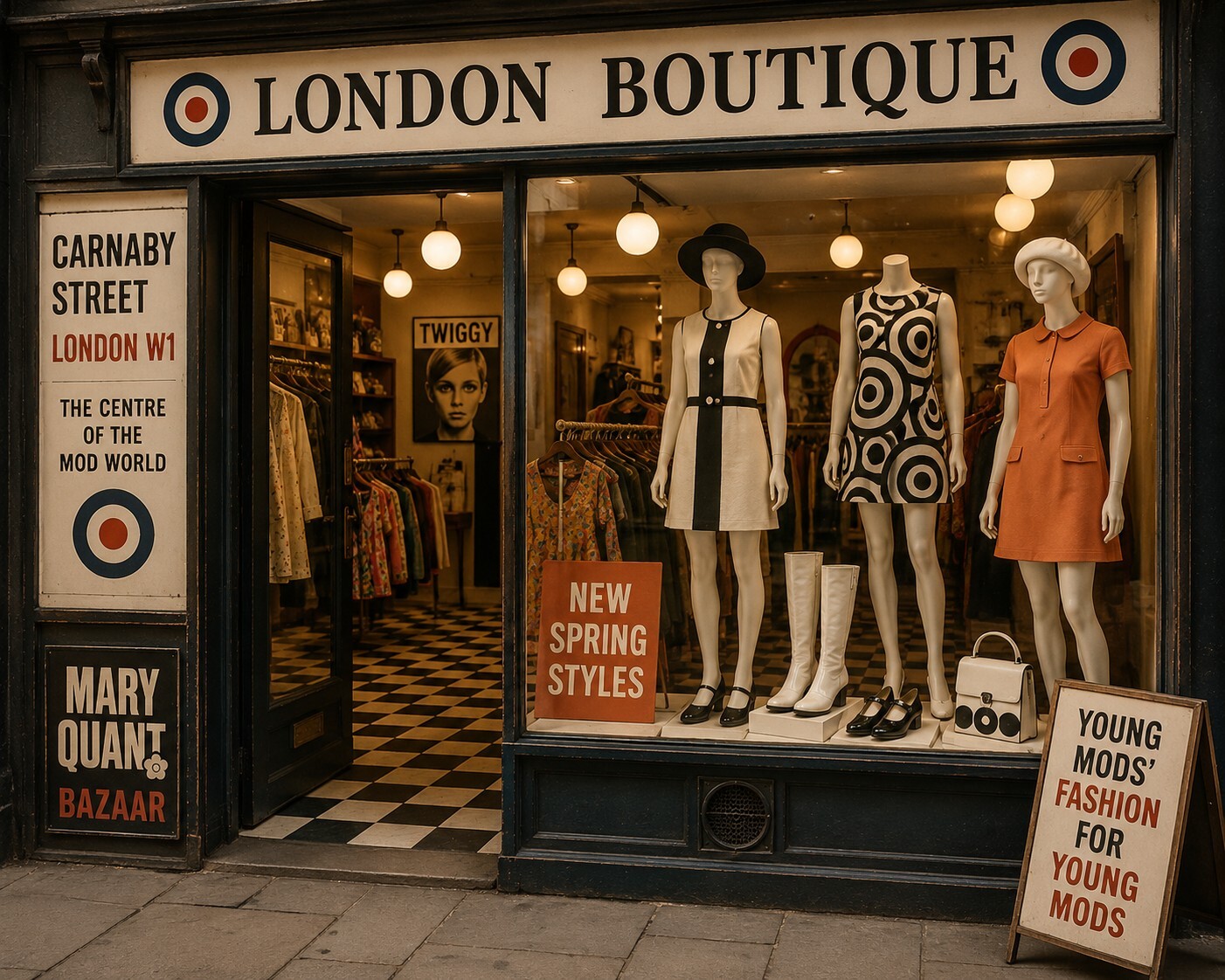
While young men embraced tailoring and Ivy League influences, women were reshaping fashion with equal determination. The Mod girl helped transform London into the style capital of the world, embracing bold new silhouettes, youthful attitudes and a spirit of experimentation that challenged traditional ideas of femininity.
Her wardrobe was modern, practical and unmistakably forward-looking. Mod womenswear didn’t just follow fashion it changed it.
As the 1960s unfolded, a powerful new youth-driven movement swept Britain, sparked by music, clubs, scooters and a desire to break free from the conventions of their parents’ world. Young women were at the heart of this revolution, and their clothes became a bold visual language of freedom, individuality and modern living.
Unlike the hourglass silhouettes of the 1950s, Mod style was forward-facing, clean-lined and pared back. Inspired by European tailoring, art-school cool, and the rise of design-led boutiques, young women embraced a brand-new aesthetic. Hems climbed above the knee, shapes shifted into sharp A-lines, and clothes were no longer designed simply to flatter but to excite, express and empower.
This was the birth of:
-
The mini skirt — a daring declaration of independence
-
The shift dress — simplicity reimagined as style
-
Go-go boots — footwear built to be seen
-
Graphic monochrome, bold brights and Pop Art patterns
-
Androgynous tailoring, borrowed — and improved — from the boys
Crucially, Mod womenswear celebrated movement and modernity. Clothes were made to dance in at cellar clubs, ride pillion on a scooter, or prowl London pavements in search of the next boutique.
From Mary Quant’s playful revolution on the King’s Road, to Jean Shrimpton’s streamlined elegance, Twiggy’s boyish glamour and the polished Italian-inspired styles of Soho’s sharpest girls, Mod women shaped a whole new fashion landscape.
Their look was not about status or age it was about attitude.
Mod womenswear remains an enduring touchstone because it rewrote the rules, embracing:
-
Youth over tradition
-
Design over decoration
-
Confidence over conformity
This was the wardrobe of a generation determined to dress for the world they were building, not the one they inherited.
The Mini Skirt — A Hemline that Changed the World
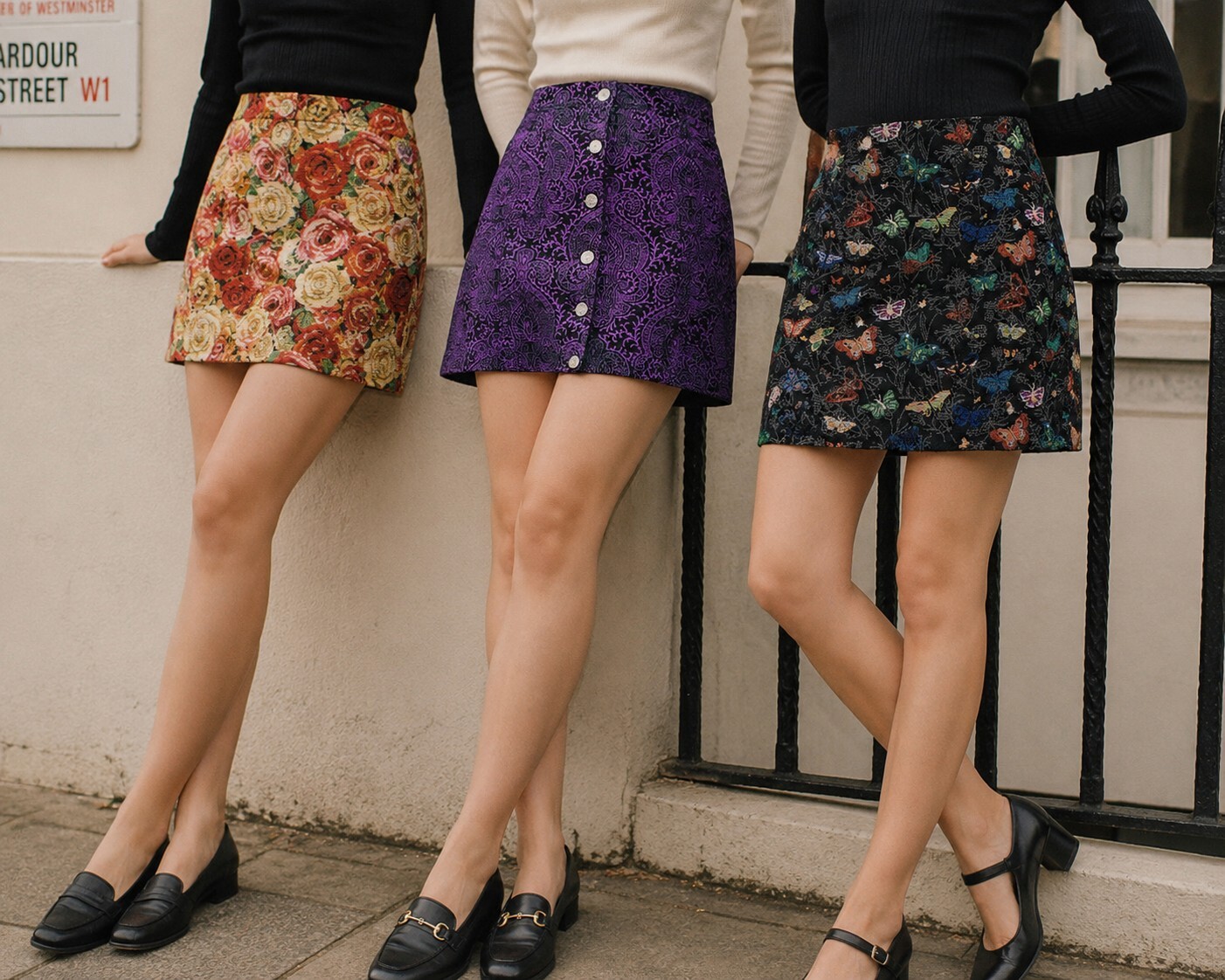
Few garments define the spirit of the 1960s quite like the mini skirt. More than a fashion trend, it became a cultural landmark, a symbol of youth, liberation and the new social freedoms sweeping Britain.
While hemlines had been rising slowly since the 1950s, it was Mary Quant; the boundary-pushing designer of Bazaar on the King’s Road, who took the decisive leap above the knee. Quant didn’t invent the mini skirt in isolation, but she championed it, popularised it and personified its cheeky new attitude. With her cropped haircut, playful wit and instinctive feel for what young women wanted, she turned the mini from a daring experiment into an international revolution.
The mini skirt’s power lay not only in its look but in what it represented. For the first time, women, particularly teenagers and young adults, were dressing for themselves rather than for convention. Minis allowed for movement, dancing, walking, running for the bus, and fitted perfectly into a lifestyle built around clubs, cafés and scooters. Bright colours, bold geometric prints and simple lines accentuated the look, giving the mini an unmistakably modern edge.
By the mid-1960s the mini had become the defining silhouette of the decade. London boutiques led the way, with Quant joined by designers like Foale & Tuffin, Barbara Hulanicki of Biba and many more. The press dubbed London “the fashion capital of the world,” and Mod girls proudly put the city’s style on global display.
From Twiggy and Jean Shrimpton to student fashionistas on Carnaby Street, the mini skirt embodied independence, youth culture and a refusal to look back. Its legacy has endured, reappearing every decade since and it remains permanently linked to the rebellious, joyful modernism of the Mod era.
The Shift Dress — Clean Lines, Bold Shapes, Pure Mod
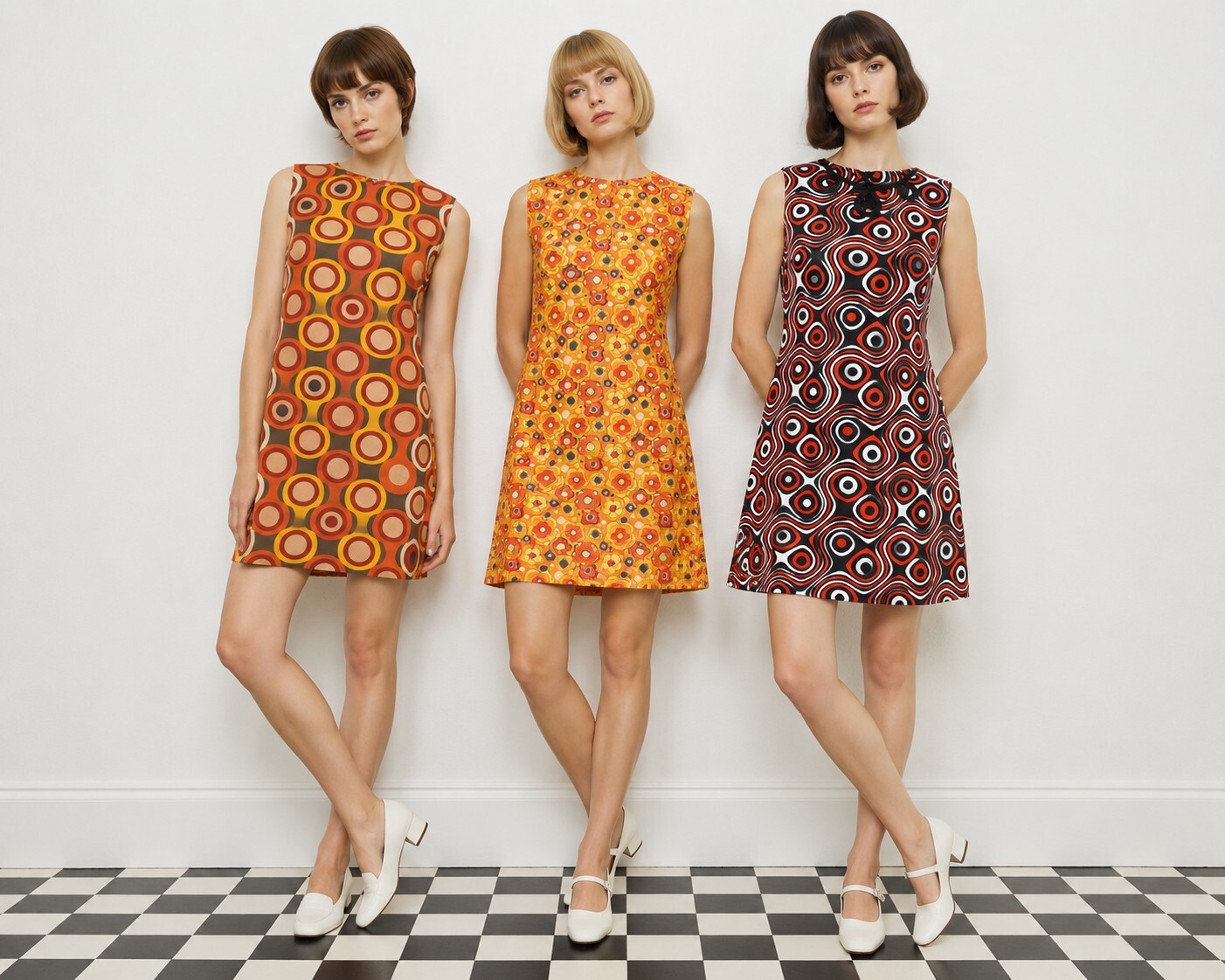
If the mini skirt captured the daring spirit of the 1960s, the shift dress embodied its streamlined aesthetic. Sleek, simple and effortlessly stylish, the shift was the dress of choice for Mod girls, a garment that perfectly echoed the movement’s love of modernity, geometry and freedom.
Cut straight through the body with little shaping at the waist, the shift dress defied the traditional hourglass silhouette of the 1950s. Gone were corsets, layers and frills, replaced with a silhouette that celebrated youth, ease and movement. In the shift dress, women were free not only to look modern but to live modern.
Mod designers seized on this shape and reinvented it in countless ways. Mary Quant’s versions were playful and sporty, often in bold colours and crisp fabrics. Foale & Tuffin brought imaginative prints and edgy tailoring, while boutique labels on Carnaby Street offered dazzling variations; from stark monochrome to Pop Art brights, op art patterns and futuristic metallics.
The shift dress also suited every environment in Mod life:
-
By day: paired with flats or low heels for school, work or boutique browsing
-
By night: worn with mini length boots or court shoes for clubs, gigs and dancing
-
On scooters: sleek enough to sit comfortably beneath a parka
Design simplicity made it the perfect canvas for experimentation. Contrasting pockets, decorative buttons, Peter Pan collars, panel details and colour blocking became iconic stylistic signatures of the Mod scene. The result was clothing that looked sharp, modern and unmistakably forward-thinking.
Worn by icons such as Twiggy, Cathy McGowan and Marianne Faithfull and countless girls who filled London streets with colour, the shift dress remains one of the most instantly recognisable shapes of the decade. It perfectly expressed what the Mod movement stood for: clean design, youth culture, and a refusal to be bound by the past.
Patterned Tights — Legs Made for Swinging
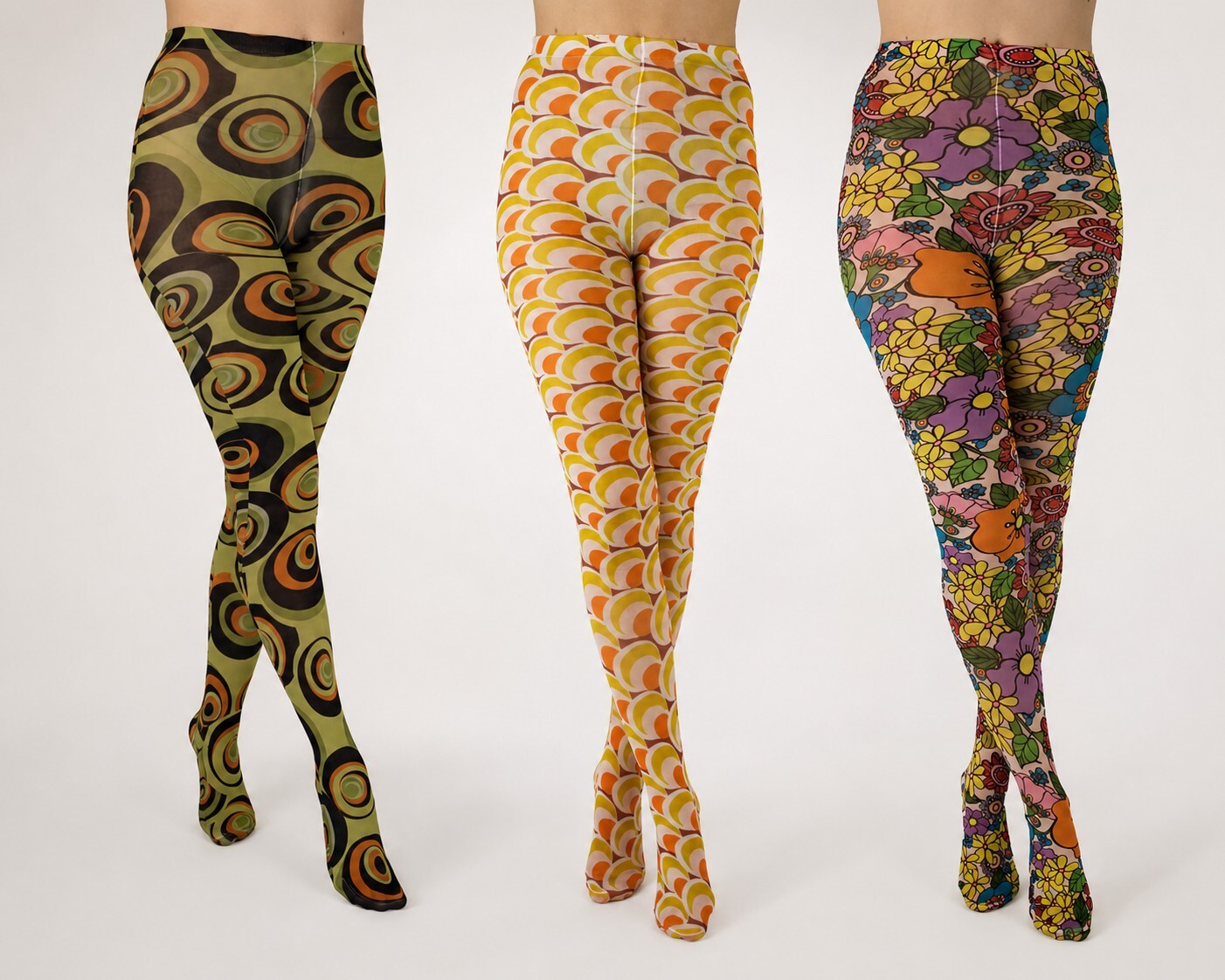
If the mini skirt was the icon of 1960s womenswear, patterned tights were its perfect partner in crime. As hemlines climbed higher than ever before, bare legs demanded a fashionable new frame and tights stepped boldly into the spotlight.
Before the early sixties, most women relied on stockings and suspenders; practical perhaps, but hardly ideal for dancing until dawn in a Swinging London club. The arrival of nylon tights was genuinely transformative. Comfortable, affordable and endlessly versatile, they complemented the clean lines of Mod fashion while giving women greater freedom of movement. For a generation embracing modernity in every aspect of life, tights felt like a small revolution.
As the decade progressed, hosiery evolved from a simple necessity into a powerful form of self-expression. Traditional flesh tones and conservative shades quickly gave way to bold colours, graphic patterns and eye-catching designs. Bright primary colours, rich jewel tones, op-art geometrics, stripes, florals and psychedelic swirls all found their place in the Mod wardrobe. Much like Pop Art itself, tights became another canvas on which individuality could be displayed.
The look reached its peak when paired with the era's defining garments. Opaque white tights worn beneath an A-line mini skirt became one of the most recognisable images of the decade, immortalised by style icons such as Twiggy and Cathy McGowan. Meanwhile, patterned versions allowed Mod girls to reinvent an outfit entirely, transforming a simple shift dress into something strikingly modern with nothing more than a change of hosiery.
What made patterned tights so appealing was their ability to balance playfulness with sophistication. They could complement the geometric precision of Mod fashion while adding colour, movement and personality. In an era obsessed with youth, creativity and self-expression, they turned an everyday garment into a statement piece.
Like so many elements of Mod style, patterned tights never truly disappeared. From Glam Rock and New Romantic fashion to Britpop and contemporary retro revivals, their influence continues to resurface. More than a wardrobe detail, they remain a symbol of the confidence, experimentation and youthful optimism that defined the Mod era.
Go-Go Boots — The Footwear of the Future
Before knee-high boots became commonplace, they felt positively futuristic. Worn with minis and shift dresses, Go-Go boots embodied the space-age optimism and youthful energy of the mid-sixties. Usually white, often glossy and always attention-grabbing, they became one of the most recognisable elements of the Mod girl's wardrobe.
Whether paired with geometric prints, bold colours or monochrome tailoring, Go-Go boots transformed a simple outfit into a statement of modern style.
Mary Janes — The Sweet Shoe with a Sharp Mod Edge
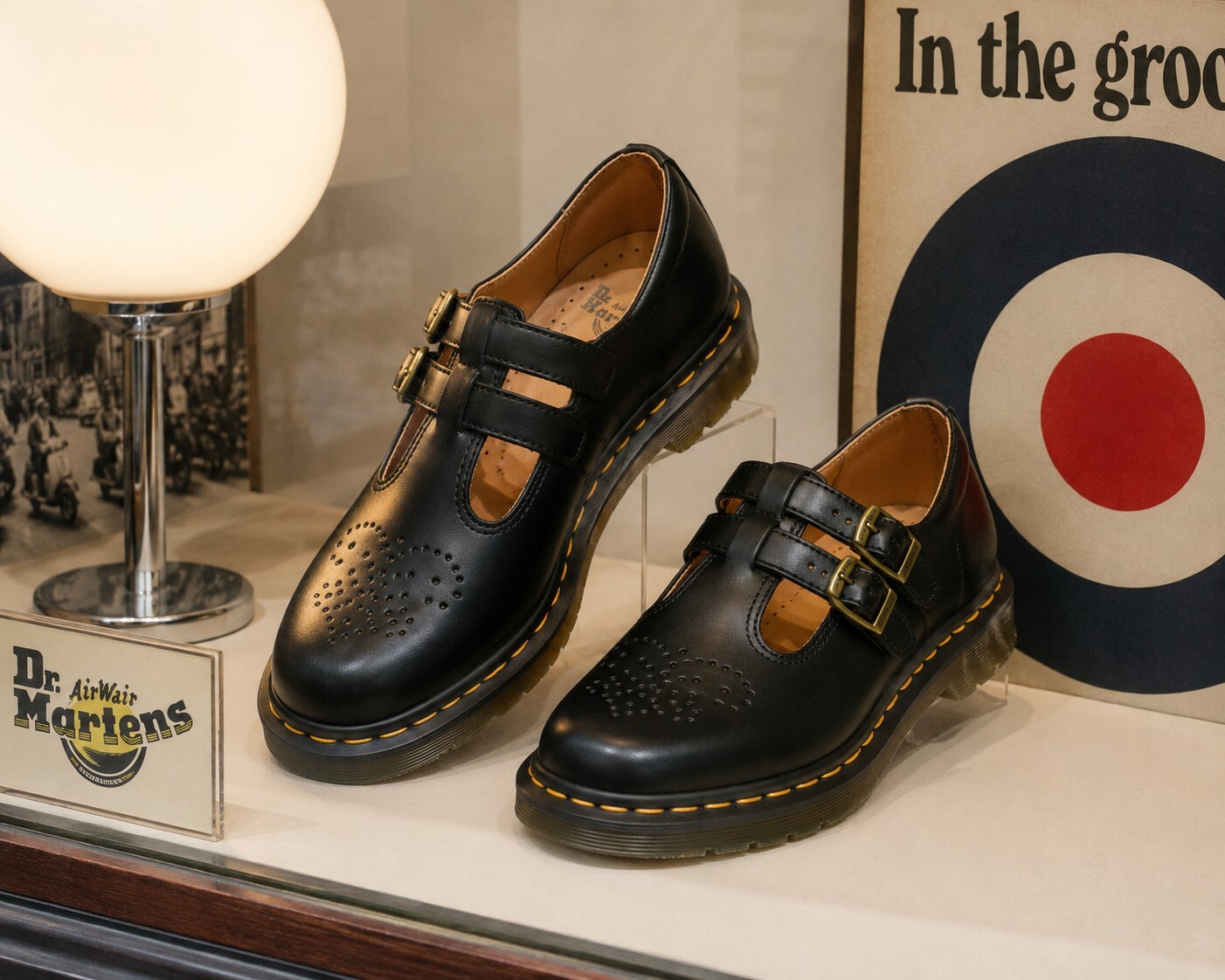
While knee-high Go-Go boots often steal the spotlight when discussing 1960s womenswear, the Mary Jane was every bit as important to the Mod wardrobe. Instantly recognisable by its rounded toe and signature strap across the foot, it offered a youthful, playful alternative to more formal footwear while perfectly complementing the clean lines of Mod fashion.
The shoe's origins were surprisingly modest. Long associated with school uniforms and children's footwear, the Mary Jane might seem an unlikely style icon. Yet this sense of innocence proved part of its appeal. The Mod generation had a talent for reinventing familiar garments, transforming everyday staples into something fresh, fashionable and unmistakably modern.
As the 1960s progressed, traditional school-shoe colours gave way to glossy patent finishes, bright shades and eye-catching metallics. The silhouette remained simple, but the effect was striking. Worn with mini skirts, shift dresses and bold patterned tights, Mary Janes helped create some of the decade's most recognisable looks.
Their popularity also stemmed from practicality. Unlike towering heels, Mary Janes were designed for movement. Whether browsing boutiques on the King's Road, dancing at an all-night club or navigating London's busy streets, they offered comfort without sacrificing style. Flat soles and modest block heels made them ideal companions to the active, youthful lifestyle embraced by so many Mod girls.
Fashion icons such as Twiggy and Cathy McGowan frequently paired Mary Janes with the era's latest fashions, helping to cement their place within the Mod style canon. Their clean, uncomplicated design allowed the bolder elements of an outfit — colourful tights, graphic prints, dramatic make-up and geometric silhouettes — to take centre stage.
Like much of Mod fashion, the Mary Jane has never truly disappeared. Reinterpreted by successive generations, it has resurfaced through Glam Rock, Britpop and countless retro revivals. Yet its appeal remains unchanged. Sweet but sophisticated, youthful yet stylish, the Mary Jane continues to embody the playful confidence that made 1960s Mod fashion so influential.
⭐The Finishing Touches
No Mod outfit was ever complete without attention to detail. Skinny ties, silk scarves, polished loafers, bold sunglasses and carefully chosen jewellery all contributed to the overall effect. Haircuts were meticulously maintained, shoes kept spotless and garments carefully pressed.
For Mods, style was never accidental. Every detail mattered.
That commitment to presentation remains one of the movement's most enduring legacies. More than sixty years after its emergence, Mod fashion continues to influence designers, musicians and style enthusiasts around the world.
Because while trends come and go, true style never goes out of fashion.