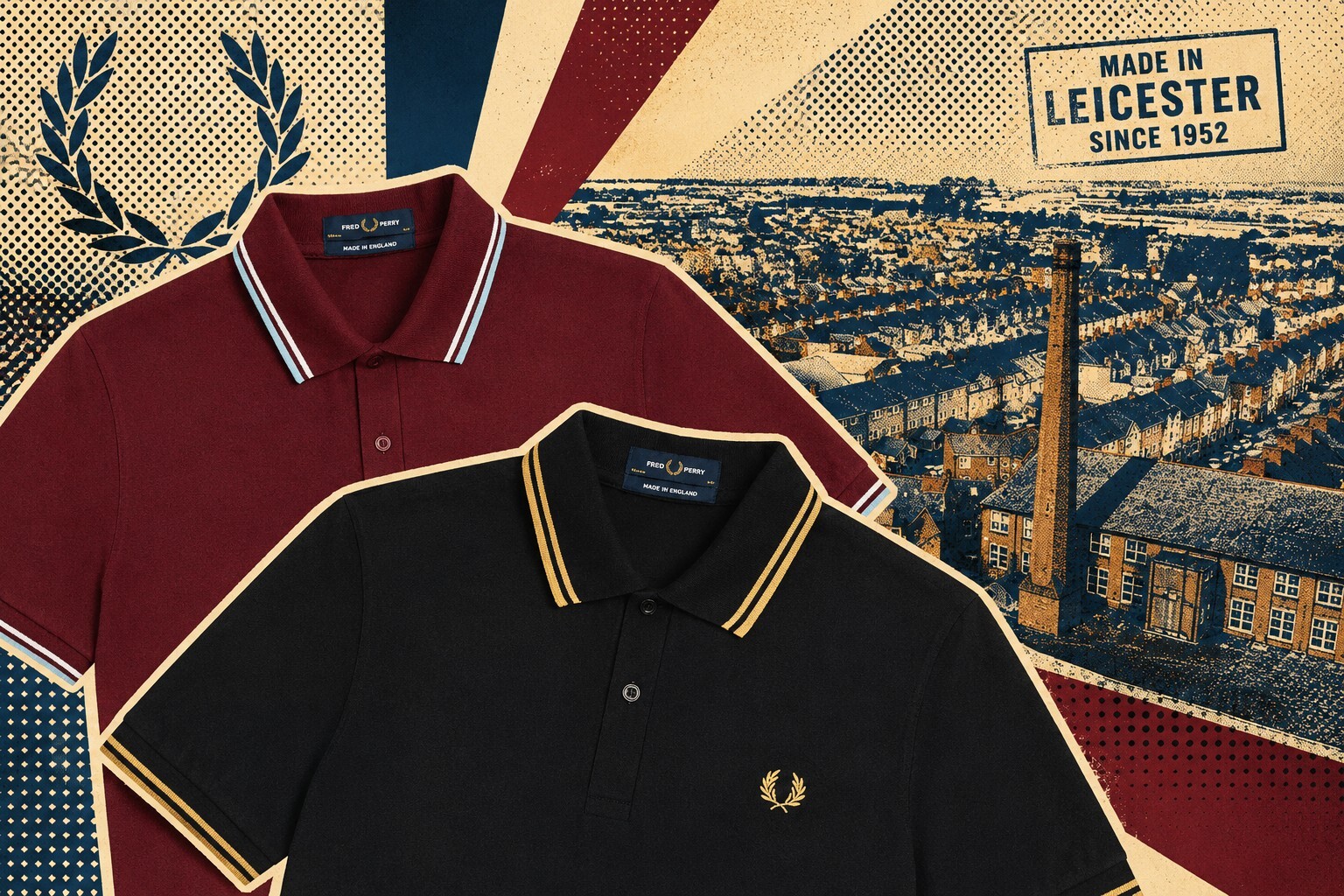
The Original Twin Tipped Polo: The Story of the Fred Perry M12 Made in England
Few garments have crossed the boundaries of sport, music and subculture quite like the Fred Perry M12.
For almost seventy years, it has remained one of the defining pieces of British menswear. Instantly recognisable by its twin tipped collar and cuffs, the M12 is far more than a polo shirt. It represents generations of youth culture, from the sharp-dressed Mods of the 1960s to the Ska scene, Britpop bands and football terraces that followed.
While fashion trends have come and gone, the M12 has endured because it has never needed to reinvent itself. Built in England using the same principles that shaped the original, it remains one of the purest expressions of British design and craftsmanship.
From Centre Court to the High Street
The story begins in 1952, when Fred Perry introduced the original plain white M3 polo shirt for the tennis court.
Constructed from durable cotton piqué and embroidered with the now-famous Laurel Wreath, it quickly became synonymous with sporting excellence.
The transformation came five years later.
In 1957, London's famous sporting retailer Lillywhites approached Fred Perry with an unusual request. West Ham United supporters wanted a version of the plain tennis shirt that incorporated their club colours.
The solution was remarkably simple.
Subtle contrast tipping was added to the collar and cuffs.
The original White, Ice and Maroon M12 was born.
Named after the twelfth prototype produced during development, the M12 would become the blueprint for one of Britain's most recognisable garments.
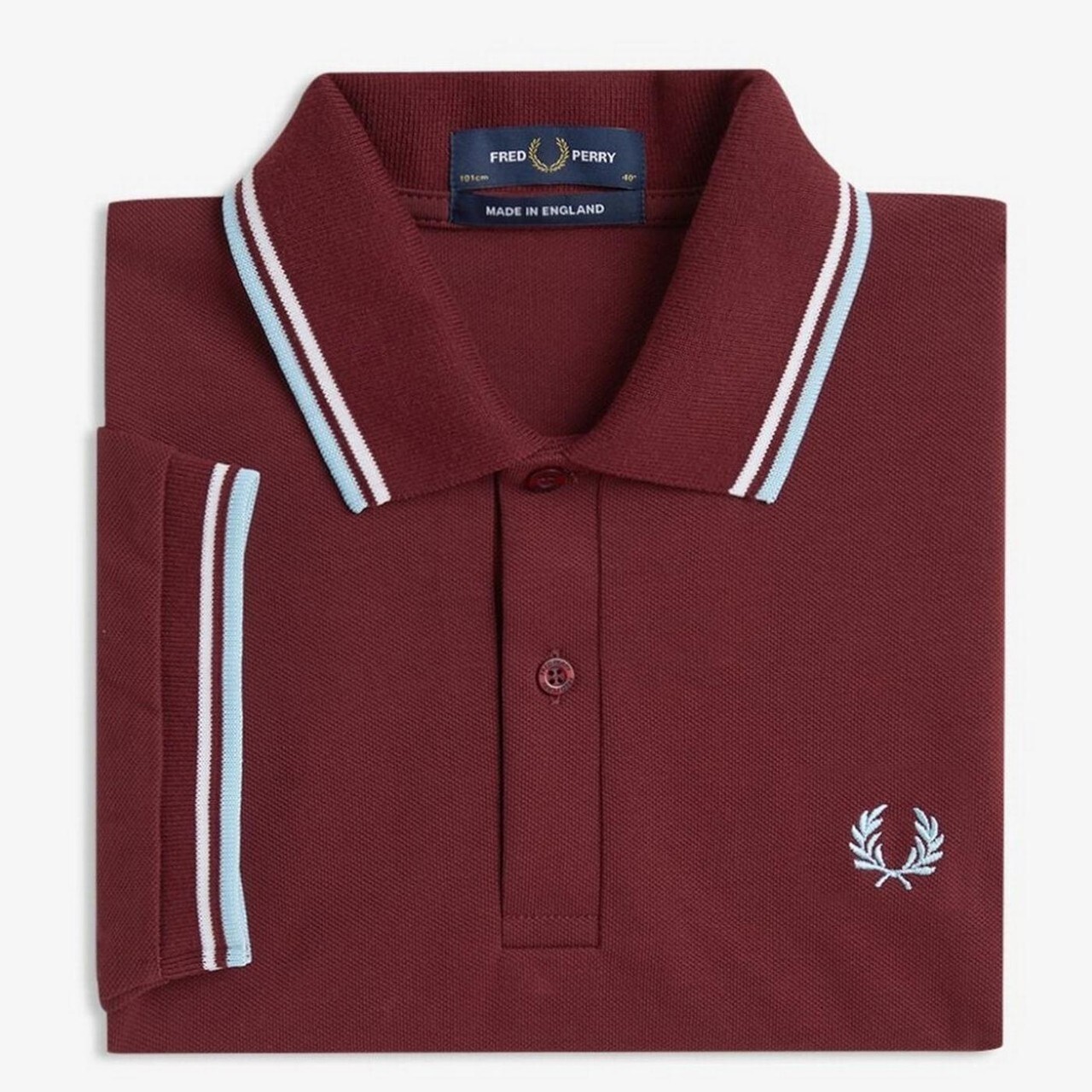
Fred Perry M12 in Maroon with White and Ice twin tipping.
The Polo That Defined British Subculture
The genius of the M12 lies in its versatility.
It was never designed for one generation.
Instead, each generation made it their own.
The Mod Years
During the early 1960s, the M12 became an essential component of the Mod wardrobe.
Buttoned to the top beneath Harrington jackets or lightweight tailoring, its clean silhouette perfectly complemented the sharp, disciplined aesthetic that defined Mod style.
The twin tipping provided just enough contrast without sacrificing sophistication.
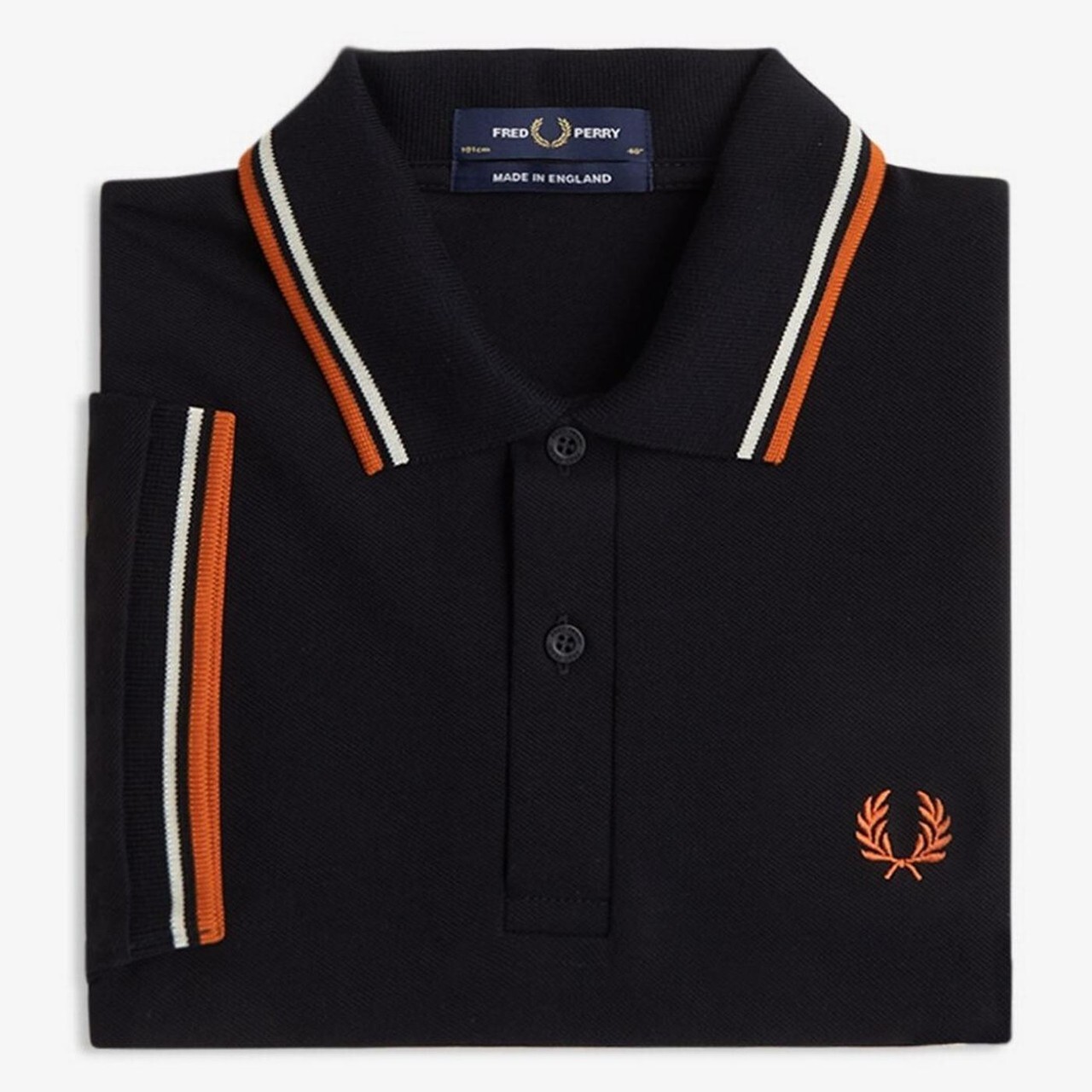
Fred Perry M12 Twin Tipped Polo Shirt in Black with Tramline White and Summer Clay twin tipping.
Ska, Skinheads and Northern Soul
By the late 1960s and into the 1970s, the M12 had found new audiences.
Skinheads, Suedeheads and Rudeboys embraced the shirt for its honest British construction and understated confidence, while the expanding range of colour combinations allowed wearers to express their own identity without abandoning the shirt's unmistakable character.
Across Northern Soul clubs and Ska venues alike, the M12 became part of a uniform built on quality rather than excess.
Britpop and Beyond
Like many great British classics, the M12 enjoyed a new lease of life during the 1990s.
Artists including Blur and Oasis helped introduce Fred Perry to another generation, pairing twin tipped polos with denim, parkas and trainers as Britpop celebrated Britain's rich musical and cultural heritage.
From indie venues to festival fields, the M12 once again became the shirt of choice for those looking to combine timeless style with effortless authenticity.
Today, its influence stretches well beyond music, remaining a favourite among football Casuals, scooter enthusiasts and lovers of classic British menswear.
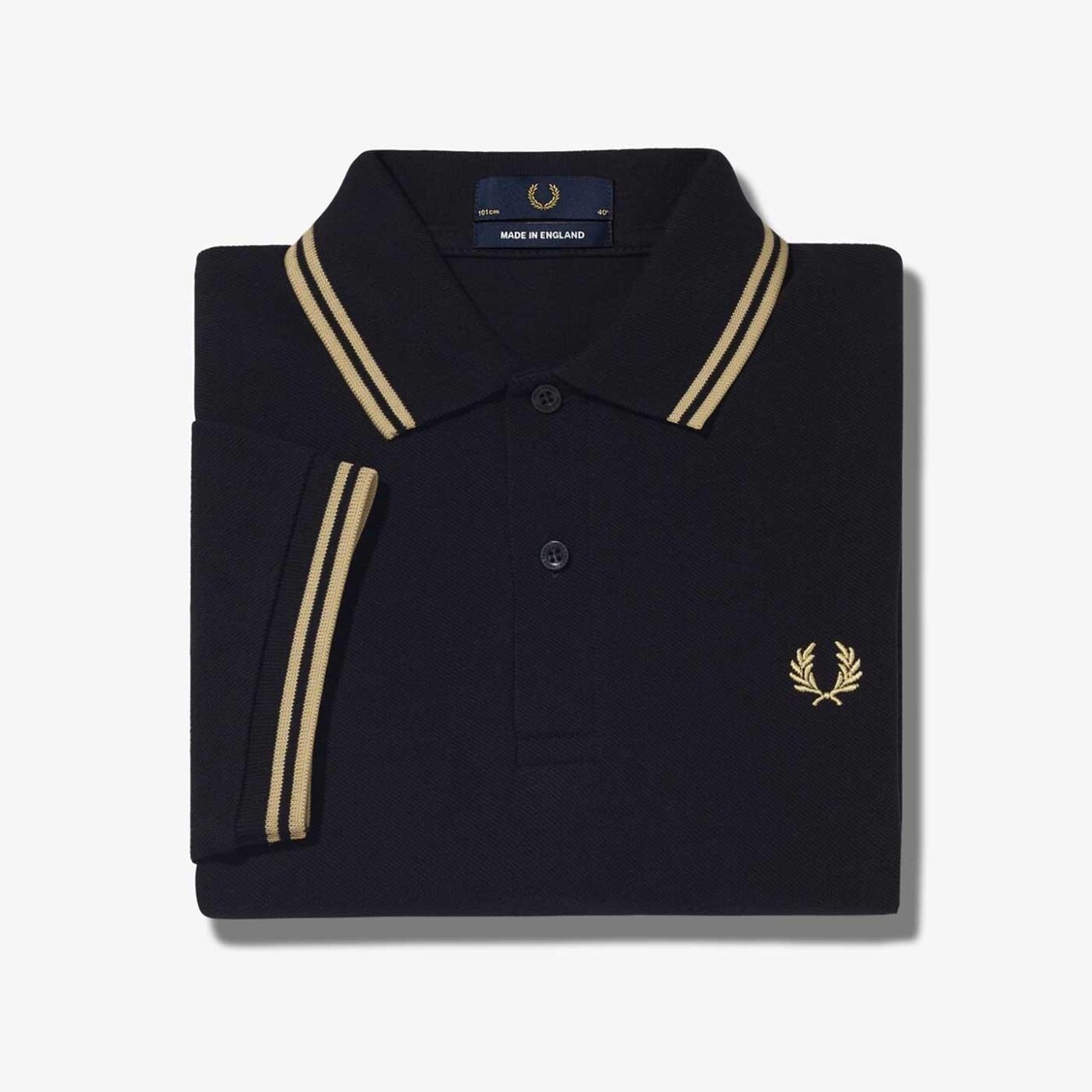
Fred Perry M12 in Black with Champagne twin tipping.
Still Made in England
What separates the M12 from many heritage garments is that it has remained remarkably faithful to its origins.
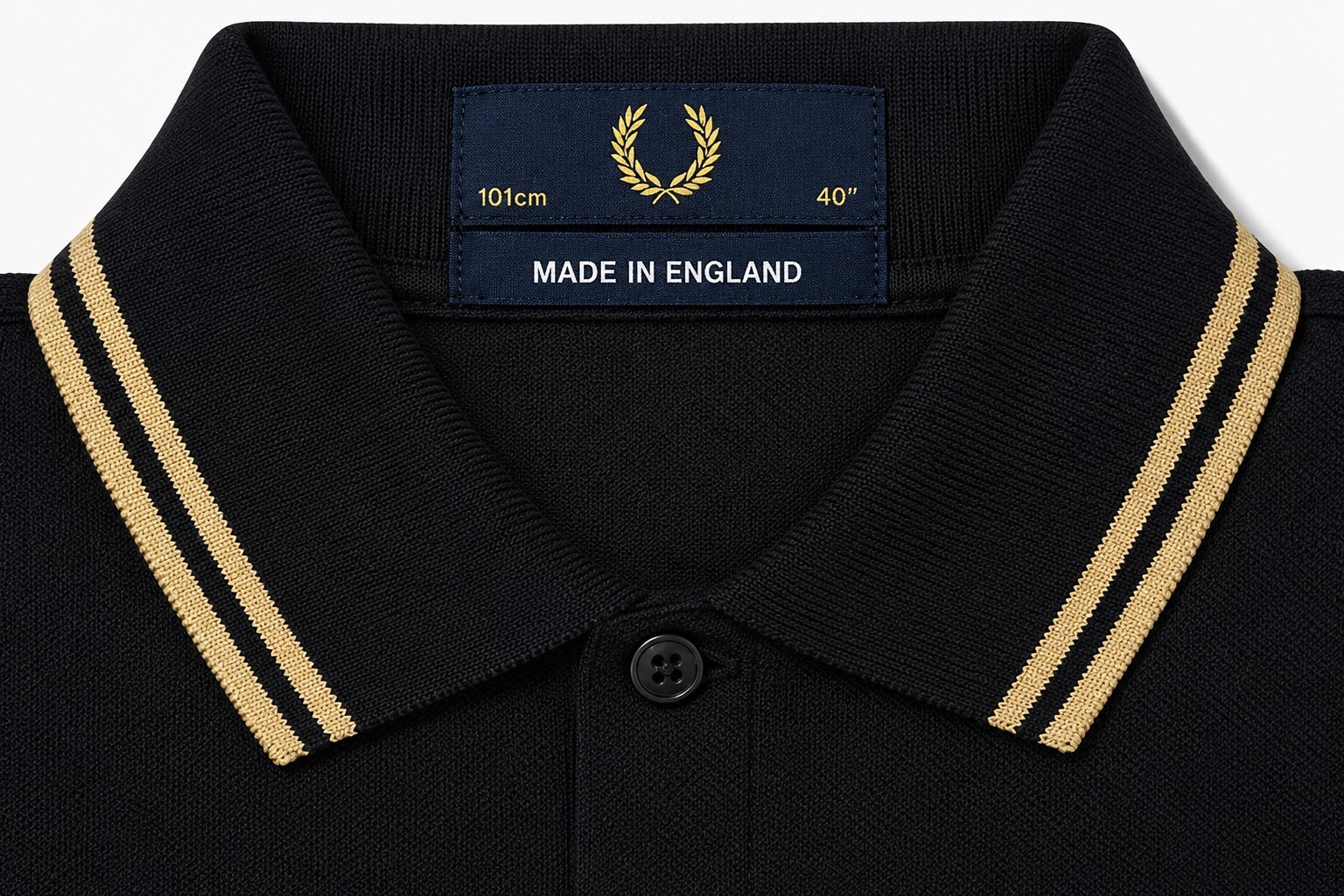
Every Made in England M12 continues to be produced in Leicester, preserving the techniques and attention to detail that made the original such a success.
Its heavyweight cotton piqué offers a structured feel that recalls the shirts of the 1950s, while the traditional straight-cut silhouette delivers the authentic proportions that have defined the M12 for generations.
Then there is the detail that changed everything.
The famous twin tipping follows Fred Perry's distinctive 5-4-4 ratio, a carefully balanced sequence of knitted stripes that has become one of the most recognisable signatures in fashion.
It's a subtle design feature, yet one instantly recognised around the world.
Combined with the embroidered Laurel Wreath, ribbed collar and cuffs, two-button placket and flat hem, every element serves as a reminder that true icons rarely need updating.
Built to Last
While fashion continually evolves, the M12 has remained steadfast.
Modern sustainability improvements, including recycled sewing threads, recycled buttons and responsibly sourced Laurel Wreath embroidery, ensure today's Made in England polo continues to meet contemporary expectations without compromising its heritage.
It is proof that craftsmanship and responsible production can comfortably exist alongside tradition.
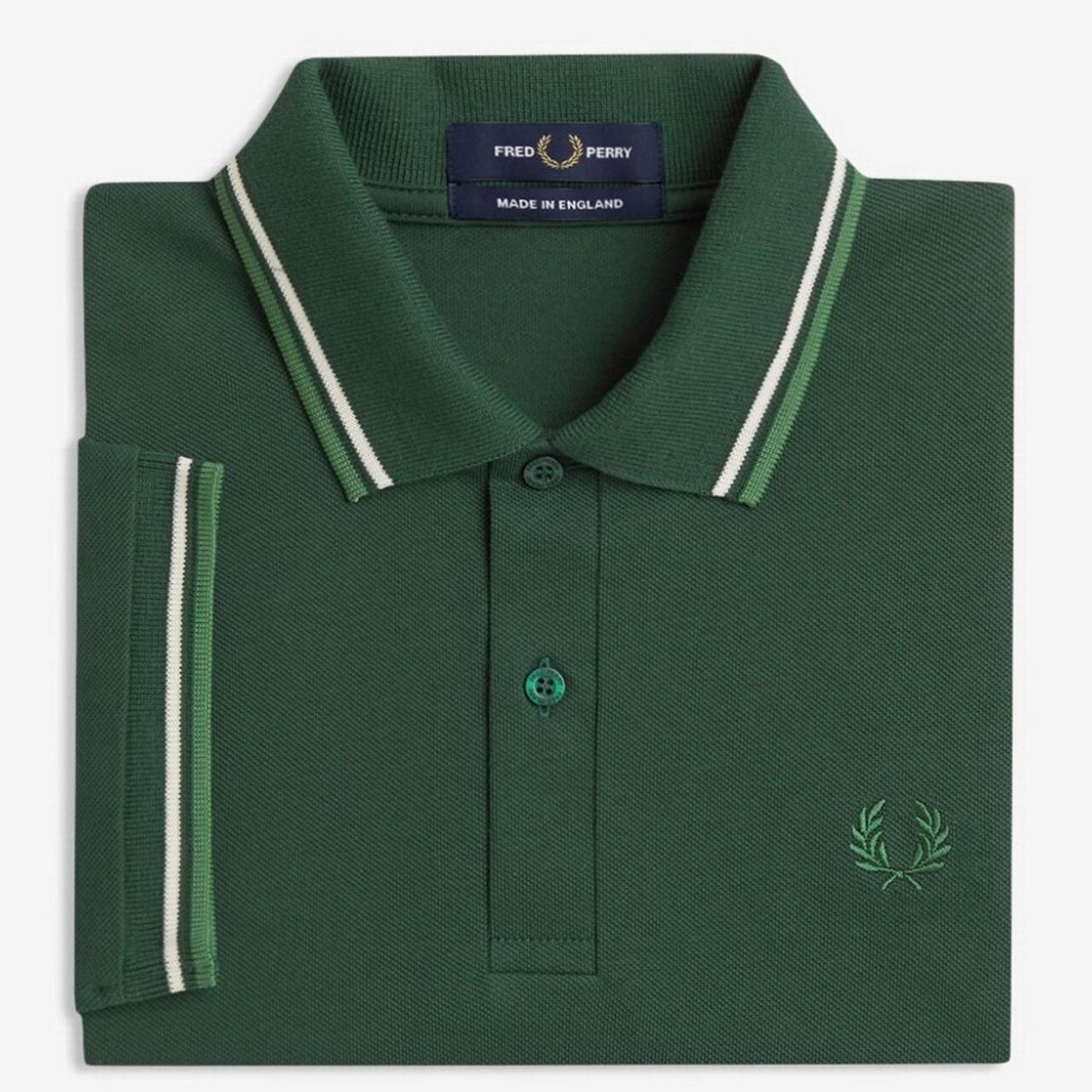
Fred Perry M12 Twin Tipped Polo Shirt in Grassroots with Tramline White and Ace Green twin tipping.
The Original That Started It All
Fred Perry has expanded its polo shirt collection over the decades, introducing modern silhouettes such as the popular M3600.
Yet the M12 occupies a unique position.
It is the original twin tipped polo.
The shirt that transformed a sporting garment into a cultural icon.
From Centre Court to Carnaby Street, from Ska clubs to Britpop stages, from scooter rallies to football terraces, few garments have travelled so effortlessly through Britain's changing cultural landscape.
The M12 has never simply reflected style.
It has helped define it.
More than sixty years after its introduction, the Fred Perry M12 remains exactly what it has always been: an authentic Made in England classic and one of the greatest polo shirts ever produced.
Shop our full Fred Perry men's range here.