
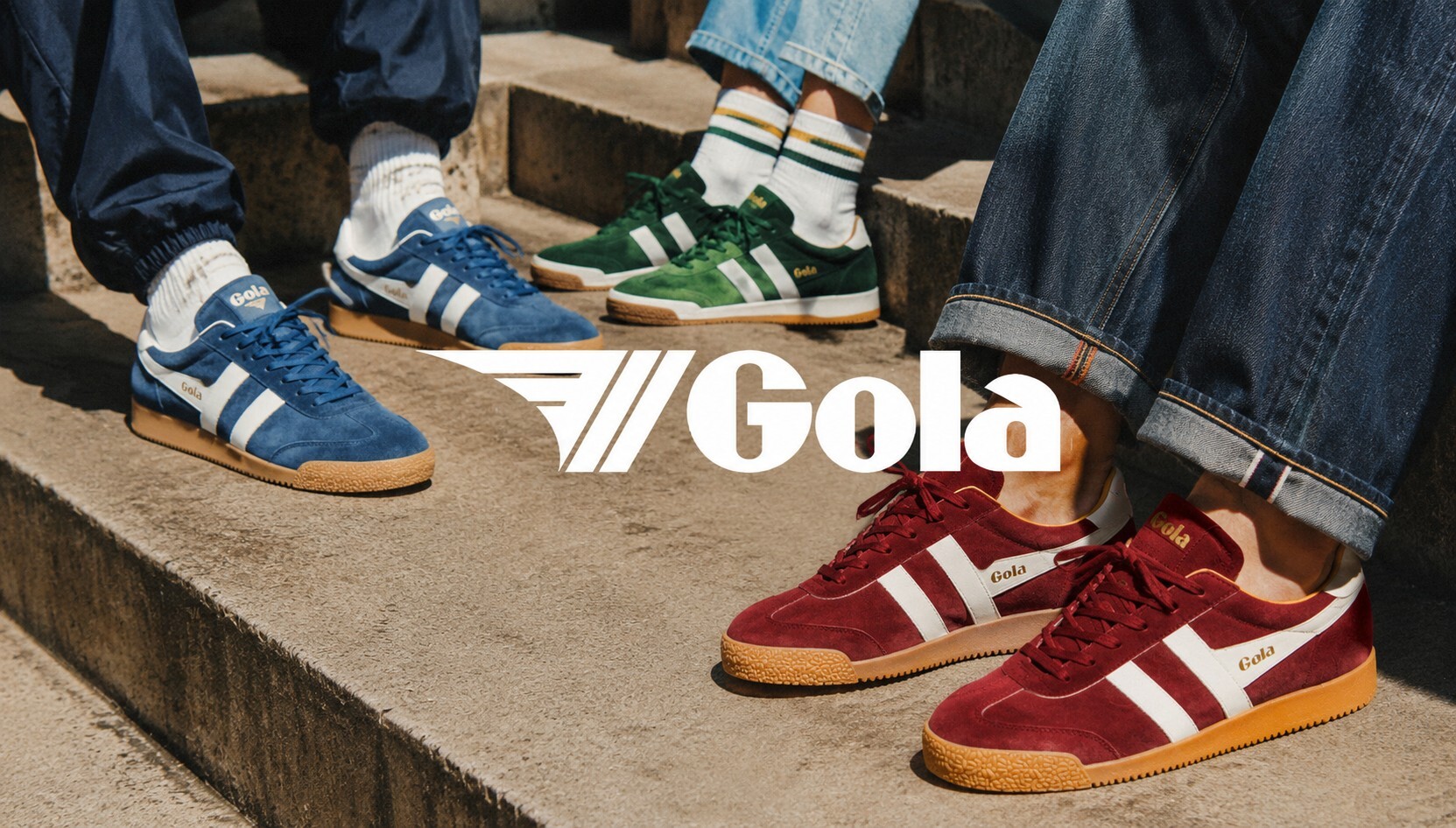
Gola Harrier: The Trainer That Never Went Out of Style
Some trainers define a moment.
Others define an era.
The Gola Harrier has managed both.
First introduced in 1968 as a practical all-round training shoe, the Harrier has spent more than five decades evolving from sports hall essential to one of Britain's most recognisable lifestyle trainers. Long before the phrase "retro sneaker" entered the fashion vocabulary, the Harrier had already found its place on running tracks, football terraces, music stages and high streets across the UK.
Today it remains the flagship style in the Gola Classics collection, appreciated as much for its understated versatility as its sporting heritage. Available in both men's and women's collections, the Harrier continues to bridge generations, proving that good design never really dates.
Whether paired with denim, tailored trousers, dresses or casual weekend wear, the Harrier remains exactly what it was designed to be; simple, comfortable and unmistakably British.
Born on the Track
Like many iconic trainers, the Harrier began life with performance rather than fashion in mind.
Its origins can be traced to 1967 when Gola designer Fred Dilley developed a prototype known internally as the Gola 367. Constructed with a leather upper, suede reinforcement and the newly introduced Wingflash side stripe, the design represented a significant step forward from the plimsolls and simple tennis shoes that dominated sports footwear during the period.
Recognising its potential, Gola officially launched the shoe as the Harrier in 1968.
Rather than specialising in a single discipline, the Harrier was intended as a versatile training shoe suitable for athletics, gym work, football training, badminton and squash. It was exactly the sort of practical, durable footwear Britain's growing sporting culture demanded.
The response exceeded expectations.
Within a remarkably short period the Harrier was reportedly selling more than 6,000 pairs every week, establishing itself as one of Britain's biggest sports footwear success stories.
Designed to Stand the Test of Time
Part of the Harrier's enduring appeal lies in the fact that its design has changed remarkably little over the decades.
Its instantly recognisable silhouette is built around a handful of distinctive features that continue to define the trainer today.
The famous Wingflash side stripe gives the shoe its unmistakable profile, while the suede toe cap provides both durability and visual texture. A classic gum sole adds warmth and vintage sporting character, completing a design that feels every bit as relevant now as it did during the late 1960s.
While modern Harriers benefit from softer linings, lighter construction and improved comfort, the essential character remains faithful to the original.
It's a trainer that never needed reinventing.
From Sports Shoe to Style Icon
The Harrier's greatest achievement wasn't on the running track.
It happened when people stopped wearing it purely for sport.
During the early 1970s Britain witnessed the birth of casual sportswear as everyday fashion. Trainers began appearing with denim rather than shorts, and football supporters increasingly adopted sports footwear away from the terraces.
The Harrier was among the first trainers to make that transition naturally.
Its clean profile looked just as comfortable beneath a pair of jeans as it did with training kit, helping establish a blueprint for the modern lifestyle trainer decades before the category officially existed.

A Favourite of Mods, Casuals and Britpop
Few trainers have crossed as many British style movements as the Harrier.
Its uncomplicated lines made it a natural fit for the Mod Revival, where smart, understated sportswear sat comfortably alongside polo shirts, Harrington jackets and tailored trousers. Artists including Paul Weller helped reinforce the trainer's connection with modernist style throughout the late 1970s and beyond.
During the 1980s the Harrier found another audience among football Casuals, who embraced European sportswear and heritage trainers as part of terrace culture.
Then came the 1990s.
As Britpop celebrated British fashion once again, Gola's classic trainer enjoyed another surge in popularity. The Gallagher brothers of Oasis, Blur, Robbie Williams and countless indie musicians all helped reintroduce the Harrier to a new generation who appreciated its authentic sporting roots and understated confidence.
Unlike trend-led trainers, the Harrier never looked like it was trying too hard.
That remains part of its charm today.
More Colours, Same Character
Although the original Harrier appeared in relatively simple colour combinations, the trainer has become renowned for its extraordinary variety.
Over the decades Gola has produced hundreds of colourways, ranging from timeless navy, black and grey combinations through to vibrant seasonal editions inspired by vintage sportswear and contemporary fashion.
Premium suede has become the defining material for much of the collection, while leather editions, vegan alternatives and Made in England releases demonstrate just how adaptable the Harrier has become.
Whatever the colour, the unmistakable silhouette remains instantly recognisable.
Why the Gola Harrier Still Matters
One reason the Harrier has remained so relevant is its universal appeal.
Unlike many heritage trainers originally developed solely for men, today's Harrier collection spans both men's and women's ranges, with colours and finishes that complement a huge variety of wardrobes.
Its slim profile makes it equally at home with denim, chinos and tailored trousers as it does with dresses, skirts or relaxed casual styling.
Few trainers manage that level of versatility without sacrificing their identity.
Fashion moves quickly.
The Harrier doesn't.
Instead, it quietly continues doing exactly what it has done since 1968; offering honest design, dependable comfort and timeless British style.
While trends have come and gone, the Harrier has remained a constant presence through Mod, Casual, Britpop and today's renewed appreciation for vintage sportswear.
It's no coincidence that younger generations continue discovering the shoe through the current resurgence of terrace fashion, retro sportswear and 'blokecore'. The Harrier never needed to chase nostalgia because it never really disappeared.
That authenticity is something few trainers can genuinely claim.
Whether you're discovering the Harrier for the first time or replacing a well-loved favourite, it's easy to understand why this enduring design continues to sit at the heart of the Gola Classics range.
From classic suede finishes and understated everyday colourways to bolder seasonal releases, the Harrier remains one of Britain's defining trainers; equally at home with Mod styling, terrace fashion, vintage sportswear or contemporary casual wear.
More than half a century after its debut, one thing remains certain.
There's only one Harrier.