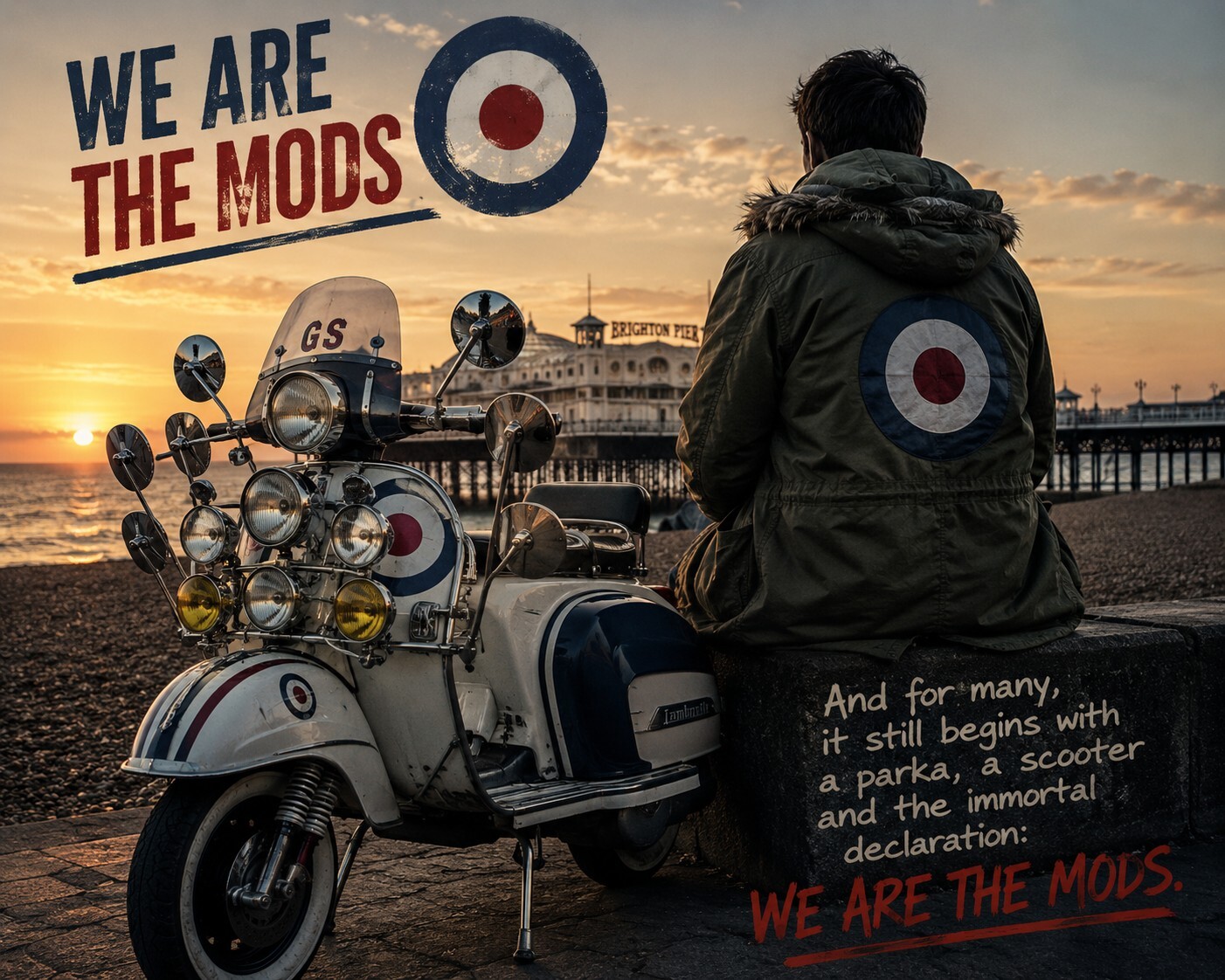
⭐ WE ARE THE MODS!
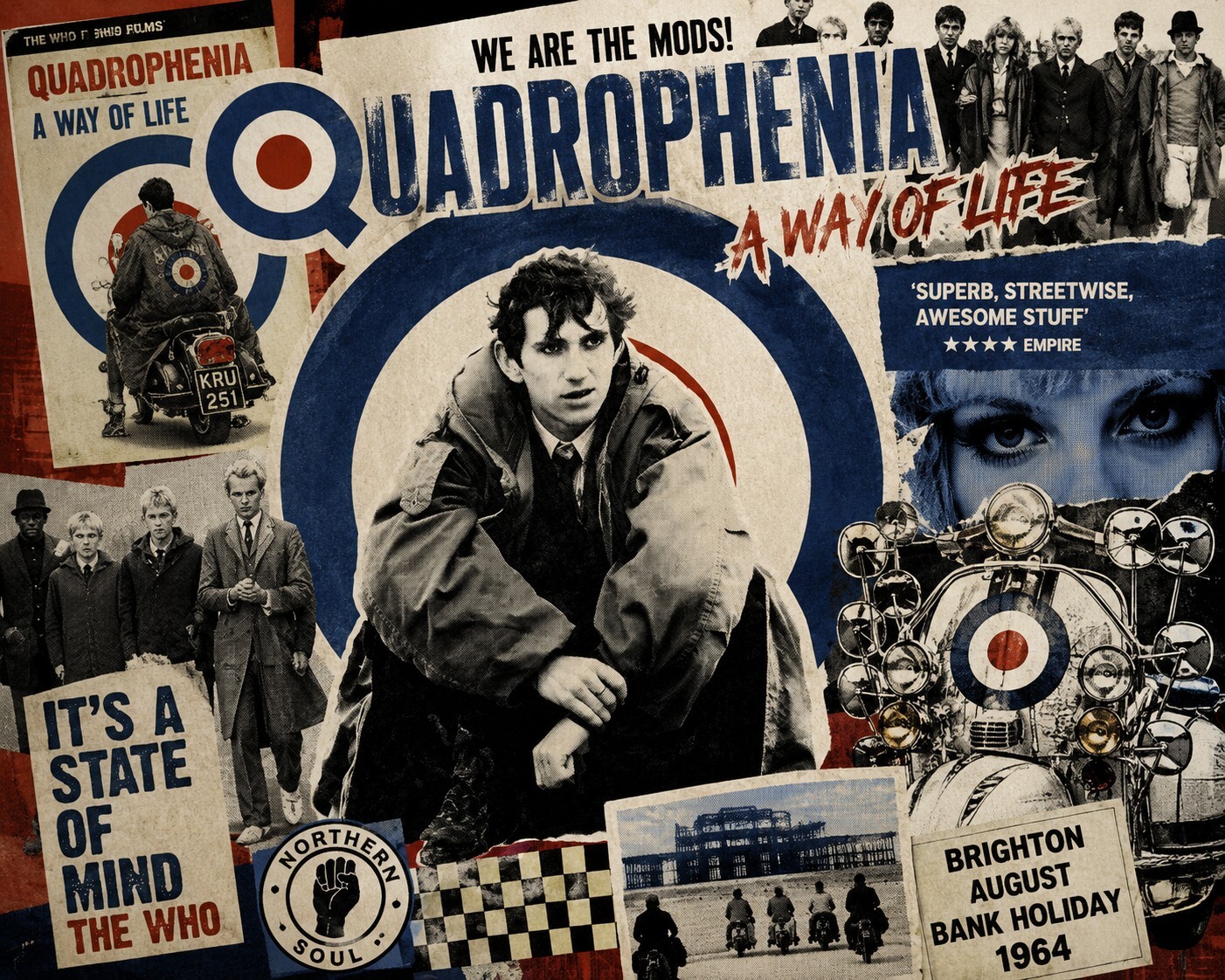
Quadrophenia and the Mod Revival of the Late 1970s
If the original Mod movement defined a generation during the early 1960s, its influence proved impossible to confine to a single decade. Long after the scooters had been parked and Carnaby Street's first wave had faded, Mod continued to survive in record collections, club nights, tailoring shops and among those unwilling to abandon the sharp style and musical passion that had first drawn them to the scene.
By the late 1970s, Britain was a very different country. Economic uncertainty, industrial decline and rising unemployment had created an atmosphere far removed from the optimism of the Swinging Sixties. Punk had exploded onto the streets with its confrontational attitude and DIY spirit, encouraging young people to reject convention and carve out identities of their own.
Yet while some embraced safety pins and torn clothing, others began looking elsewhere for inspiration. They found it in the sharp silhouettes, soul records and scooters of the original Mod movement.
The spark was already there. Bands such as The Jam were reintroducing elements of Mod style and musical influences to a new generation. Then, in 1979, a film arrived that would transform a growing underground interest into a full-scale cultural revival.
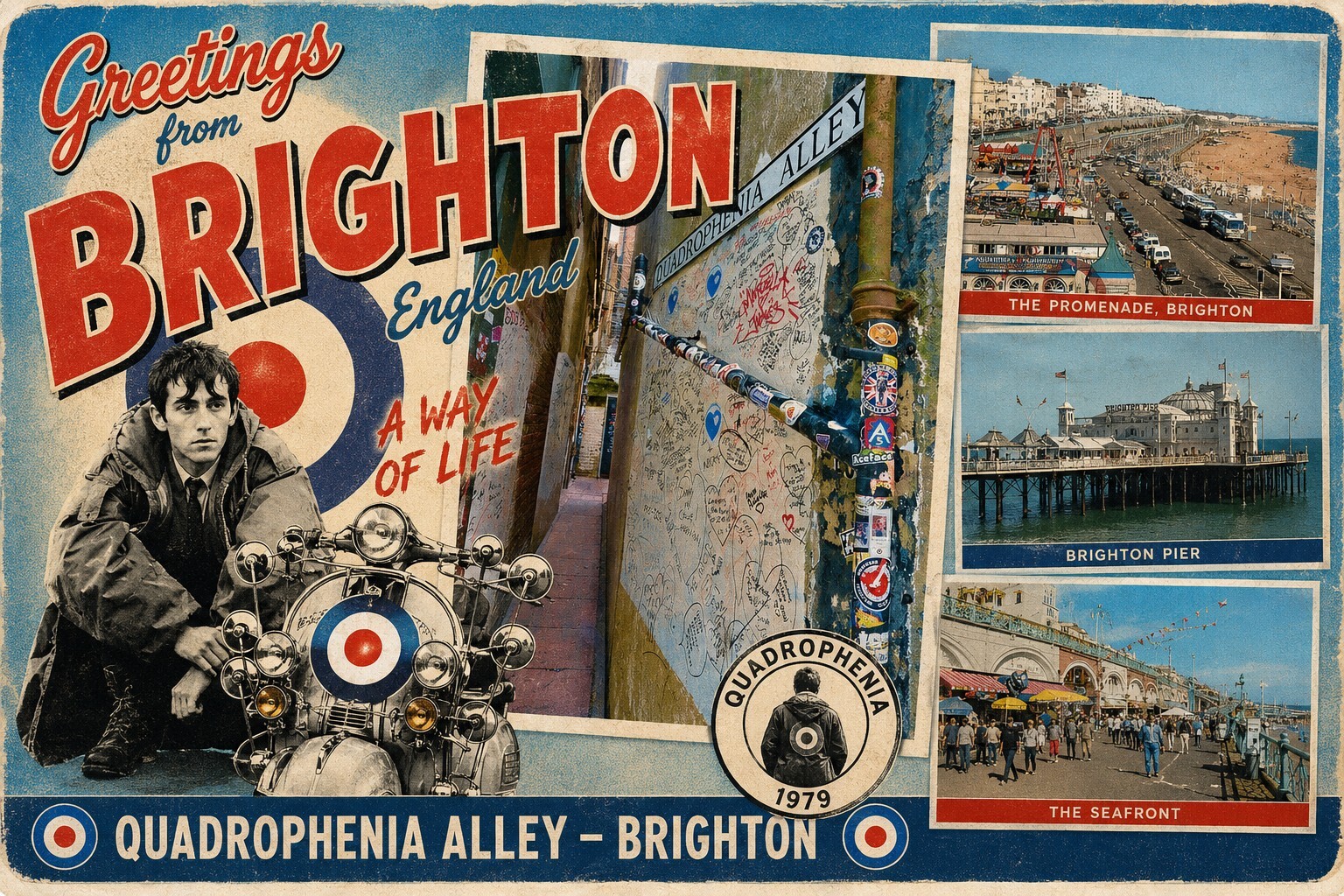
Quadrophenia Lights the Fuse
Released in 1979 and based on The Who's 1973 rock opera, Quadrophenia told the story of Jimmy Cooper, a young Mod navigating life in London during the summer of 1964.
More than a coming-of-age drama, the film captured the excitement, frustration and tribal identity that defined youth culture. Jimmy lives for weekends, soul records, scooters and nights spent with fellow Mods. He finds belonging within the scene, but gradually discovers that the ideals and heroes he worships are often more fragile than they appear.
The film's climax recreates the infamous Brighton clashes between Mods and Rockers, but the story's lasting power comes from what follows. Jimmy's growing disillusionment, particularly after discovering that his idol Ace Face is merely a hotel bellboy serving wealthy guests, resonated strongly with audiences.
For many viewers in 1979, Jimmy's frustrations felt remarkably familiar.
Britain's young people faced limited opportunities, uncertain futures and a growing sense of alienation. Although the story was set fifteen years earlier, its themes felt entirely contemporary. The result was a film that functioned not simply as nostalgia, but as a reflection of late-1970s Britain itself.
A Blueprint for a New Generation
The cultural impact of Quadrophenia was immediate.
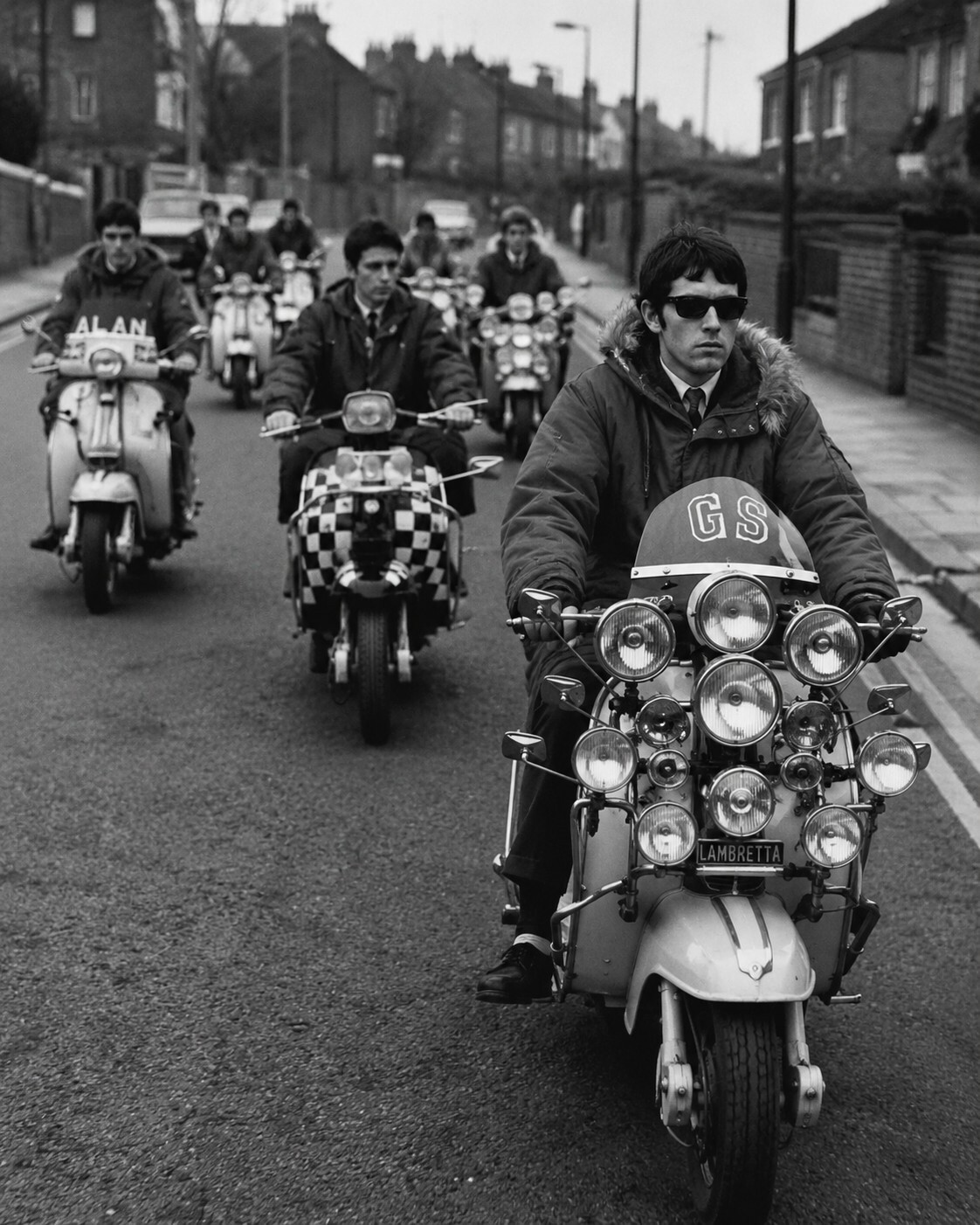
Thousands of teenagers who had been too young to experience the original Mod movement suddenly had a visual guide to an entire way of life. The film provided the clothes, the music, the attitude and the imagery. Almost overnight, parkas returned to Britain's high streets, scooter clubs grew rapidly and Mod nights began appearing across the country.
What made the revival particularly powerful was that it wasn't based on second-hand memories. Most of the young people embracing Mod in 1979 had never experienced the original movement. They weren't recreating their own youth; they were discovering a culture that felt more exciting and authentic than the one surrounding them.
The film offered something many young people felt was missing from contemporary life: identity, style and belonging.
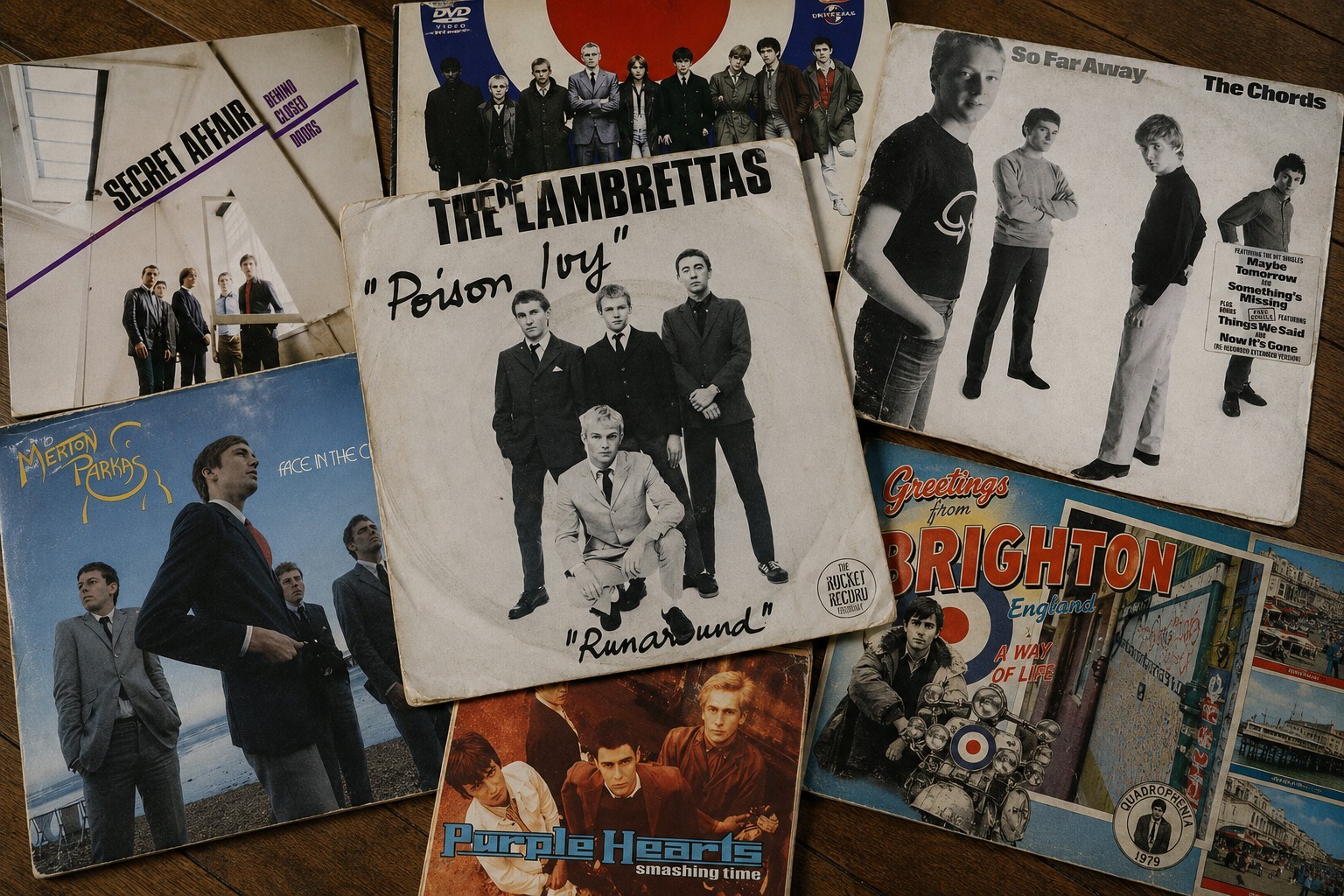
The Soundtrack of the Revival
Music remained at the heart of the movement, just as it had during the 1960s.
The original Mods had built their culture around Modern Jazz, American Rhythm & Blues, Motown and Soul. Revival Mods retained that appreciation while introducing newer influences drawn from Punk, Power Pop, New Wave and the rapidly growing 2 Tone movement.
The Jam became the defining band of the era. Although never simply a Mod revival act, Paul Weller and company fused sharp tailoring, social commentary and explosive energy into a sound that felt both modern and connected to the past.
Alongside them came bands such as Secret Affair, The Chords, Purple Hearts, The Lambrettas and The Merton Parkas, all helping to establish a distinct soundtrack for the revival generation.
Meanwhile, 2 Tone groups such as The Specials, Madness and The Selecter brought Ska and Reggae influences into the mix, creating a scene that was broader and more musically diverse than its predecessor.
Style Returns to the Streets
Fashion played an equally important role in the revival.
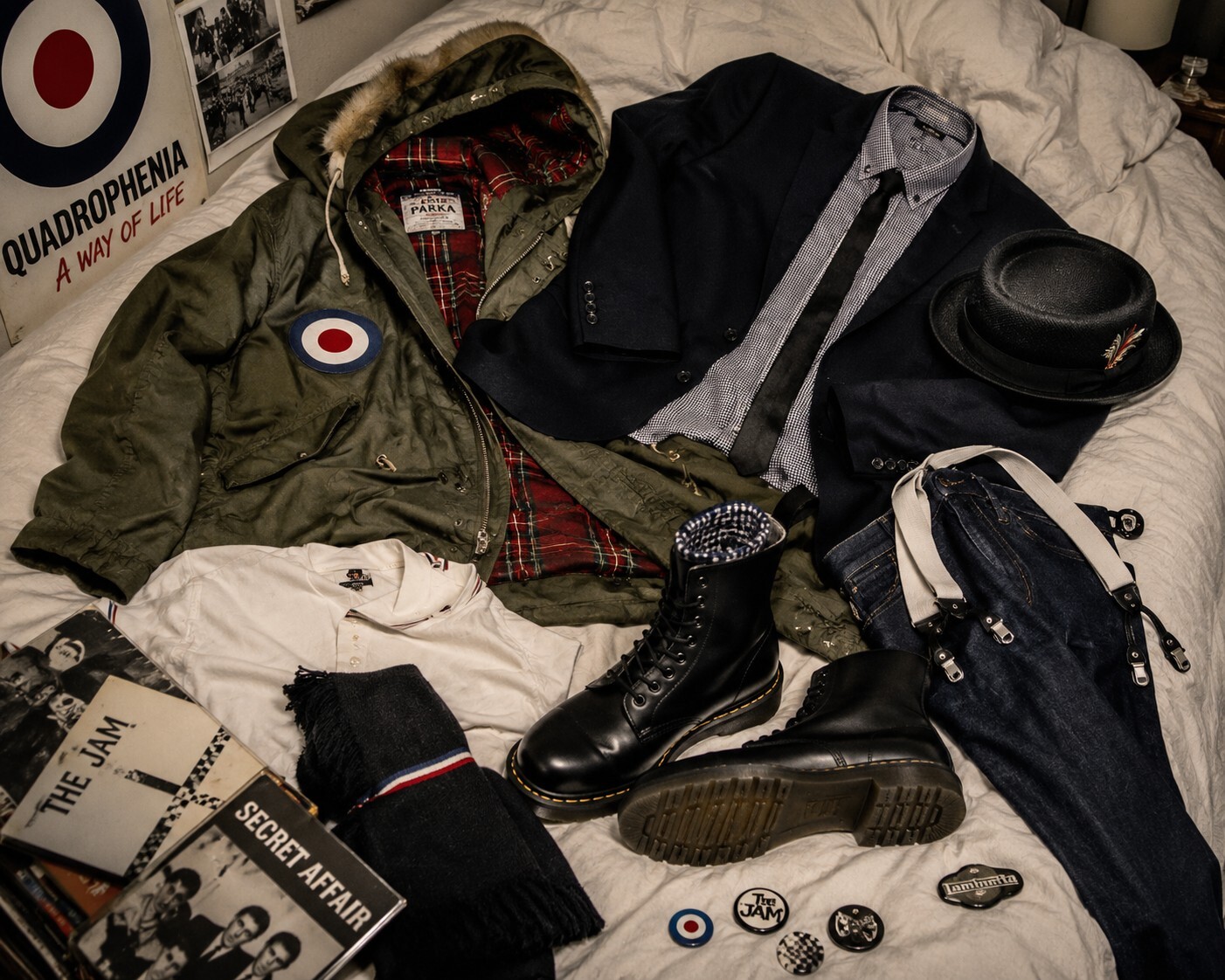
Many of the essential ingredients remained familiar. Fishtail parkas, button-down shirts, loafers, slim tailoring and Lambretta or Vespa scooters all returned to prominence. The iconic RAF target symbol became increasingly visible, appearing on jackets, badges, scooter panels and record sleeves.
Yet the revival developed its own identity rather than simply copying the past.
The influence of Punk could be seen in sharper silhouettes, thinner ties, greater use of badges and a slightly more aggressive edge. Tartan trousers, bomber jackets and military-inspired clothing often appeared alongside traditional Mod staples. The look was cleaner and more uniform than the eclectic experimentation of the original 1960s scene.
What emerged was a version of Mod that reflected late-1970s realities while remaining connected to its roots.
More Than Nostalgia
One of the reasons Quadrophenia remains so influential is that it captured a universal aspect of youth culture.
At its core, the film isn't really about scooters, Brighton riots or even Mod style. It's about searching for identity, trying to find your place in the world and discovering that the people you idolise are often just as flawed as everyone else.
Those themes resonated as strongly in 1979 as they had in 1964.
The revival therefore became more than an exercise in nostalgia. It was a reinterpretation of Mod values for a new generation facing its own challenges. Style, music, friendship and self-expression remained central, but they were filtered through a very different social and economic landscape.
The Legacy of the Revival
Although the peak of the revival faded during the early 1980s, its influence never disappeared.
Its impact can be traced through the Mod scenes that continued throughout the decade, the rise of Britpop in the 1990s and the enduring popularity of scooter culture, Northern Soul events and Modernist club nights around the world.
Most importantly, it ensured that Mod remained a living culture rather than a historical curiosity.
If the original movement created the blueprint, the Mod Revival ensured it survived. Through Quadrophenia, a new generation discovered the enduring appeal of sharp clothes, great records and the pursuit of something more exciting than everyday life.
More than forty years after its release, the film remains the gateway through which countless people first encounter Mod culture.
And for many, it still begins with a parka, a scooter and the immortal declaration:
We Are The Mods.