
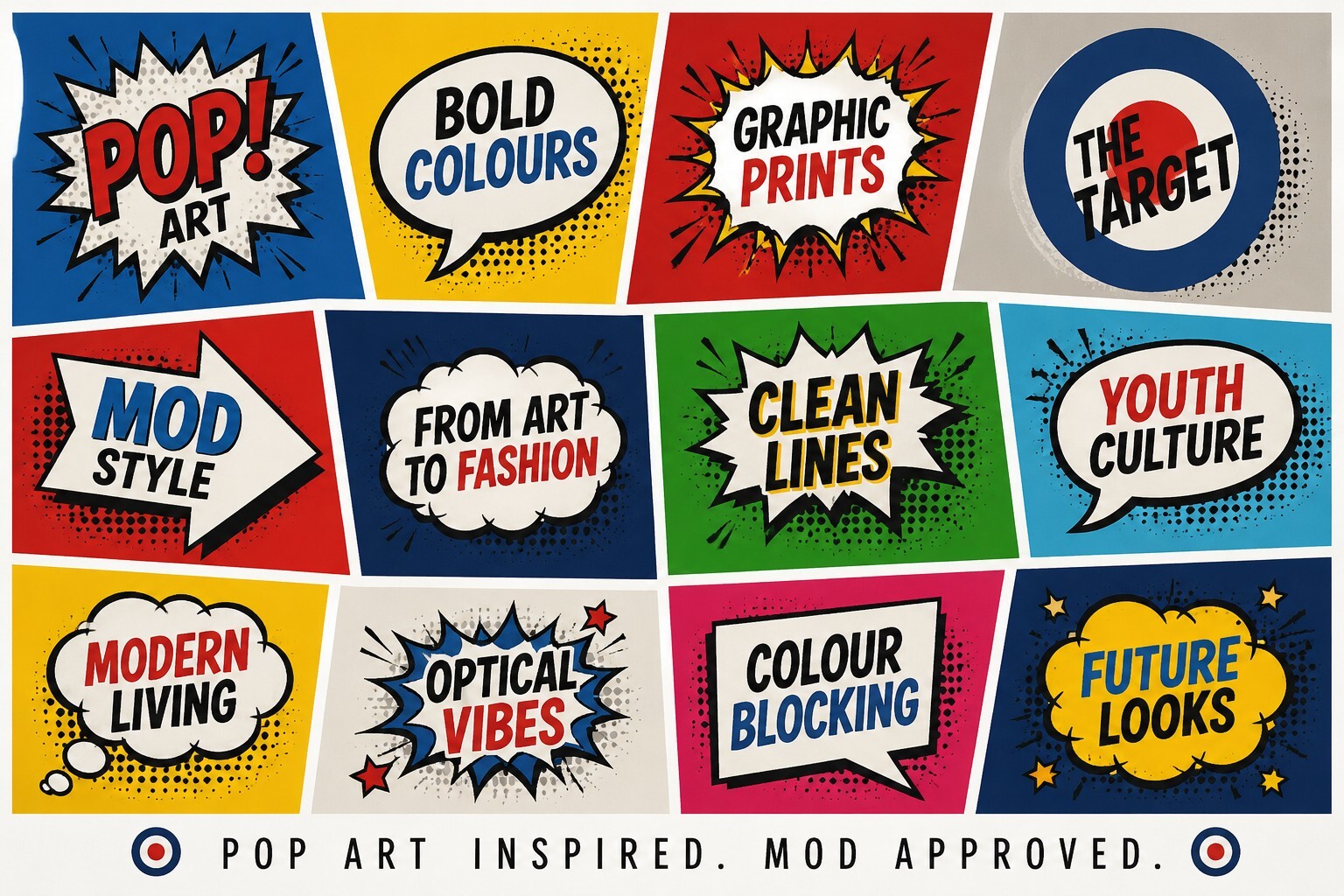
⭐ POP ART, STYLE & THE MOD TARGET: When Art Leapt Off Canvases and Onto Clothes
Few artistic movements have influenced fashion quite as profoundly as Pop Art. Emerging in Britain and America during the late 1950s and exploding into popular culture throughout the 1960s, Pop Art challenged traditional ideas about what art could be. Everyday objects, advertising, comic books, consumer packaging and mass-produced imagery became worthy artistic subjects, blurring the boundaries between high culture and popular culture.
For the Mod generation, this was more than an artistic revolution. It was a reflection of the world they already inhabited.
Mods embraced the new, the modern and the exciting. They were drawn to contemporary music, cutting-edge design, Italian tailoring, scooters and the latest trends emerging from London's boutiques. Pop Art shared that same fascination with modern life, celebrating the energy, colour and visual noise of the post-war consumer age. It is little wonder that the two movements became so closely intertwined.
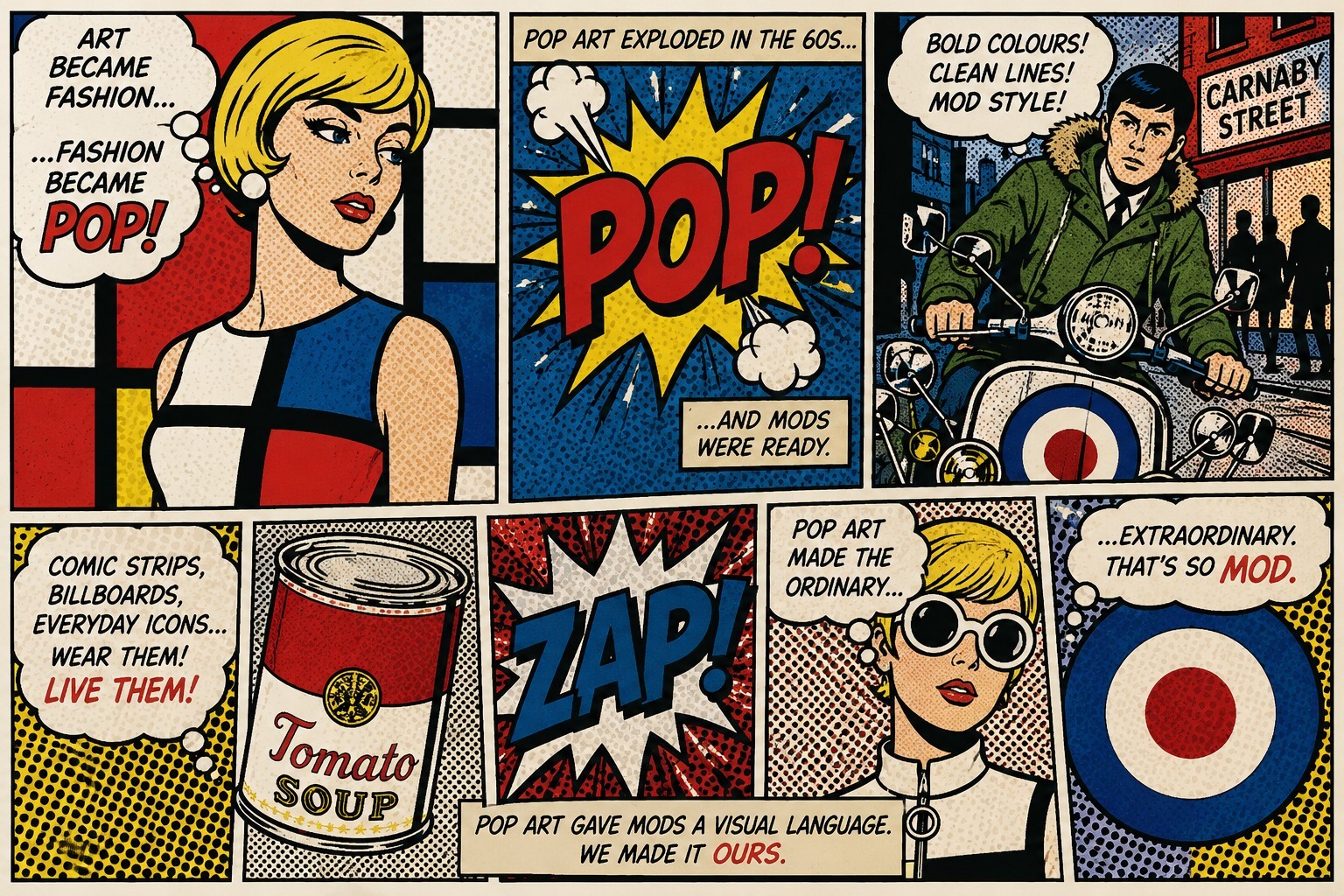
Art Steps Off the Gallery Wall
Before Pop Art, fashion and fine art largely occupied separate worlds. Art belonged in galleries and museums, while clothing remained largely functional or traditionally decorative. Pop Art helped dissolve those boundaries.
Artists such as Andy Warhol, Roy Lichtenstein, Peter Blake and Richard Hamilton demonstrated that inspiration could come from anywhere. Magazine advertisements, comic strips, packaging and popular entertainment all became legitimate creative sources. Fashion designers quickly recognised the possibilities.
Suddenly, clothing could be playful, provocative and visually striking. Dresses became canvases for graphic experimentation. Shirts featured bold prints and geometric patterns. Fashion no longer had to imitate the past; it could embrace the visual language of the modern world.
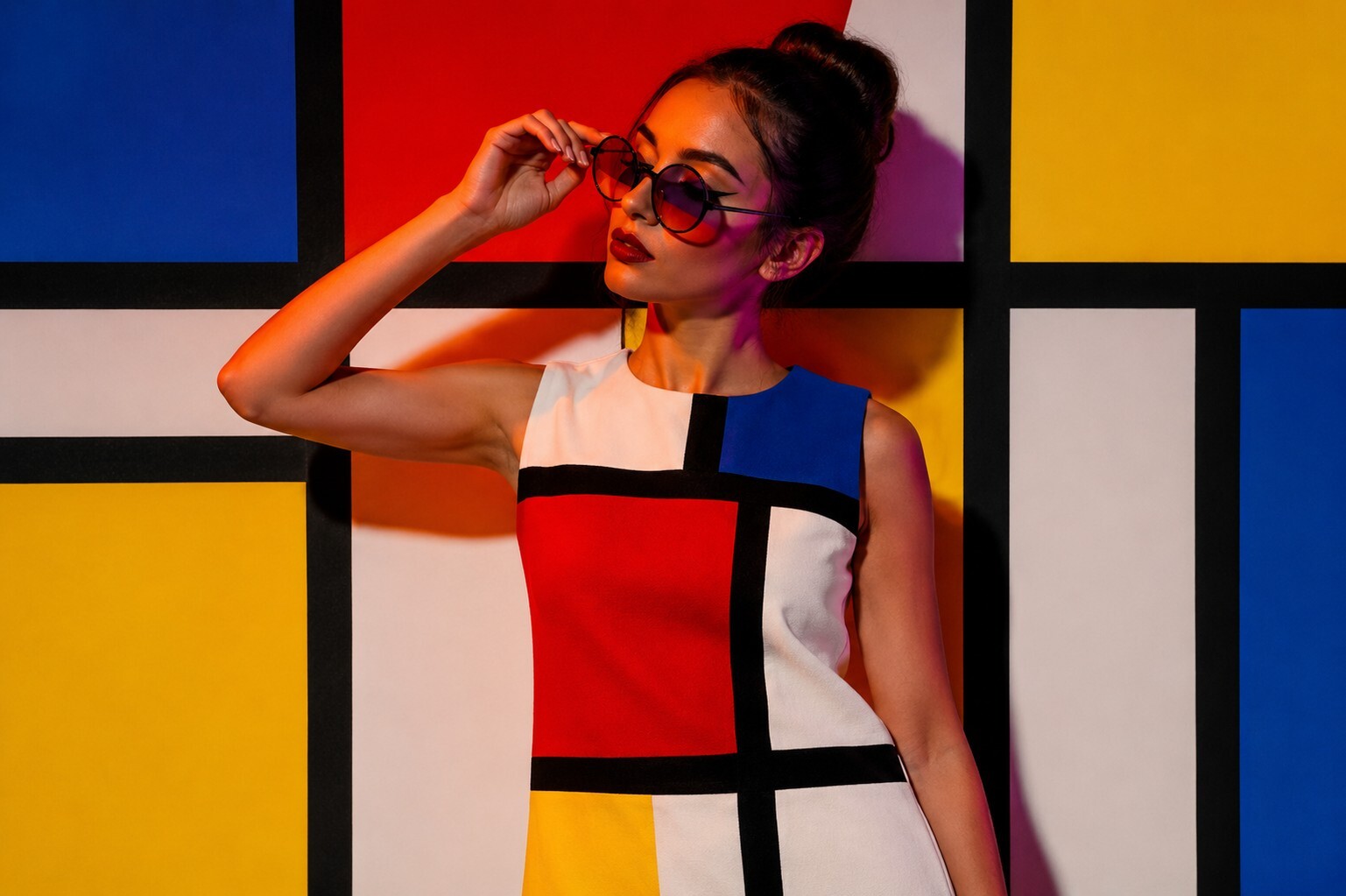
One of the most famous examples remains Yves Saint Laurent's Mondrian Dress of 1965, inspired by the geometric paintings of Dutch artist Piet Mondrian. The design transformed a gallery concept into something wearable, proving that art could move beyond the frame and onto the street.
Yet for Mods, perhaps the more significant figure was Mary Quant. Through her King's Road boutique Bazaar, Quant championed youthful fashion that was bold, accessible and unapologetically modern. Bright colours, graphic shapes and playful designs echoed many of the same ideas emerging within Pop Art, helping to bring contemporary visual culture directly into everyday wardrobes.
The Pop Art Influence on Mod Fashion
As the decade progressed, Pop Art's influence became increasingly visible throughout Mod fashion.
The restrained palette of the 1950s gave way to vibrant blocks of colour. Bright reds, vivid blues, brilliant yellows and stark monochrome combinations appeared across dresses, knitwear and accessories. Geometric colour blocking became a defining feature of mid-sixties style, creating garments that felt sharp, clean and unmistakably modern.
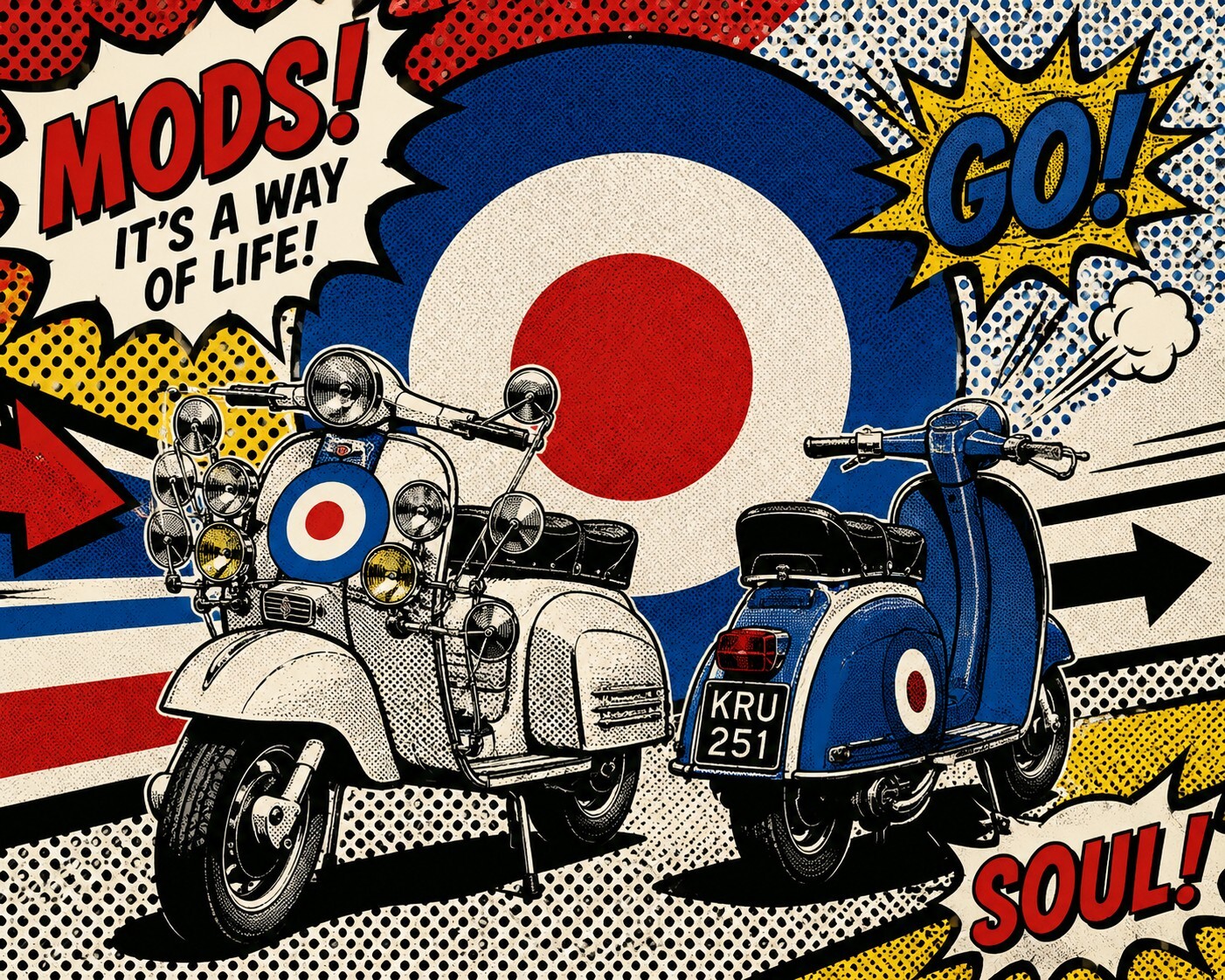
Graphic imagery also became commonplace. Comic-book aesthetics, bold typography and striking visual motifs appeared on clothing, posters, record sleeves and boutique interiors. Fashion became more immediate and expressive, communicating ideas through image as much as through silhouette.
This shift reflected a broader cultural change. For the first time, youth fashion was no longer simply following trends established by older generations. Young people were creating their own visual identity, drawing inspiration directly from contemporary art, music and popular culture.
For Mods, whose entire outlook revolved around being modern, this represented a natural evolution.
Op Art, Optical Illusions and Visual Energy
Closely linked to the rise of Pop Art was the emergence of Optical Art, commonly known as Op Art. While technically a separate movement, its influence on sixties fashion was impossible to ignore.
Artists such as Bridget Riley explored patterns, repetition and visual illusion, creating artworks that appeared to vibrate, shift and move before the viewer's eyes. Fashion designers quickly adapted these ideas into textiles and clothing.
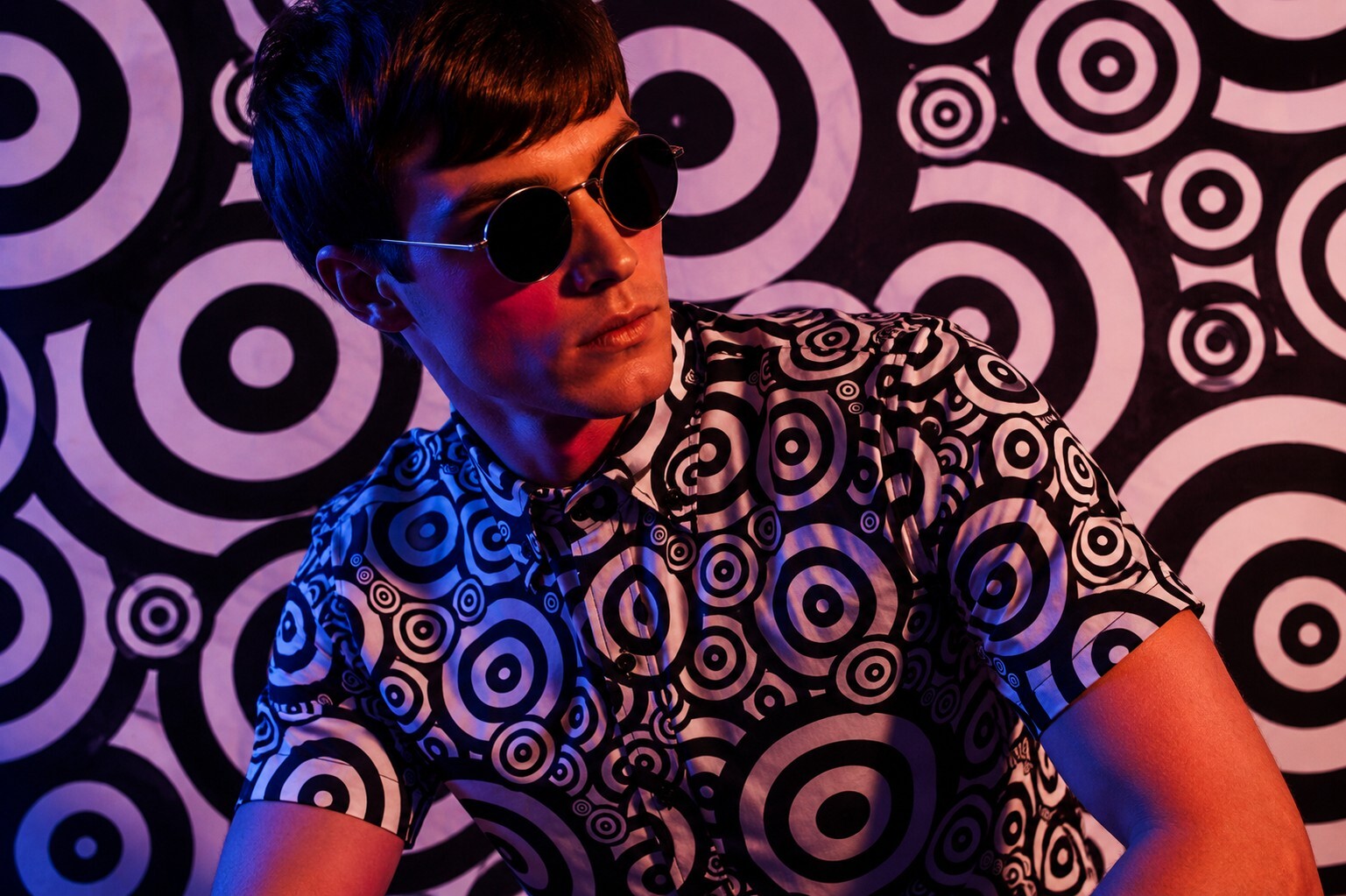
Checkerboards, concentric circles, zig-zags and hypnotic monochrome patterns became common features of Mod-inspired garments. Dresses, coats and knitwear appeared to come alive beneath nightclub lighting, creating a sense of movement even when standing still.
The fascination with clean geometry and bold visual effects perfectly complemented the Modernist appreciation for contemporary design. Whether expressed through tailoring, architecture, graphic design or fashion, Mods consistently gravitated towards anything that felt innovative and forward-thinking.
New Materials for a New Age
Pop Art's celebration of consumer culture also encouraged designers to experiment with materials that previous generations might have dismissed.
Traditional notions of luxury were challenged by the introduction of PVC, plastics and synthetic fabrics. Shiny raincoats, vinyl accessories and futuristic jewellery reflected the space-age optimism that characterised much of the decade.
Even disposable fashion emerged as a phenomenon. Paper dresses, produced cheaply and designed to be worn only a handful of times, perfectly captured the Pop Art fascination with mass production and consumerism. While often more novelty than practical garment, they demonstrated how radically ideas about fashion were changing.
For a generation obsessed with innovation, these new materials felt every bit as exciting as the latest record or scooter model.
The Rise of the Target
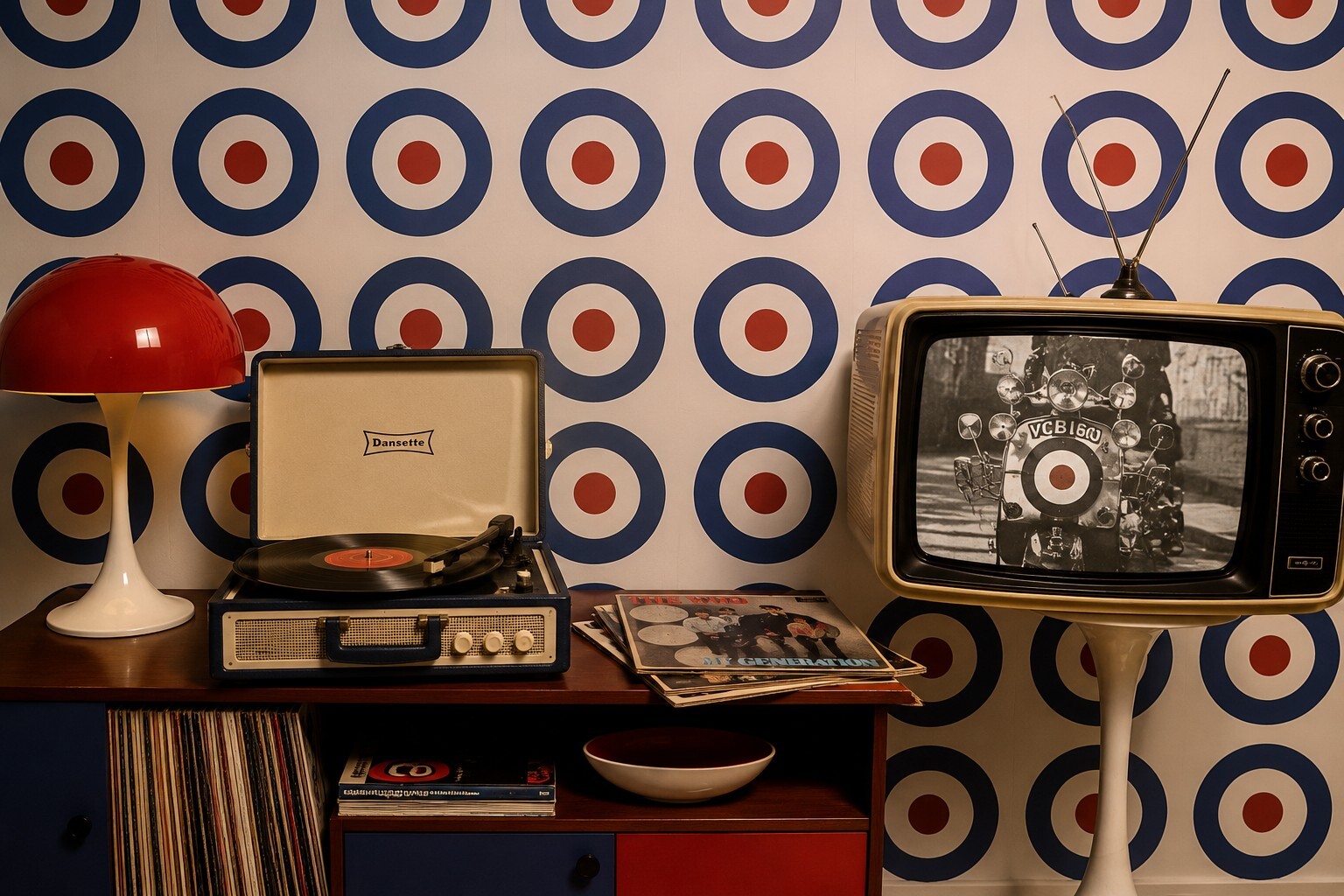
No visual symbol is more closely associated with Mod culture than the target, or roundel.
Originally derived from Royal Air Force insignia, the target was transformed during the 1960s into a powerful graphic motif. Its simple geometry and bold colours made it perfectly suited to the visual language of Pop Art.
Artists such as Jasper Johns had already explored target imagery within contemporary art, while British Pop artists frequently incorporated similar symbols into their work. The roundel's clean, graphic appearance aligned perfectly with the Modernist preference for simplicity and impact.
Its connection to Mod culture was cemented when bands such as The Who adopted the symbol as part of their visual identity. Appearing on shirts, jackets, stage equipment and promotional material, the target quickly evolved from a military marking into an unmistakable badge of Mod allegiance.
Soon it could be found decorating scooters, parkas, posters and bedroom walls. What began as a practical insignia became one of the defining visual icons of British youth culture.
Pop Art's Lasting Legacy
Pop Art fundamentally changed the relationship between fashion, art and popular culture.
It demonstrated that style could be democratic rather than exclusive, playful rather than formal, and inspired by everyday life rather than distant tradition. The movement encouraged designers to embrace colour, graphics, experimentation and humour, many of which remain central to fashion today.
Its influence can be traced through everything from psychedelic fashion and Punk graphics to contemporary streetwear and modern designer collections. The visual language developed during the 1960s continues to shape the way brands communicate and the way clothing is designed.
For Mods, Pop Art was never simply another passing trend. It reinforced everything the movement already valued: originality, modernity, individuality and confidence. Together, Pop Art and Mod culture helped create one of the most visually distinctive style movements of the twentieth century, proving that fashion could be every bit as expressive, innovative and culturally significant as the art hanging on gallery walls.