
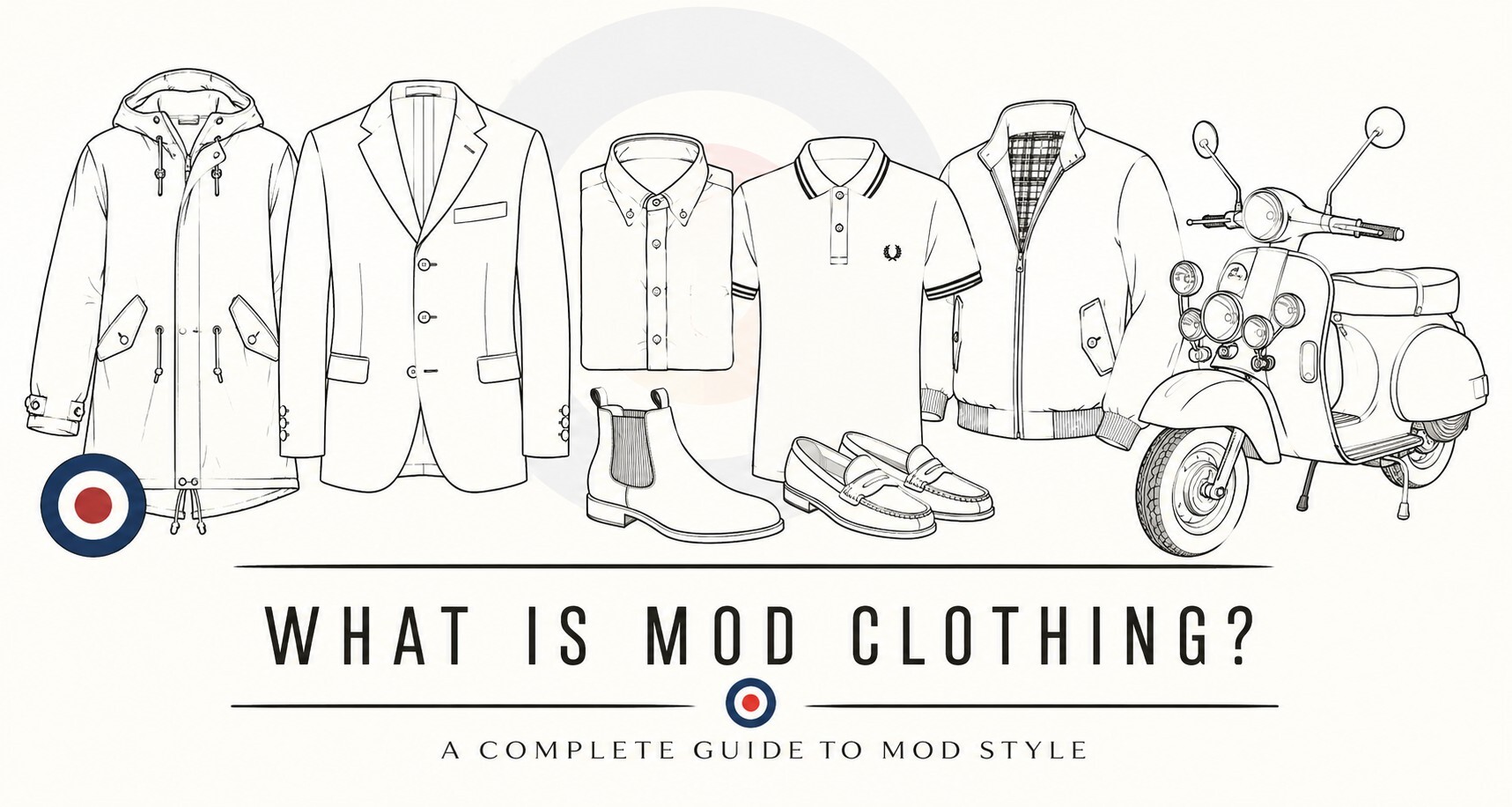
What is Mod Clothing? A Complete Guide to Mod Style
Mod fashion is one of the most enduring and influential style movements ever to emerge from Britain. More than sixty years after the original Modernists first appeared on the streets of London, the sharp silhouettes, clean lines and attention to detail that defined the movement continue to inspire generations of style-conscious individuals.
Unlike many youth movements, Mod was never about looking scruffy or rejecting fashion. Quite the opposite. The Mod philosophy centred on looking smart, modern and meticulously put together. Every garment, from a tailored suit to a simple polo shirt, was chosen with care. Presentation mattered. Details mattered. Fit mattered.
At its heart, Mod style is about sophistication without pretension. It combines continental influences, particularly from Italy, with British tailoring traditions and a youthful desire to constantly seek out the next thing. While fashions evolved throughout the 1960s and beyond, certain garments became firmly established as Mod wardrobe staples.
This guide explores the essential elements that make up the Mod look and explains why these timeless pieces remain as relevant today as ever.
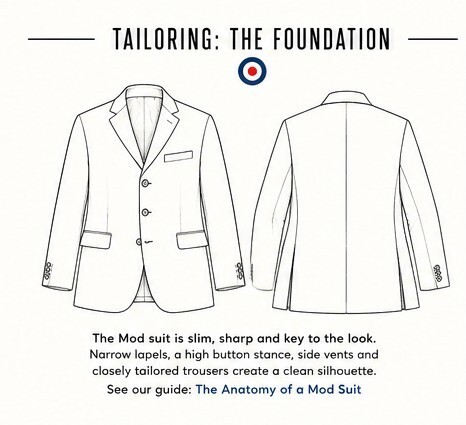
Tailoring: The Foundation of Mod Style
If there is one garment that defines Mod fashion more than any other, it is the suit.
For the original Modernists, tailoring represented modernity, aspiration and individuality. A well-cut suit demonstrated an appreciation for quality and style, regardless of social background. The emphasis was always on a slim, clean silhouette that appeared contemporary and youthful.
The classic Mod suit typically features a single-breasted jacket with narrow lapels, a higher fastening stance and a closely tailored fit. Trousers are slim through the leg, often slightly tapered, and cut to show a little more footwear than traditional tailoring.
Fabrics play an equally important role. Mohair blends became highly sought after thanks to their smooth finish and subtle sheen, while tonic fabrics gained legendary status for their distinctive two-tone appearance and ability to catch the light.
Although tailoring remains central to Mod style, it should never appear overly formal. The best Mod suits combine elegance with effortless confidence.
Shirts: Clean, Crisp and Characterful
A Mod wardrobe is built upon versatile shirts that can be dressed up or down depending on the occasion.
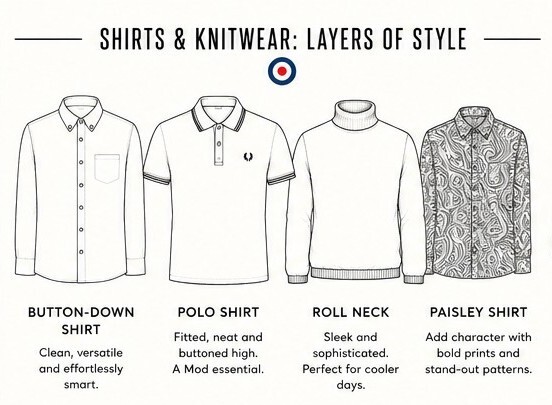
Button-down shirts became a particular favourite thanks to their neat appearance and Ivy League influences. Worn beneath tailoring, knitwear or casual jackets, they offered a clean and sophisticated foundation for countless outfits.
Alongside plain white shirts, patterns became an important part of the Modernist wardrobe. Gingham checks, fine stripes and bold paisley prints all found favour among Mods looking to inject individuality into their look.
The key was balance. A bold patterned shirt would often be paired with simple tailoring, while more understated shirts allowed statement outerwear or accessories to take centre stage.
Polo Shirts and Knitwear
The Mod movement demonstrated that casual clothing could be every bit as stylish as formalwear.
Polo shirts became an essential component of the Modernist wardrobe. Typically worn fitted and buttoned high at the neck, they offered a sharp alternative to traditional shirts while maintaining the clean lines Mods admired.
Fine-gauge knitwear also played an important role. Lightweight crew necks, V-necks and roll neck sweaters provided ideal layering pieces throughout the year. Roll necks in particular became associated with the more sophisticated side of the movement, creating a sleek silhouette when worn beneath jackets and coats.
The emphasis was always on simplicity, quality and fit rather than excessive decoration.
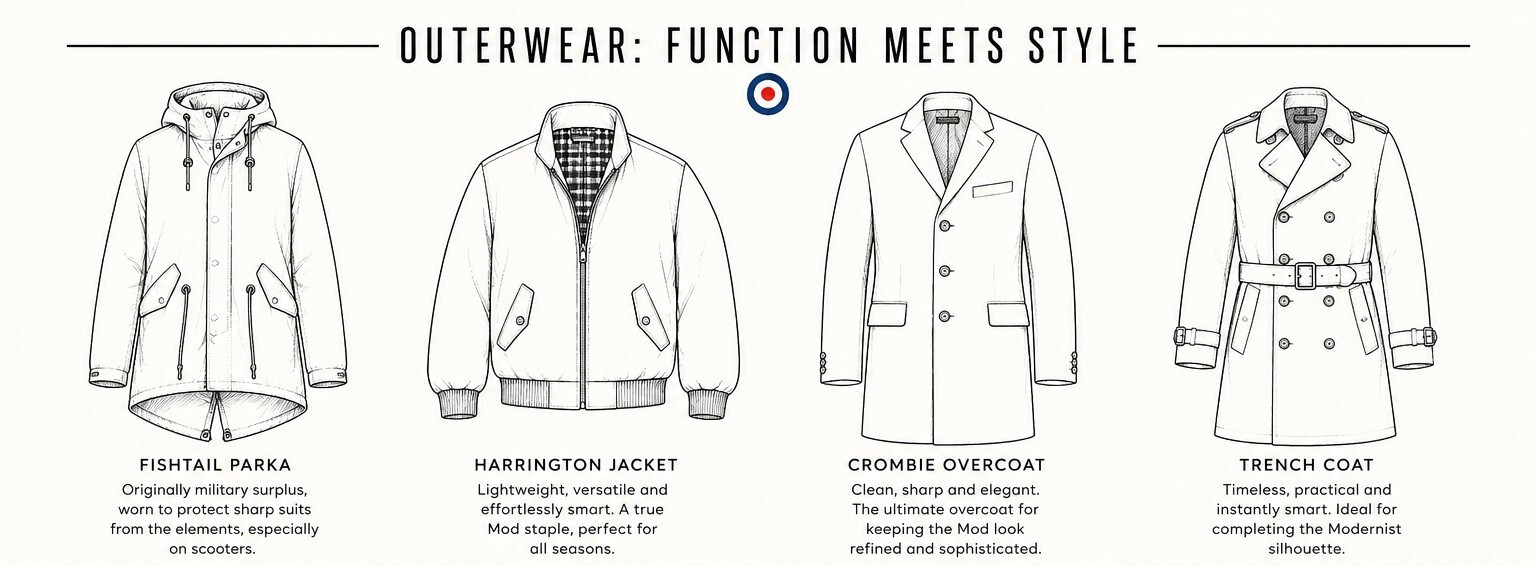
Outerwear: Function Meets Style
Few garments are more closely associated with Mod culture than the fishtail parka.
Originally military surplus clothing, parkas became popular because they protected expensive suits and smart clothing from the weather while riding scooters. Practicality may have driven their adoption, but they quickly became a visual symbol of the Mod movement.
The Harrington jacket also emerged as a key piece thanks to its simple design, lightweight construction and versatility. Easy to wear with tailoring, knitwear or casual separates, it remains a staple of Mod-inspired wardrobes today.
Other outerwear favourites include trench coats, pea coats and smart wool overcoats, all chosen for their clean lines and timeless appeal.
Regardless of style, outerwear should complement the outfit beneath rather than overwhelm it.
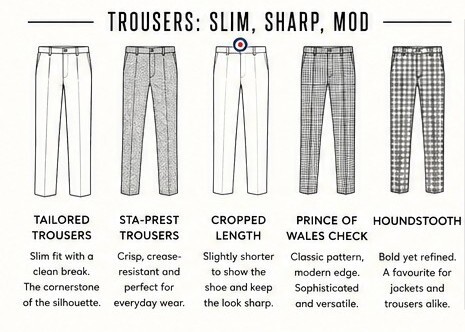
Trousers: Slim and Streamlined
The Mod silhouette relies heavily upon well-fitting trousers.
Traditional wide-cut styles were largely rejected in favour of slimmer shapes that created a sharper appearance. Tailored trousers, pressed front creases and tapered legs became hallmarks of the look.
Length also matters. Mod trousers are often worn slightly shorter than conventional tailoring, helping to showcase footwear and maintain a clean break at the ankle.
Checks, subtle patterns and textured fabrics all have their place, but the emphasis should remain on achieving a sleek and modern silhouette.
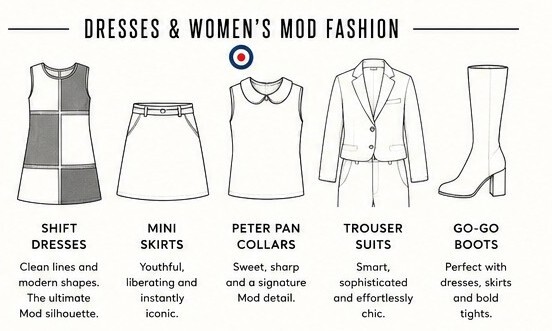
Dresses and Women's Mod Fashion
Women's Mod fashion helped define the look of the Swinging Sixties and remains hugely influential today.
Simple shift dresses became iconic thanks to their clean lines and youthful energy. A-line silhouettes, bold colour blocking and geometric patterns reflected the movement's fascination with modern design and contemporary culture.
Mini skirts revolutionised fashion and became one of the decade's defining garments. Often paired with brightly coloured tights and knee-high boots, they represented a fresh and exciting approach to style.
Tailored trouser suits, sleeveless tops, roll necks and structured jackets also became important elements of the female Mod wardrobe, demonstrating the movement's appreciation for both elegance and innovation.
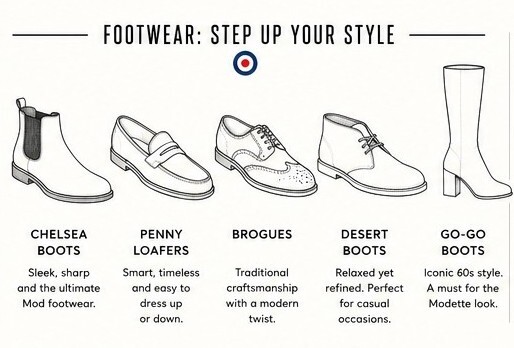
Footwear: The Finishing Touch
Mods understood that even the sharpest outfit could be undone by poor footwear.
Chelsea boots became a defining choice thanks to their sleek profile and versatility. Loafers offered a smart yet relaxed alternative, while brogues added a touch of traditional British sophistication.
Desert boots found favour among those seeking a more casual look without sacrificing style. For women, knee-high boots and other contemporary designs complemented the bold silhouettes of the era.
Whatever the choice, footwear should always appear clean, polished and carefully considered.
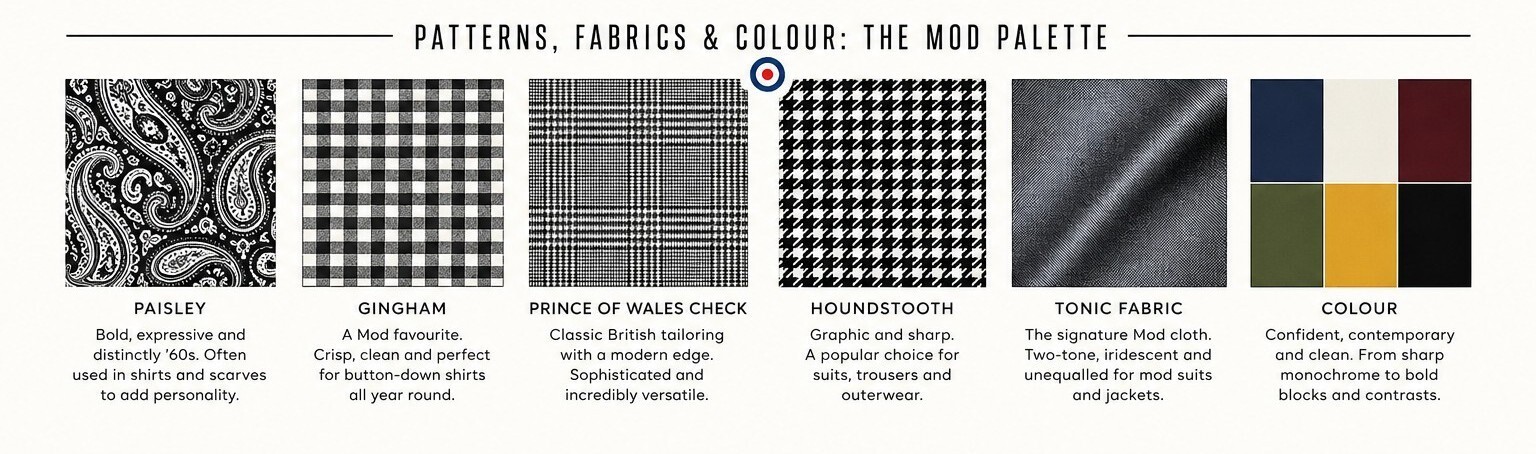
Patterns, Fabrics and Colour
Mod fashion is often associated with clean tailoring, but pattern and colour played an equally important role.
Paisley designs, gingham checks, Prince of Wales patterns and subtle houndstooth fabrics all became staples of the movement. These patterns added personality while maintaining a sense of refinement.
Colour was used with confidence. Rich burgundy, racing green, navy blue, mustard yellow and monochrome combinations all featured heavily within the Mod wardrobe.
The secret lay in balance. Statement pieces were combined with simpler garments to create outfits that felt bold without appearing excessive.
Accessories and Attention to Detail
Mod style has always been about the finer details.
Slim ties, knitted ties, pocket squares and silk scarves provided opportunities for personal expression. Watches, sunglasses and carefully chosen belts completed the look without dominating it.
Even socks became an important consideration. A flash of colour or pattern beneath a pair of tailored trousers could transform an otherwise understated outfit.
These details may appear small individually, but together they contribute to the polished appearance that defines Mod style.
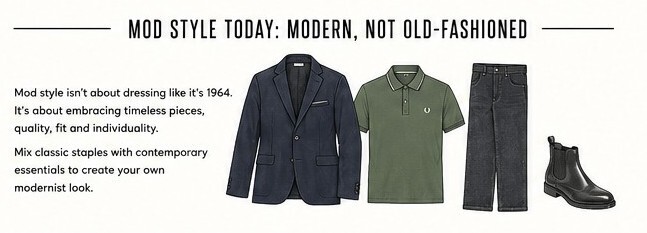
Mod Style Today
While fashion trends come and go, the principles that underpin Mod clothing remain remarkably relevant.
A modern Mod wardrobe does not require a complete recreation of 1964. Instead, it draws upon the movement's enduring values: quality, fit, individuality and attention to detail. A tailored jacket, a well-fitted polo shirt, a smart pair of boots or a classic Harrington can all capture the spirit of Mod style when worn with confidence.
Ultimately, Mod fashion is less about following rigid rules and more about embracing a mindset. It is a commitment to looking your best, paying attention to the details and approaching style with purpose.
That philosophy remains as modern today as it was at the beginning of the movement.
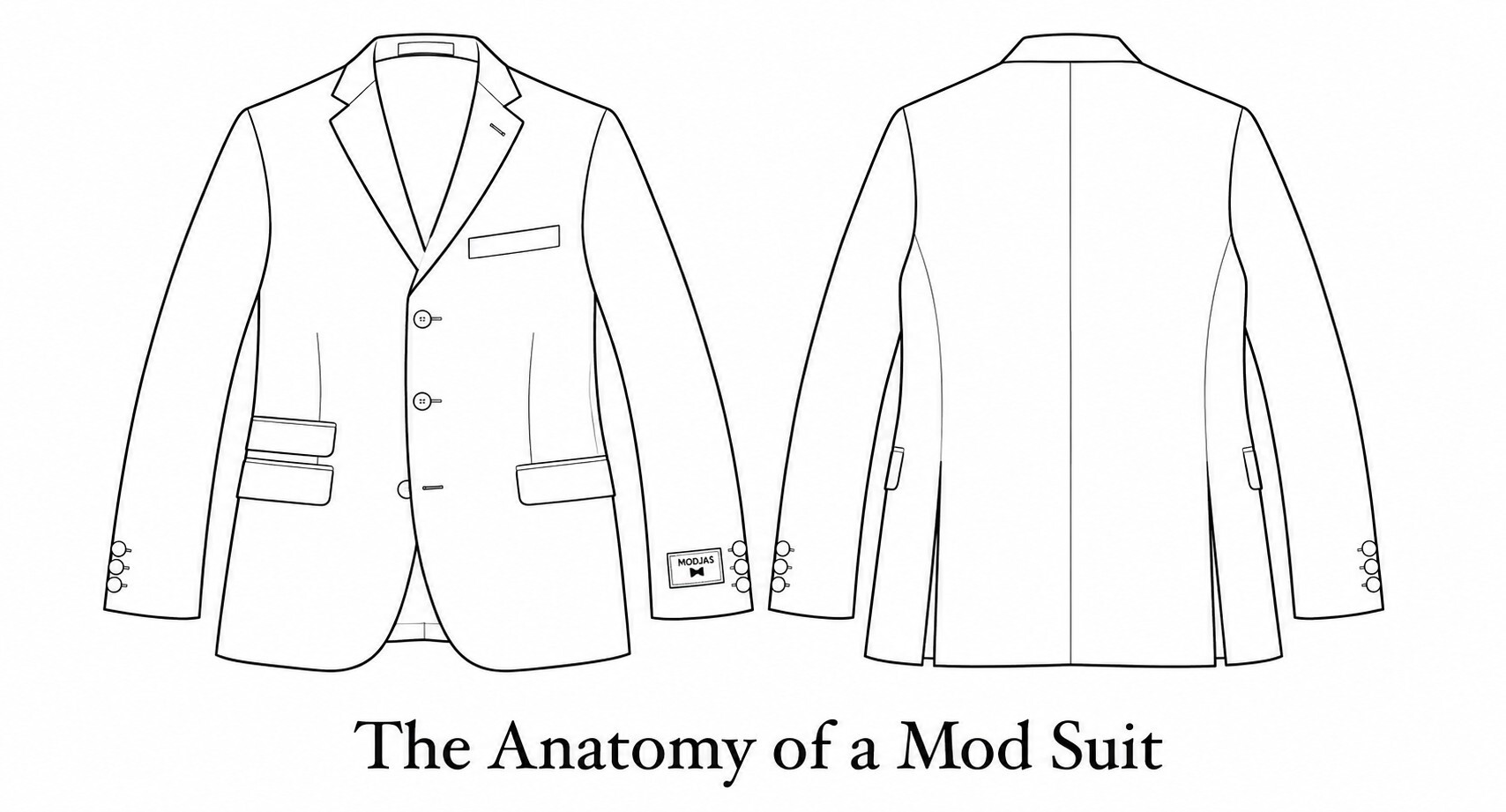
What makes a mod suit mod? One may argue that the mod suit is what defines the mod look, more so than parkas, gingham shirts and pique polos - after all, we’re only wearing our parkas to keep the grease and oil from our scooters from staining our impeccable, smart and sharp mod suit.
The mod suit look emerged in the late 50s. The first mods - the modernists - defined as such for their love of modern jazz over traditional jazz (the mods vs. the trads) looked to their jazz heroes for style inspiration. Charlie Parker, Miles Davis, John Coltrane, et al, were often pictured wearing sharply tailored suits. Couple this with the influence of Italian fashion and the mod suit was born.
Here are the basic qualities to look for in a Mod Suit:
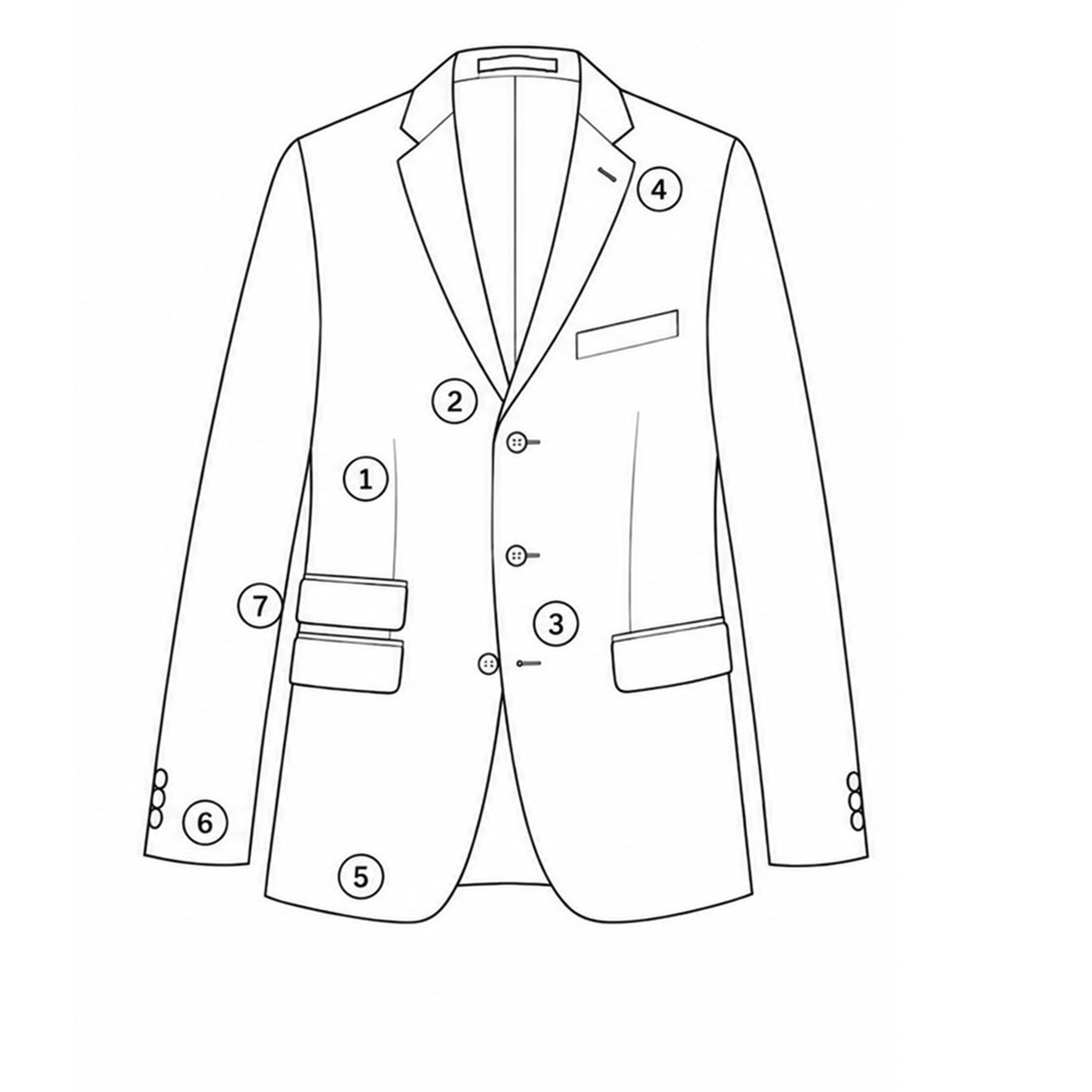
- 1. SLIM FIT & WAISTED CUT: The mod suit is a slim fit. As slim as you can stand it. The look does not allow for boxy jackets or baggy trousers. Your suit must be cut slim with darts to accentuate the waist.
- 2. SINGLE BREASTED: The classic mod suit is a single breast. This means one row of buttons, not two (which is double breasted).
- 3. 3 BUTTON FASTEN: Tradition dictates the jacket is high fastening with a three button fasten. However, we will usually wear it with only the top two fastened.
- 4. NARROW, NOTCH LAPELS: Slim lapels are a must, typically with a notch (over a peak). This is the triangular cut out shape to the top of the lapel. Exact width is a matter of taste, but around a two inch width will see you through nicely.
- 5. SHORT LENGTH: This blazer isn’t called the bumfreezer for nothing. Mod suit jackets are slightly on the short side. Nothing worse than a suit jacket which is too long.
- 6. SHORT-ISH SLEEVE: The sleeve should also be on the slightly short side, although not so it is overly noticeable. This is so we can show off our shirt sleeve cuffs and our fancy cufflinks.
- 7. TICKET POCKET: Another defining aspect of the mod suit. The ticket pocket is the smaller, third pocket usually found above the main pocket on the right hip of the suit jacket. A British tailoring tradition, we could write a completely separate article on the history of the ticket pocket, but for our purposes here, it adds that dandy mod heritage look.
- 8. MOHAIR AND/OR TONIC FABRIC: Not all mohair fabrics are tonics and not all tonic look fabrics are mohair, but if we can have both, then why not? Mohair is the classic fabric used in a mod suit. Mods loved the lustrous, smooth look mohair wool gives a suit, making it immediately the mark of class and style. Tonik - the original and proper fabric - was developed by French fabric manufacturer Dormeuil, but the tonic look here refers to a two-tone, iridescent fabric which copied that look. (The original fabric was quite expensive, but the look can be achieved with other tonic fabrics).
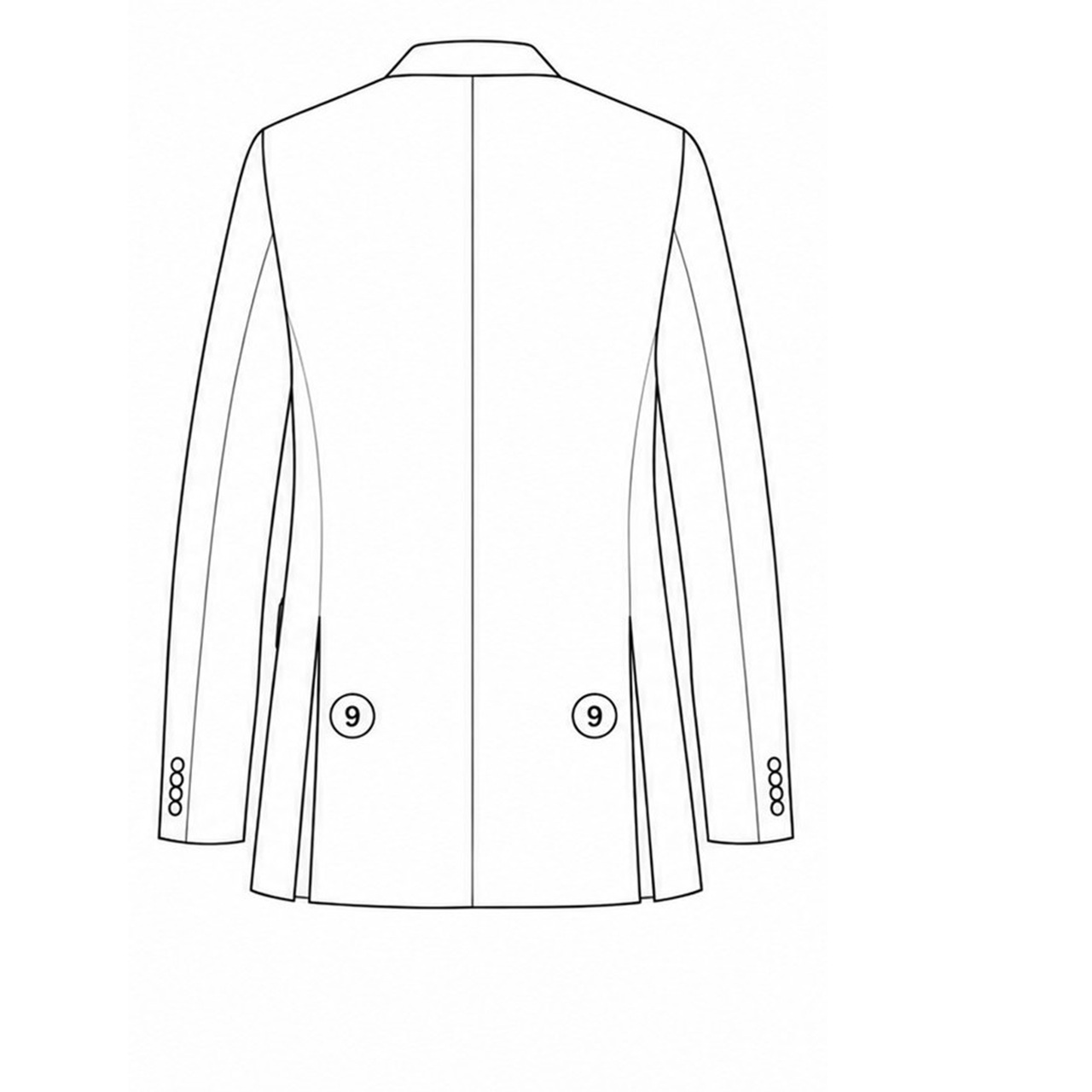
- 9. SIDE VENTS: On the back of our mod suit jacket we find two side vents. This has also been written into mod lore that our classic mod suit shall feature side vents (twin slits at either side of the back of the jacket) and never a centre vent (a single slit in the middle of the back of the jacket at the bottom). The length of the vent is a matter of personal taste. The Who song (or High Numbers, as they were then) Zoot Suit contains the lyric, “I wear zoot suit jacket with side vents five inches long,” so a lot of mods opt for that length, but anything in that region is fine. The vents purpose is to aid movement while wearing the suit. For a frame of reference, the vents on the suit jacket in the illustration are 7.25.
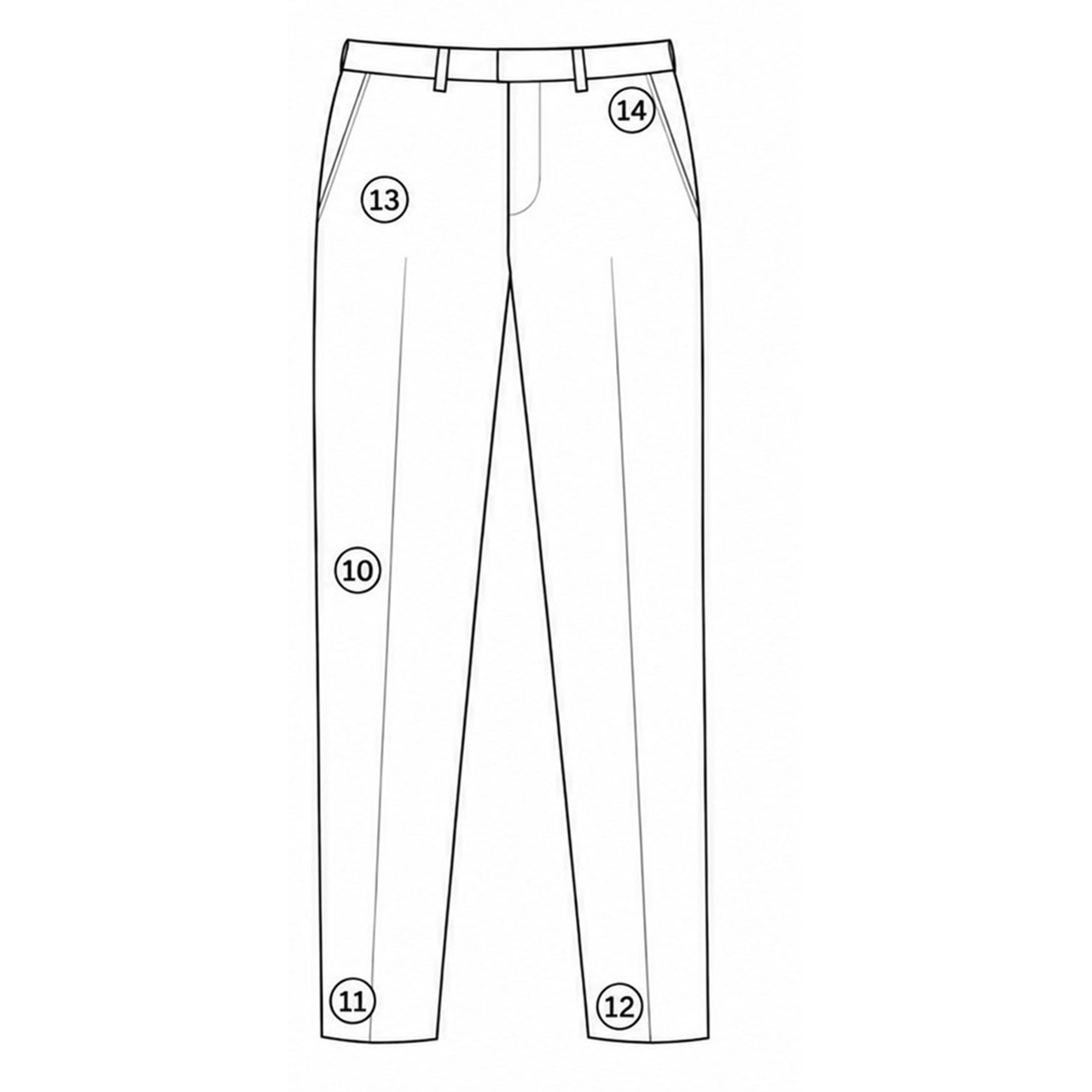
- 10. TAPERED, SLIM LEG TROUSERS: On to the trousers and as you might expect, the mod suit trousers are slim leg and usually tapered, meaning the are narrower at the bottom than the top, as opposed to straight.
- 11. SHORT-ISH LEG LENGTH: As with our jacket sleeves, we wear the trousers very slightly on the short side (but no half-masts, please!) This is so we can show off our stylish loafers, brogues or chelsea boots and maybe the snazzy socks we’re wearing with them. Mod is all about detail and we need to show off that detail.
- 12. NARROW ANKLE: The tapered mod suit trouser leg results in the narrow ankle. A traditional suit would have maybe 16" - 18" bottoms or wider, but the mod suit will have a narrow bottom. Again, it’s personal preference as to how wide. 14" is a good ball park figure.
- 13. POCKETS: Trouser pockets are a must, but how many and how they look is again down to taste. The mod suit pictured here has two front slanted side pockets which keep the shape and silhouette of the trouser nicely. Not pictured is also a single straight pocket with a button fasten on the back, but more about pockets in part two.
- 14. NARROW WAISTBAND: Also details down to preference and style, but the classic mod suit will feature a narrow waistband, equipped to hold a narrow width suit belt (but probably unsuitable for wider jeans belts). You shouldn’t really have to wear a belt with your mod suit, but sometimes it’s nice.
This, we should stress, are only the basics of a mod suit - a starting point. Here are the rules of mod suit style, and now we have learned the rules, we can break them!