
90 Years of Weejuns: Celebrating the Original Penny Loafer with the Bass Anniversary Larson
Few shoes have travelled quite as successfully between generations, subcultures and continents as the penny loafer. From Ivy League campuses and American prep style to British Mods, indie musicians and contemporary terrace fashion, the penny loafer has become one of those rare pieces of footwear that seems to find a place wherever classic style and individuality meet.
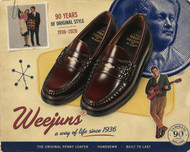
This year marks 90 years since G.H. BASS introduced the Weejuns Penny Loafer in 1936, and to celebrate the milestone we’re pleased to welcome the Bass Weejuns Anniversary Larson Penny Loafer to Atom Retro. Available in both Black and Wine, this limited-edition version takes one of the most recognisable Weejuns silhouettes and adds a handful of carefully considered details to commemorate nine decades of the original penny loafer.
Where the Weejun Began
The story of the Weejun begins with a style of footwear that originated in Norway. Norwegian fisherman and farm-style moccasins caught the attention of fashionable travellers, and similar slip-on shoes began appearing in European resorts and eventually in America.
In 1936, G.H. BASS took inspiration from this Norwegian moccasin tradition and created its own interpretation for the American market. The name Weejuns was a playful reference to the shoes' Norwegian origins, and BASS's version introduced an important detail: the distinctive leather saddle with a small slot across the front.
That slot would ultimately give the shoe its most enduring name.
The familiar story is that students began placing a one-cent coin into the slot of their loafers, supposedly keeping a penny handy for a telephone call. Whether every student actually used their loafers as emergency phone credit is another matter, but the association stuck — and the penny loafer was born.
What began as a practical detail became one of the most recognisable design signatures in footwear.
From Norwegian Moccasin to Ivy League Essential
The Weejun's rise coincided perfectly with the development of American Ivy League style.
By the 1950s and 1960s, penny loafers had become a defining component of the collegiate wardrobe. They occupied that particularly appealing territory between formal and casual: polished enough to wear with a jacket and tailored trousers, yet relaxed enough to work with chinos, knitwear and rolled-up jeans.
This versatility was central to their appeal.
The Weejun could be worn without a tie, without socks and eventually without much concern for the traditional rules surrounding formal footwear. It was a smart shoe that didn't take itself too seriously.
The Ivy League association would prove particularly influential because the style travelled far beyond American campuses. The clean silhouette, leather construction and easy slip-on design offered a perfect foundation for the emerging language of youthful menswear.
And that brings us to the British relationship with the penny loafer.
From Ivy to the Mod Wardrobe
When American Ivy style crossed the Atlantic, British youth culture interpreted it in its own way.
For Mods in particular, the penny loafer offered something different from the heavier traditional footwear of the period. Its sleek profile worked perfectly with sharply tailored trousers, narrow suits and clean-cut shirts, while its American collegiate associations gave it a slightly exotic quality.
The Weejun consequently became part of the broader vocabulary of 1960s British style — alongside button-down shirts, fine-gauge knitwear, Harrington jackets and tailored trousers.
That ability to move between cultures has remained one of the Weejun's greatest strengths. It was born from Norwegian footwear, developed by an American shoemaker, adopted by Ivy League students and subsequently embraced by British subcultures.
Very few shoes can claim that sort of journey.
The Larson: A Modern Classic
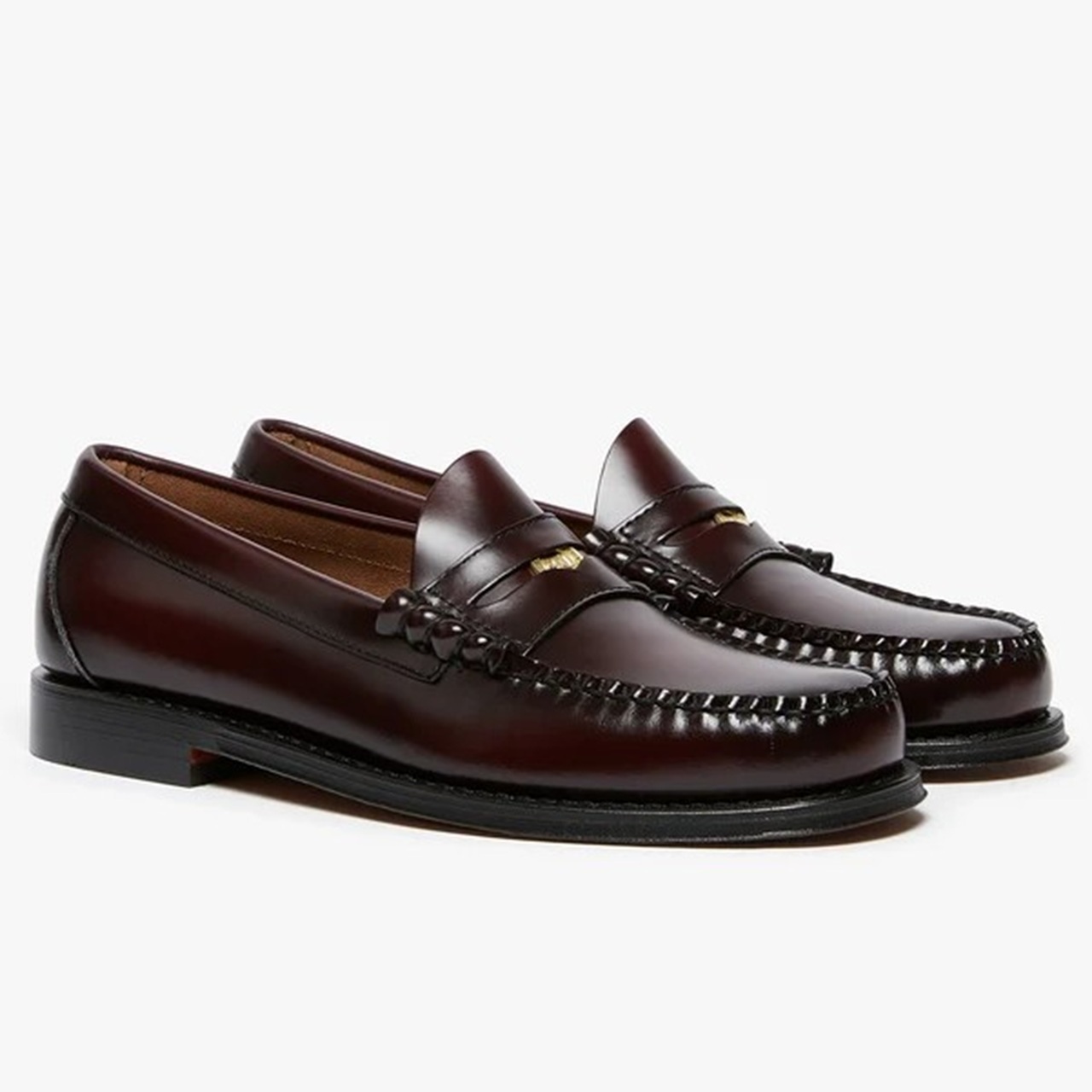
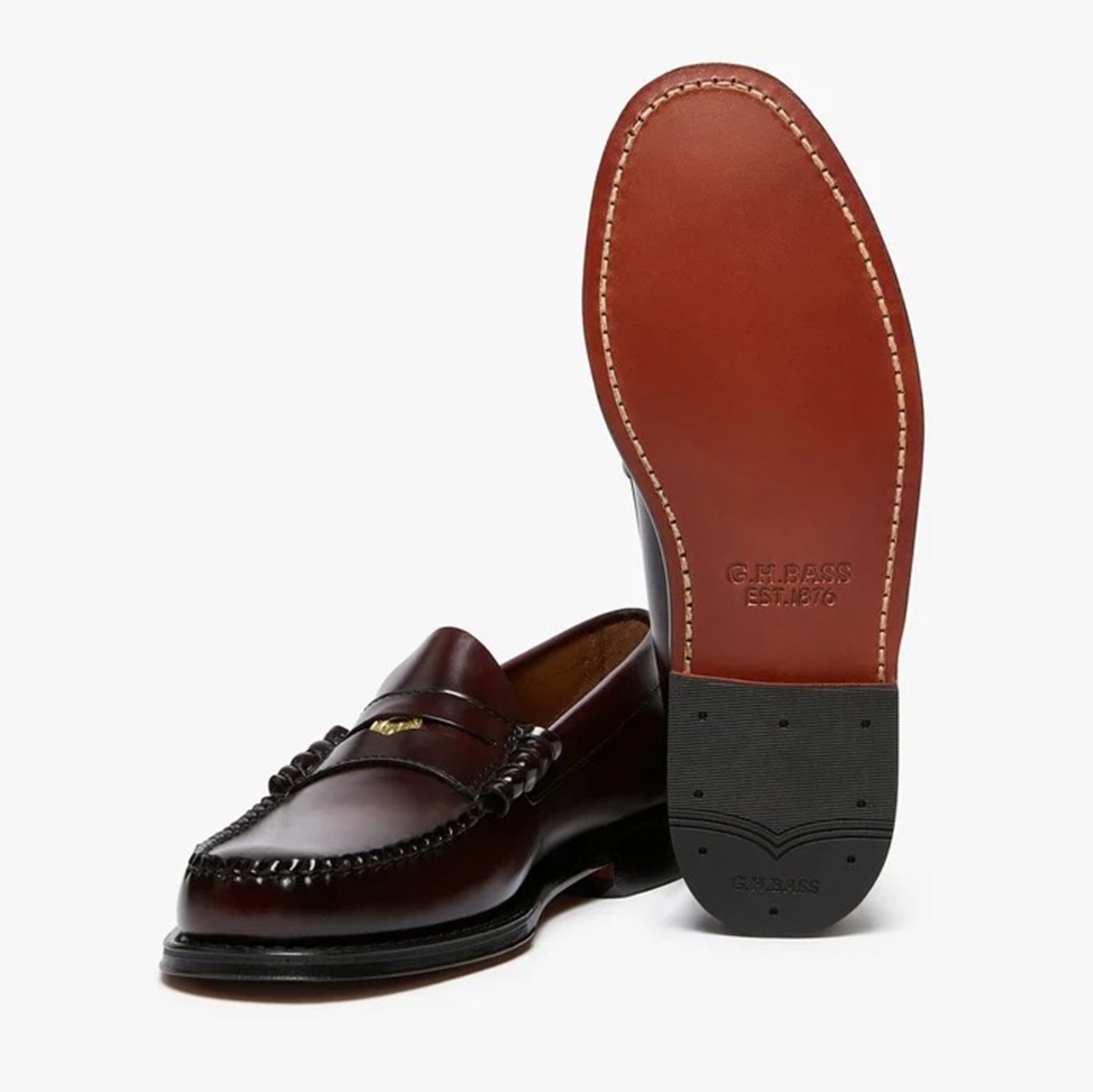
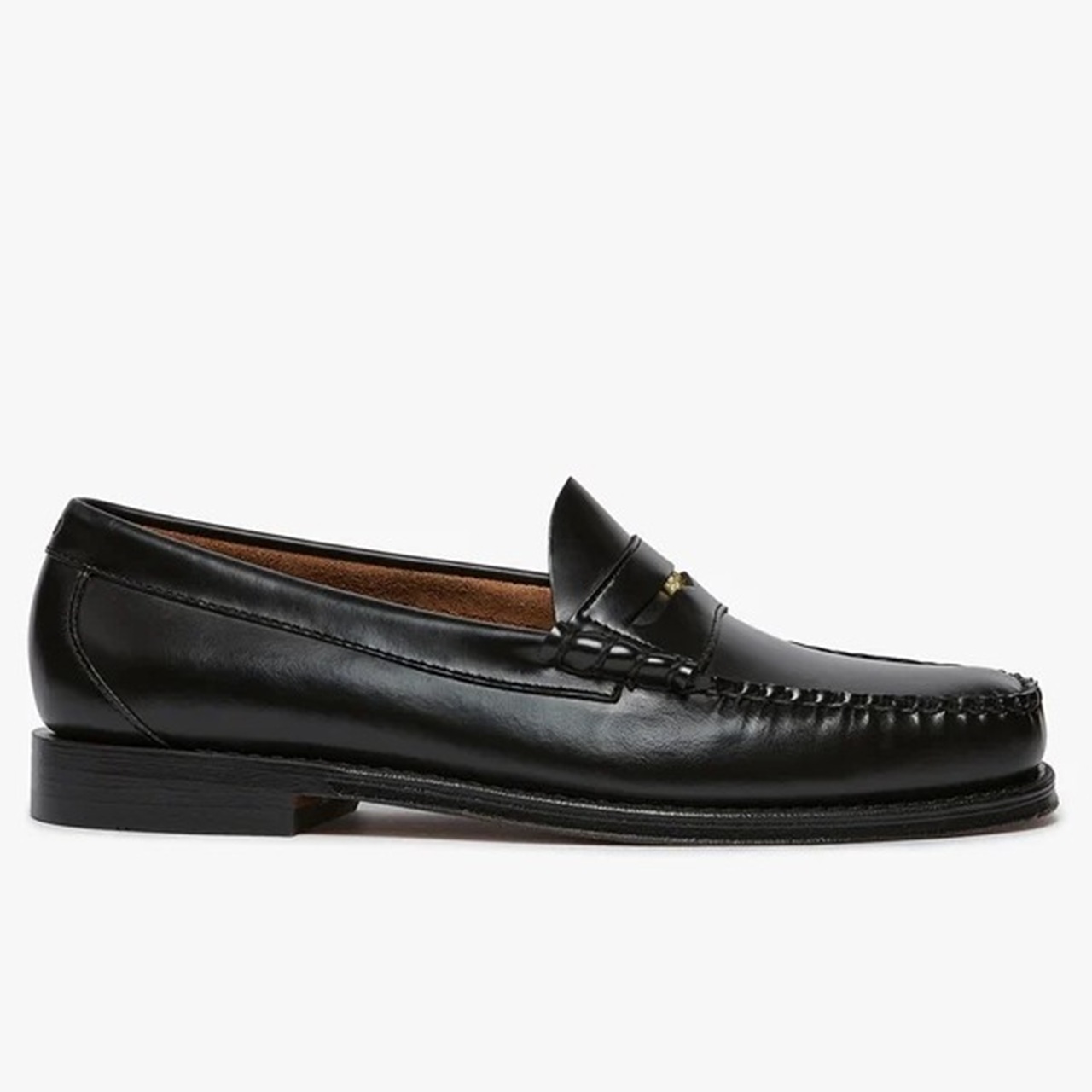
The Larson is particularly familiar. It distils the Weejun aesthetic into a beautifully balanced penny loafer, retaining the characteristic moccasin construction, saddle and hand-stitched detailing that have made the silhouette so recognisable.
The Larson's appeal lies partly in its proportions. It isn't overly formal, nor is it excessively casual. The low profile, rounded moccasin shape and distinctive penny strap give it an unmistakable character, while the polished leather construction allows it to move effortlessly between different wardrobes.
Wear it with a sharply pressed pair of trousers and a knitted polo for a classic Mod interpretation. Pair it with turned-up jeans and a simple Oxford shirt for something more relaxed. Or let the loafer become the polished element within an otherwise casual outfit.
It's this versatility that has kept the Weejun relevant while so many other fashion trends have come and gone.
The Craft Behind the Weejun
Of course, the appeal of the Weejun isn't simply visual. A significant part of its enduring reputation comes from the way the shoe is constructed.
Traditional Weejuns use a tubular moccasin construction, where the leather is shaped around the foot to create a distinctive, supportive form. G.H. BASS continues to emphasise hand-stitching as an important part of its manufacturing tradition, with the upper carefully assembled and sewn by footwear artisans.
This construction helps explain why a Weejun develops such a personal character over time. Rather than being an anonymous flat-soled loafer, the shoe gradually conforms to its wearer.
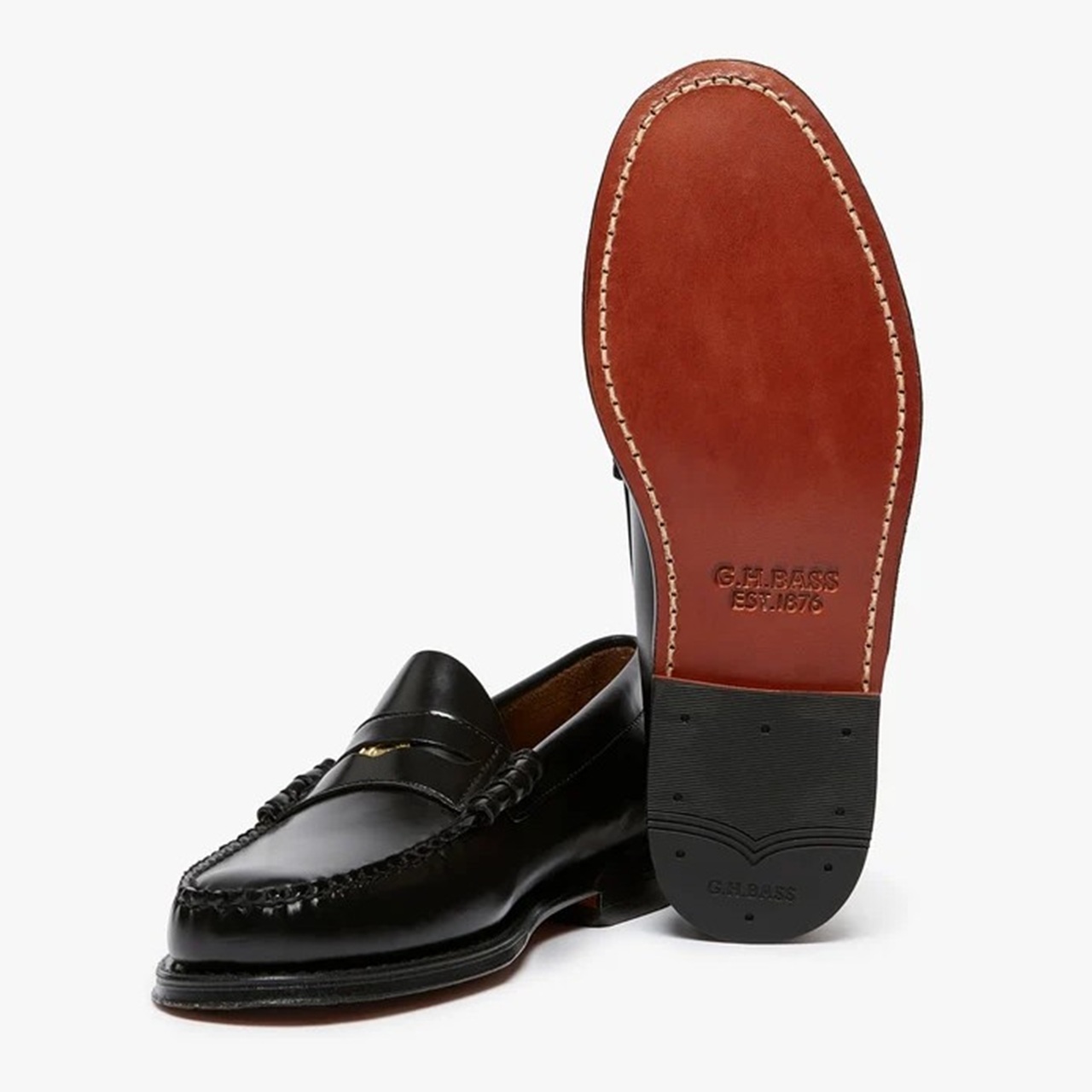
The Anniversary Larson continues this traditional approach, with hand-stitched construction, leather components and reinforced welt stitching. A cushioned footbed and internal rubber midsole also provide an extra degree of comfort, bringing a little modern practicality to a fundamentally traditional shoe.
90 Years, Marked in the Details
The Bass Weejuns Anniversary Larson is not a radical reinterpretation of the classic. That's precisely the point.
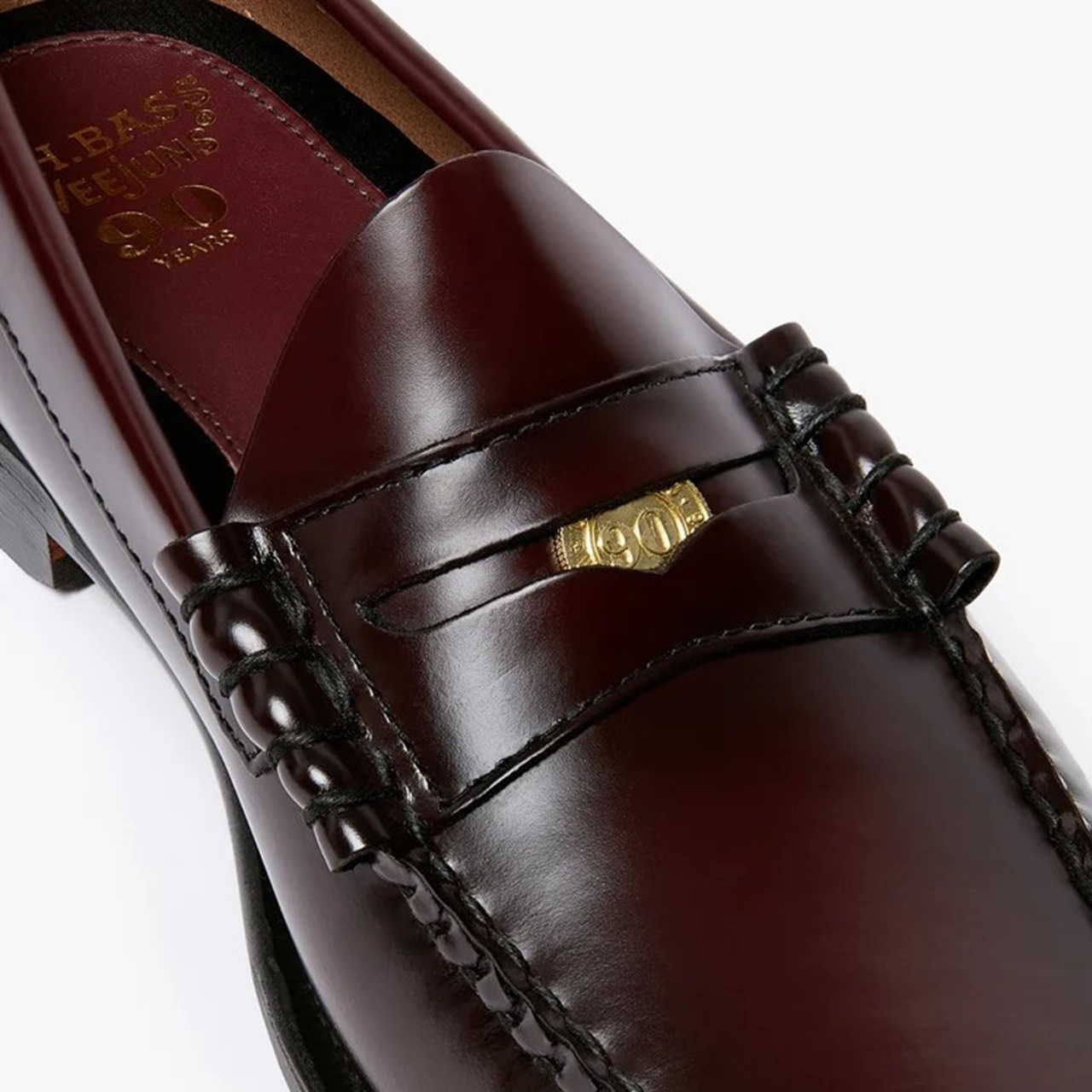
Rather than changing the silhouette beyond recognition, BASS has chosen to celebrate the 90th anniversary through a series of subtle commemorative details.
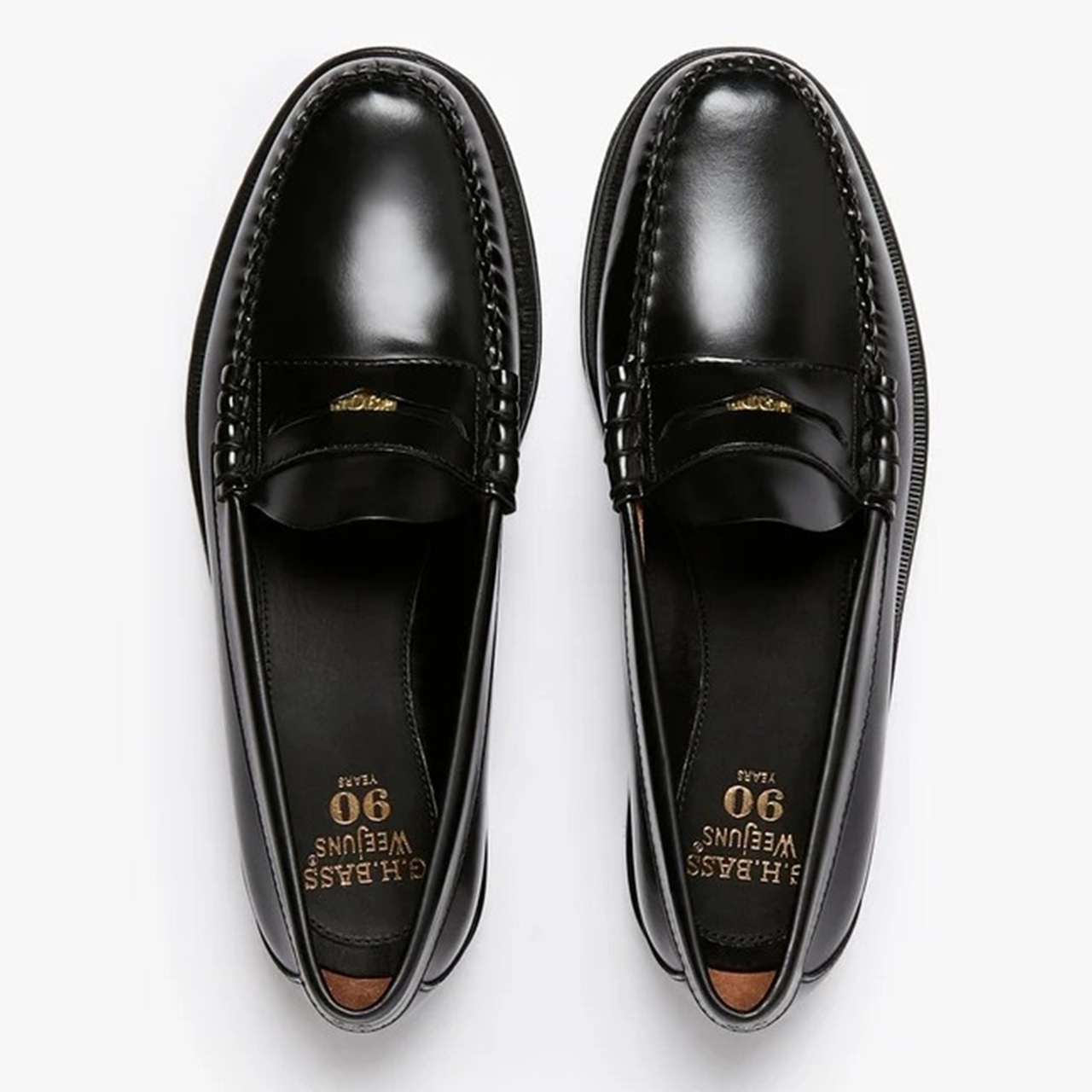
Every pair comes with a special collector's gold coin, tucked neatly into the penny apron — an obvious but beautifully appropriate reference to the story behind the name.
There's also a small '90' fabric tag positioned near the exterior heel seam, while the leather heel sock features commemorative gold-foil detailing. These are deliberately restrained touches: details that will be appreciated by those who know the Weejun story without overwhelming the shoe itself.
Underneath, reinforced welt stitching and an internal rubber midsole provide additional durability and cushioning, while the polished leather sole retains the refined character associated with the Heritage Larson.
In other words, this remains a Weejun first and an anniversary edition second.
Black or Wine?
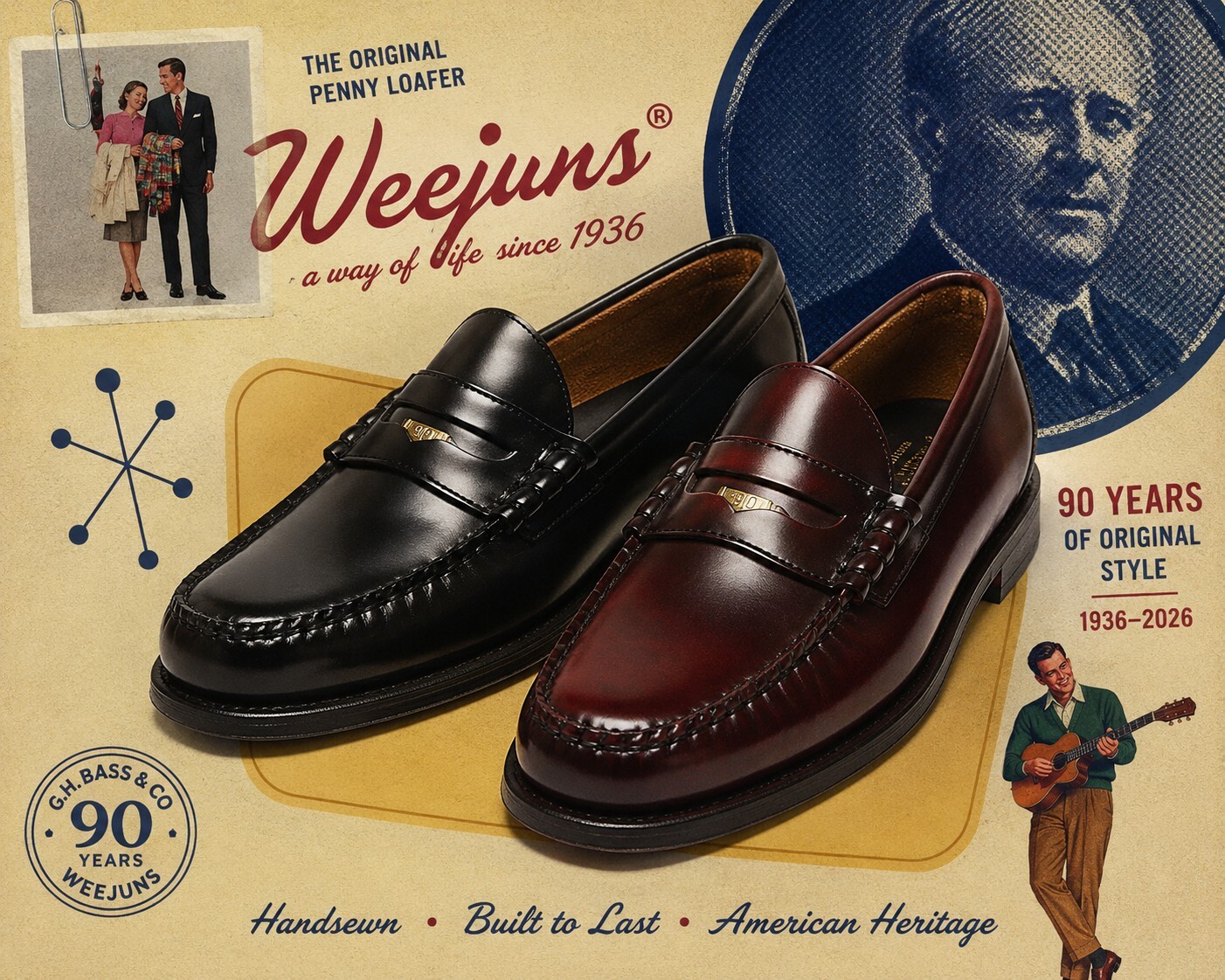
For the Anniversary Larson's arrival at Atom Retro, we've selected two colourways that demonstrate just how versatile the silhouette can be.
Black is the ultimate classic. Clean, sharp and endlessly adaptable, it captures the formal side of the penny loafer while retaining enough attitude to work with denim. It's the obvious choice for a traditional Mod wardrobe, but equally at home with contemporary tailoring.
Wine, meanwhile, brings a richer, more distinctive character to the same iconic shape. Deep red leather has always worked particularly well with the penny loafer because it highlights the moccasin construction and hand-finished details without becoming overly flashy.
Both retain the essential Larson DNA — the penny apron, hand stitching, polished leather and classic low-profile shape — while offering something a little more special in celebration of the anniversary.
Ninety Years and Still Relevant
It's tempting to think of heritage footwear as something preserved in aspic: an object that belongs to a particular decade and is kept alive largely through nostalgia.
The Weejun proves otherwise.
Its longevity comes from the fact that the basic idea was right from the beginning. A comfortable slip-on shoe with a distinctive silhouette, quality materials and enough refinement to dress up or down is never likely to become completely irrelevant.
Over nine decades, the Weejun has moved from Norwegian-inspired footwear to an American classic, from Ivy League campuses to British Mod wardrobes and from vintage subcultures into contemporary menswear. G.H. BASS itself notes the Weejun's continuing place in everyday culture, with the style experiencing significant popularity through the 1960s and subsequent revivals.
The Anniversary Larson celebrates that history without becoming trapped by it.
Ninety years after the first Weejun, the penny loafer remains what it has always been at its best: a beautifully simple piece of footwear with an extraordinary cultural history.
And now, with its commemorative coin, '90' heel tag and anniversary detailing, the Larson has a particularly good reason to take its place in the wardrobe.
The Bass Weejuns Anniversary Larson is available now at Atom Retro in Black and Wine.