
THE KNACK — AND HOW TO GET IT
A Cultural and Fashionable Prelude to Mod
Chapter One — A Nation in Recovery
Think of Britain in the late 1940s and early 1950s and the instinct is to picture ration coupons, bombed-out terraces, and a stoic nation determined to “carry on.” Less obvious, yet every bit as real, was the quiet emotional fallout. Yes, the Allies had won the war, but victory didn’t magically restore direction or purpose. The country’s adults had endured trauma, responsibility and, in many cases, loss. Their first instinct was to lock the world back into place using the tools they knew best: discipline, tradition, and the moral landscapes of pre-war Britain.
Young people, however, saw only fences.
The returning peace brought new questions no one could easily answer. What did the future look like? Who got to define it? And why should a generation who’d grown up under air-raid sirens settle obediently back into their parents’ rhythms?
What emerged was not a political manifesto but a murmur, an itch beneath the surface of post-war conformity. A belief that identity could be built rather than inherited. That style, music, and ideas could be more than decoration, they could be rebellion. The first sparks of what would become Mod would flicker here, though the flame had another name at first.
Chapter Two — The Teddy Boy Inheritance
Before Mod strutted down Carnaby Street, the Teddy Boy swaggered across it.
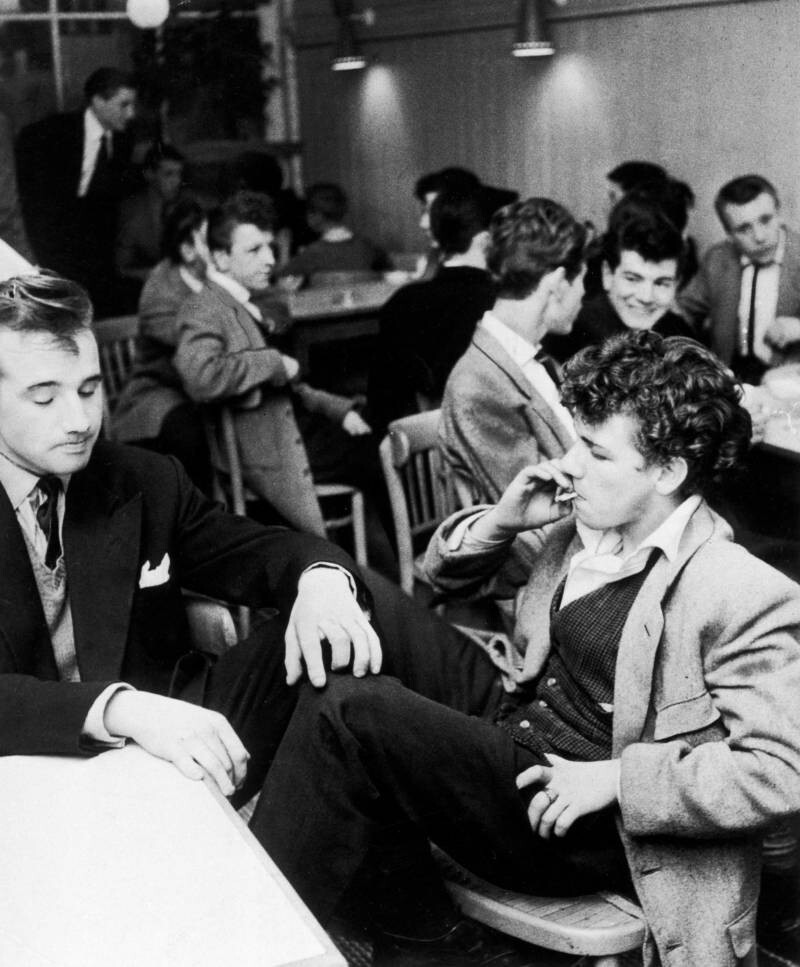
Teddy Boys seen here at the Thirteen Canteen, Elephant and Castle, London, 1955.Daily Mirror/Mirrorpix/Mirrorpix via Getty Images
The Teddy Boy, the first major British youth subculture, stepped into view in the early 1950s, wearing Edwardian-inspired drape jackets, velvet collars, bolo ties, brothel creepers, quiffs, and a stun-gun self-confidence that shocked the older generation. By September 1953, when the Daily Express printed the term Teddy Boy, the movement already felt inevitable.
Part of the punch came from across the Atlantic. American rock ’n’ roll hit Britain like a live wire. Elvis swung his hips, Bill Haley sneered his way through Billboards, and Blackboard Jungle flickered in cinema darkness with a message parents quickly recognised: this wasn’t their world anymore.
But Teds weren’t simply costumes attached to record players, they were a creative act. Boys tailored themselves into exaggerated, cartoon-sharp silhouettes; long wool drape coats for warmth on street corners (and pockets deep enough for flick knives or contraband), narrow black trousers cropped to show off brightly coloured socks, and towering quiffs sculpted with care. The look was both declaration and armour.
Teddy Girls, too often forgotten, were just as radical. Toreador trousers, circle skirts, low-cut tops, American-influenced blouses: a wardrobe explicitly designed to scandalise the older world while laying claim to one of their own.
For a moment, Teds ruled the streets. But subcultures age fast. By the end of the 1950s, the style felt loud, set, even predictable. Younger teens, never keen on inheriting their older siblings’ cast-offs, started searching for something sleeker, sharper, more modern.
And a new word began to hover in London’s night air; modernist.
Chapter Three — “I Had a Dream… and That Dream Was Mod”
The 1960s, now immortalised in pop culture as a decade of upheaval, optimism and colour, didn’t spring fully formed from nowhere. It took shape through young people who sensed the post-war dust settling and realised they now had choices.
Modernist was the word first used, not Mod, and it originally applied to fans of modern jazz. These were young listeners who rejected the trad (traditional) jazz beloved by older hepcats and instead leaned toward Miles Davis, Art Blakey, and the European cool jazz imports filtering into London. The distinction mattered. It meant sophistication over swagger. Precision over posturing. Clean lines, clean sound, clean living, “under difficult circumstances,” as Mod chronicler Peter Meaden later quipped.
The curious thing is that Mods never wanted to be easily defined. The boundaries shifted constantly and that was the point. Mod wasn’t an outfit you wore; it was a state of intent. How you dressed, what you listened to, where you spent your nights and how you carried yourself were woven from the same thread: intelligence, awareness, and the thrill of the next new thing.
Chapter Four — Coffee Bars, Beatniks, and the Modern Mind
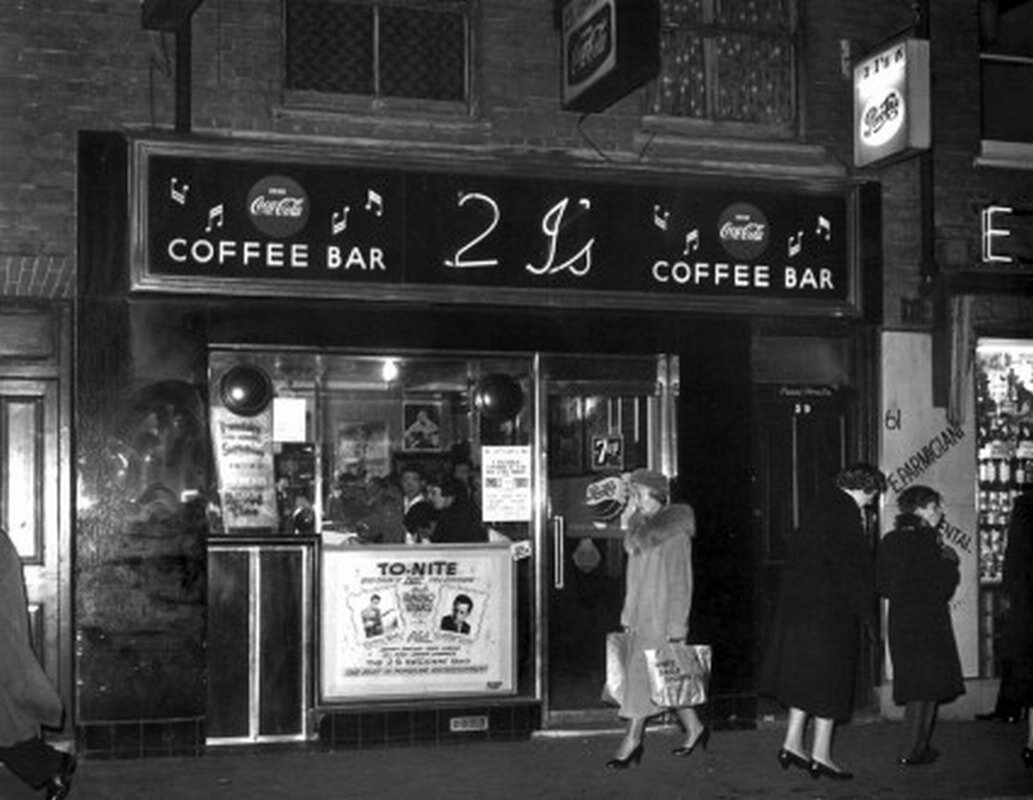
The 2i Coffee Bar 59 Old Compton Street, Soho, London. The 2 I's was so-called because its original owners were brothers Freddy & Sammy Irani.
To understand Mod's environment, forget pubs and imagine instead London’s coffee bars: smoky, dim, caffeinated caves where jukeboxes thumped till dawn. These were not genteel tearooms. They were meeting grounds where class distinctions dissolved, where school leavers rubbed shoulders with art students and early drop-outs from nine-to-five respectability.
The soundtrack evolved with the decade. Late-50s bars leaned on jazz and blues; by the early 60s, raw American R&B from labels like Chess and Stax began to take over. The basslines got dirtier. The dancing got better.
Lurking beneath the surface was the influence of the Beat Generation. Jack Kerouac, Allen Ginsberg and their circle weren’t simply writers to be read, they were models of how to inhabit the world. Beat philosophy taught that meaning wasn’t bestowed by institutions, it was found through self-invention. That attitude seeped into British youth culture like dye.
Young modernists educated themselves by choice rather than obligation, watching Italian cinema, poring over French fashion magazines, reading Sartre and Camus, and prowling record shops for jazz imports. Knowledge wasn’t a luxury, it was a tool of distinction.
Chapter Five — Dressing the Part
Clothes came next, not as decoration, but as precision instruments.
Early Mods borrowed ruthlessly from two predecessors:
-
From Teddy Boys; pride in presentation and the understanding that tailoring could be a weapon.
-
From Beatniks; minimalism, black rollnecks, stovepipe jeans, and a cultivated air of effortless intellectual cool.
Italian fashion quickly became the lodestar. Slim-cut suits, narrow lapels, pointed-collar shirts, winklepicker shoes, and neat, close-cropped hair created a silhouette that felt European, modern, urban.
And unlike Teddy flamboyance, early Mod style prized discipline. A faint crease in the wrong direction could ruin a mood. Shoes had to shine. Shirts had to be crisp. Identity required upkeep.
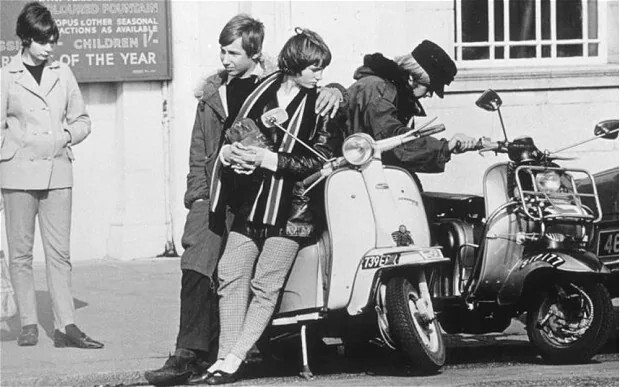
Mod teenagers in 1965 Credit: Photo: Rex
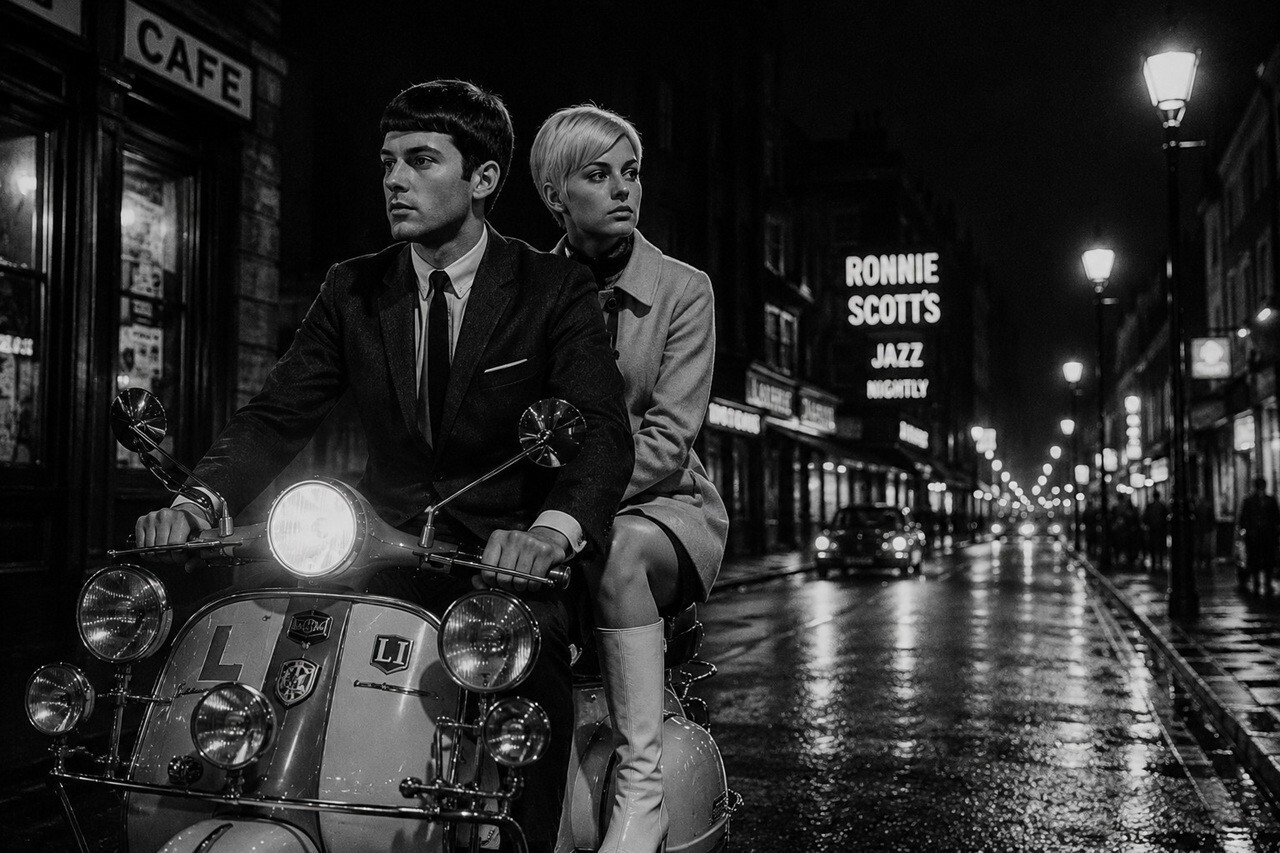
Transport also became part of the look. Lambrettas and Vespas glided into the scene; sleek, aerodynamic alternatives to the greasy rock ’n’ roll motorbike. But scooters introduced a practical problem: how to keep that immaculate suit immaculate? Enter the surplus military parka: oversized, utilitarian, and instantly iconic.
Chapter Six — Boutiques, Media Heat and the Mod Boom
By the early 1960s, the ingredients were in place; disposable income, cultural curiosity, fashion literacy, and a growing sense of collective style. The newspapers could hardly resist. Once the press named the movement, the word Mod went national.
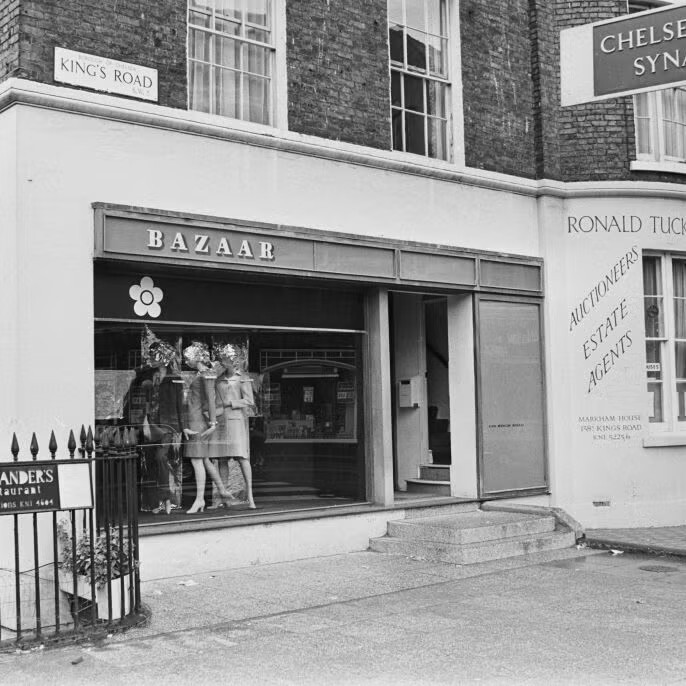
Bazaar, the first shop opened by Mary Quant in Kings Road, Chelsea,
Youth boutiques exploded, run not by cynical corporations but by twenty-somethings who were Mods themselves. Mary Quant’s hemlines, John Stephen’s Carnaby Street suits, Biba’s dreamy cuts, these designers didn’t dictate style; they listened to it, sharpened it, and put it on rails for anyone with a Saturday job and ambition.
The High Street shifted on its axis. Clothing became a personal statement rather than a parental purchase. Youth culture wasn’t secondary culture any more—it was the engine.
Chapter Seven — Swinging London and Fragmentation
By the mid-60s, Mod had reached critical mass and burst beyond fashion into mainstream culture. Bands didn’t just dress Mod, they were Mods. The Who, Small Faces, and later The Creation and The Action amplified the look and attitude with R&B power chords and operatic ambition.
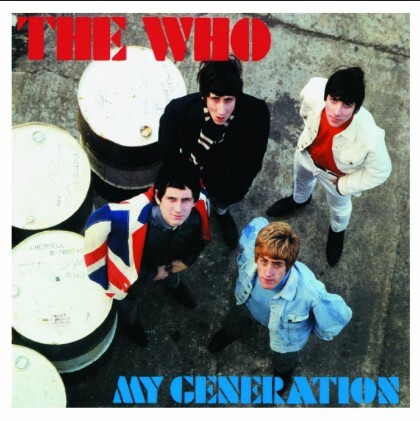
My Generation, the debut studio album studio album by the Who, released on 3 December 1965 on Brunswick Records.
Carnaby Street glittered. Pop art exploded. Nightclubs multiplied. And London—almost accidentally—became the world’s capital of the cool.
But success carries risk. By 1966, psychedelia, dandyism, and commercial appropriation began to blur Mod’s edges. Academic Dick Hebdige later argued that once manufacturers started pre-packaging “Mod style,” the underground spirit evaporated. Yet even in its mainstream moment, the DNA remained: self-creation, sharp presentation, music as identity.
And when Mod as a unified movement dissolved, it didn’t die. It simply recombined—into Northern Soul dancers, scooter clubs, freakbeat bands, skinheads, soulboys, Britpop devotees, and every generation since that’s chosen to dress sharply and move forward with purpose.
Chapter Eight — Why Mod Still Matters
So what was Mod, really?
Not just suits or scooters. Not jazz clubs or R&B. Not even London.
Mod was and is a belief:
-
that youth doesn’t have to wait to be invited into culture;
-
that style can be resistance;
-
that curiosity is power;
-
and that identity is something you build, stitch by stitch, record by record.
Its legacy is everywhere; in men’s tailoring, in street fashion, in retail design, in club culture, in the idea that teenagers deserve their own voices, and in the enduring truth that looking the part can help you become the part.
Because in the end, Mod was never solely about fashion.
It was about the knack; the mysterious, magnetic understanding that how you carry yourself can rewrite the world around you.
And for a brief, brilliant moment in British history, that knack didn’t just belong to a lucky few.
It belonged to a movement.
Read On :
- 2) What is Mod Clothing? A Complete Guide to Mod Style.
- 3) Inside the 1960s Boutiques.
- 4) The Pretty Things: Mod Clothing in the Swinging Sixties.
- 5) Pop Art Style & the Mod Target: When Art Leapt Off Canvases and Onto Clothes.
- 6) We Are The Mods!: Quadrophenia and the Mod Revival of the Late 1970s.